Email Marketing for Law Firms: A Complete Growth Guide
Published: 17 May 2026
Finding the right lawyer often starts online, but most people do not contact a law firm immediately. They compare options, read reviews, and look for attorneys they can trust before making a decision.
That is where email marketing for lawyers becomes valuable. It helps law firms stay connected with prospects, clients, and referral sources through helpful updates, legal insights, and professional communication.
From sharing legal tips to sending consultation follow-ups, email campaigns keep your firm visible and build stronger relationships over time.
Whether you run a small practice or a large firm, the right email strategy can improve client engagement, increase consultations, and support long-term business growth in a competitive legal market.
What is Email Marketing for a Law Firm?
Email marketing for lawyers is the practice of using email to communicate directly with clients, prospects, and referral sources in a professional and compliant way. Unlike general marketing, it focuses on building trust, sharing valuable legal insights, and keeping clients informed about relevant services or updates.
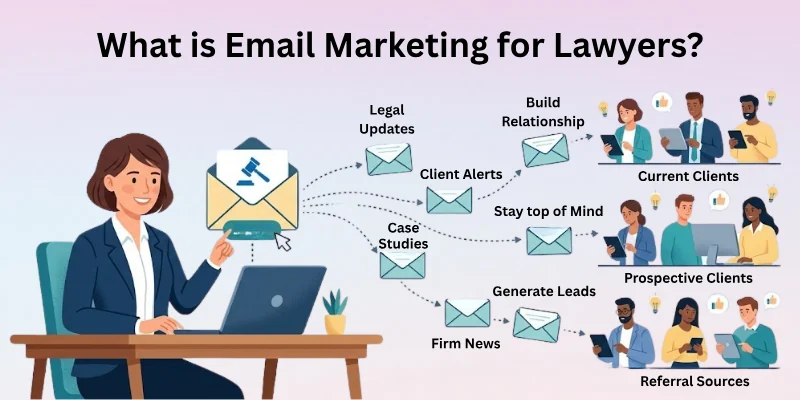
For law firms, email marketing fills communication gaps by:
- Keeping clients updated on case progress, deadlines, or legal news.
- Educating prospects about their legal rights, common issues, or services your firm offers.
- Maintaining relationships with past clients, increasing the chances of repeat business or referrals.
Why Lawyers Should Use Email Marketing?
Email marketing helps lawyers build trust and authority with both clients and referral sources. By sharing useful legal insights, updates, or tips, your firm positions itself as knowledgeable and reliable.
It also drives more consultations and revenue. Well-crafted emails can encourage potential clients to reach out, schedule appointments, or attend free webinars, turning prospects into paying clients.
Finally, attorney email marketing strengthens long-term relationships with past clients and prospects. Regular, valuable communication keeps your firm top-of-mind, making it more likely clients will return or refer others when they need legal help.
Law‑Focused Campaign Examples
Lawyers can use different types of emails to engage clients, showcase expertise, and encourage action. Choosing the right type of email ensures your messages are relevant, professional, and valuable.
Here are the main campaigns law firms can use:
1. Educational Emails
Share legal tips, step-by-step guidance, or court preparation advice. These emails help clients understand complex issues and see your firm as a trusted expert. For example, a family law firm could send a “5 Things to Know About Child Custody” guide.
2. Promotional Emails
Promote webinars, free consultations, or new services. These campaigns encourage prospects to take action while highlighting your firm’s offerings. For instance, a personal injury lawyer might invite subscribers to a free “Know Your Rights After an Accident” session.
3. Case Study Emails
Show real success stories or outcomes (while keeping client confidentiality). Sharing results demonstrates your expertise and builds credibility. For example, a corporate lawyer could highlight a complex contract negotiation that helped a client save money or avoid disputes.
Essential Email Marketing Tips for Lawyers
To get the best results from your email campaigns, it’s important to follow strategies tailored for law firms. These tips help ensure your emails are professional, effective, and compliant with legal and ethical standards.
- Set Goals: Decide what you want to achieve—more consultations, client education, or retention—and track results to improve over time.
- Segment Lists: Send relevant emails to the right audience. For example, family law clients get custody tips, while business clients get contract guidance.
- Use Templates: A professional, consistent design helps your emails look credible. Keep branding, colours, and fonts aligned with your firm’s identity.
- Add Value: Focus on solving client problems or answering questions, rather than over-promoting services.
- Strong Subjects: Your subject line determines if an email gets opened. Make it clear, concise, and relevant to the recipient’s needs.
- Respect Privacy: Always get consent and make it easy for clients to unsubscribe. This ensures compliance with ethical rules and privacy laws.
Advanced Lawyer Email Tactics
Once you’ve mastered the basics, you can use advanced strategies to get better results and save time. These tactics help your emails perform smarter and reach the right clients at the right moment.
- Test Emails: Use A/B testing to compare subject lines, content, and CTAs. See what resonates most with your audience and improve engagement.
- Automate Follow-Ups: Set up autoresponders for consultations, lead follow-ups, or newsletter sequences. Automation ensures no prospect slips through the cracks.
- Answer Questions: Craft emails that respond to common client concerns or FAQs. This builds trust and positions your firm as helpful and knowledgeable.
Legal and Compliance Requirements
Lawyers must follow strict rules when sending emails to protect clients and stay ethical. Understanding these requirements keeps your firm safe and trustworthy.
- Ethics: Follow ABA and local rules for lawyer advertising and communications. Avoid misleading claims or promises.
- Privacy Laws: Comply with GDPR, CAN-SPAM, CASL, and other relevant privacy regulations. Protect client data and avoid spam complaints.
- Consent & Opt-Outs: Always get permission before emailing clients or prospects. Provide easy unsubscribe options and honour requests promptly.
How to Choose Email Marketing Software for Lawyers
Choosing the right email marketing software is critical for law firms. Unlike generic tools, lawyers need platforms that prioritize security, compliance, and professional communication.
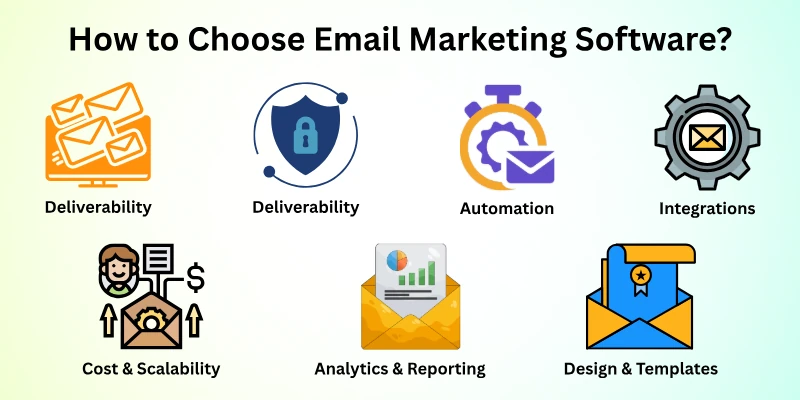
Here’s what to consider in detail:
- Deliverability: Your emails must reach clients’ inboxes, not spam folders. Look for software with strong deliverability rates, proper authentication (SPF, DKIM), and domain reputation management. This ensures important legal updates, consultations, or newsletters actually get read.
- Security & Data Protection: Law firms handle sensitive client information, so encryption, secure storage, and GDPR/CAN-SPAM compliance are essential. Choose software that stores data safely and protects against breaches, unauthorized access, and data leaks.
- Segmentation & Automation: Segment your contacts by practice area, case type, or client stage. Automation allows you to send follow-ups, reminders, or drip campaigns without manual effort. For example, a corporate law firm can automatically send a welcome email to new business clients with relevant guides.
- Design & Templates: Your emails should reflect professionalism. Pick software with responsive templates, easy branding (logo, colours, fonts), and mobile-friendly layouts. This ensures clients view your emails clearly on any device.
- Analytics & Reporting: Track open rates, click-throughs, and conversions to measure performance. Advanced analytics help you understand what works, refine your strategy, and improve ROI.
- Integrations: Good software integrates with your CRM, calendar, or case management system. This syncs client data and streamlines your workflow, allowing targeted campaigns based on real-time client activity.
- Cost & Scalability: Consider pricing based on the number of contacts and features you need. A scalable solution ensures your firm can grow its email campaigns without switching platforms later.
By choosing software that balances security, compliance, design, and automation, lawyers can run professional campaigns that build trust, engage clients, and generate results.
Best Email Marketing Tools for Lawyers
Choosing the right tool can make a huge difference in how efficiently your law firm communicates with clients. Not all platforms are built the same — some focus on automation, others on events or ease of use.
| Tool | Best For | Key Benefits |
| HubSpot | All-in-one marketing + CRM | Combines email, CRM, and automation; great for growing firms. |
| Mailchimp | Solo lawyers & small firms | Easy templates and automation; beginner-friendly. |
| ActiveCampaign | Advanced automation | Segmentation and automated workflows for targeted campaigns. |
| Constant Contact | Events & webinars | Manage invites, registrations, and follow-ups easily. |
| Brevo (Sendinblue) | Budget-friendly email and SMS | Email and SMS reminders are good for client updates. |
| GetResponse | Webinars & lead generation | Email plus webinars and landing pages for client education. |
| Moosend | Small practices | Affordable templates, automation, and basic analytics. |
Quick Tips for Lawyers:
- Start small: Mailchimp or Brevo is great if you’re just beginning.
- Think long-term: HubSpot or ActiveCampaign scales as your firm grows.
- Prioritize security: Ensure the tool protects client data and supports compliance with privacy laws.
Final Note
In this article, we’ve covered email marketing for lawyers and how it helps your firm connect with clients, build trust, and grow your practice. Each step—from targeted campaigns to choosing the right tools—makes a real difference.
From my experience with law firms, even small emails, like monthly newsletters or follow-ups after consultations, can boost engagement and referrals. Email marketing is not just sending messages; it’s about adding value, educating clients, and staying top-of-mind.
Start small, focus on your clients’ needs, and gradually use automation and segmentation. Every email is a chance to show expertise and care, turning campaigns into a tool for growth and stronger client relationships.
FAQs: Email Marketing for Lawyers
Here are some common questions about email marketing for law firms:
Email marketing for lawyers means using email to stay in touch with clients and prospects. It helps lawyers share legal tips, firm news, and offers like free consults to build trust and stay visible online.
No. Buying lists often sends emails to people who did not ask for them. It can lower your results and cause your marketing software to flag your emails as spam.
Good lawyer emails include legal tips or short alerts about important changes in the law, follow‑up after a consultation, or invitations to a free webinar. These keep readers interested and show your authority.
Email marketing uses digital messages, while lawyer direct mail marketing sends physical mail like postcards or greeting cards. Email is faster and cheaper, and direct mail can feel more personal.
Many law firms use tools like Mailchimp or HubSpot to send emails. These let you make lists, design email templates, and track opens or clicks. They help you stay organized and professional.
Lawyers usually send emails once a month or every few weeks. This keeps clients informed without overwhelming them. Too many emails may lead to unsubscribes, so a regular but reasonable schedule works best.





- Be Respectful
- Stay Relevant
- Stay Positive
- True Feedback
- Encourage Discussion
- Avoid Spamming
- No Fake News
- Don't Copy-Paste
- No Personal Attacks
- Be Respectful
- Stay Relevant
- Stay Positive
- True Feedback
- Encourage Discussion
- Avoid Spamming
- No Fake News
- Don't Copy-Paste
- No Personal Attacks
