Content Marketing for Law Firms – Grow Your Legal Practice in 2026
Published: 16 May 2026
Did you know that law firms that publish regular, useful content online can generate up to three times more client inquiries?
Content marketing for law firms’ websites helps your practice reach potential clients, showcase expertise, and build trust. From blog posts to guides and social media updates, content can position your firm as a go-to authority in your field.
This guide will cover detailed strategies for creating, promoting, and optimizing content so your website not only attracts visitors but converts them into loyal clients.
Let’s jump right in.
What is Content Marketing for Lawyers?
Content marketing is the strategic creation and sharing of informative content that attracts, engages, and converts your audience. For law firms, this lawyer content is designed to educate potential clients while demonstrating your professional knowledge.
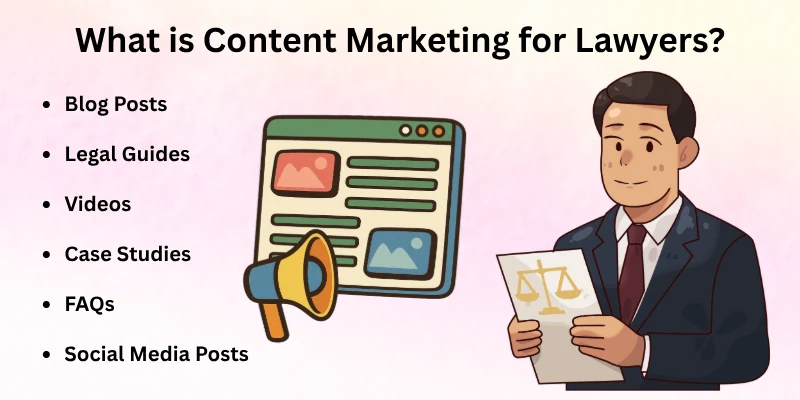
Typical examples include:
- Blog Posts: Answering specific client questions in short, easy-to-read articles.
- Legal Guides: Comprehensive resources covering a legal topic in depth.
- Videos: Explaining complex legal processes in a visual format.
- Case Studies: Highlighting real client experiences and outcomes.
- FAQs: Answering common questions about fees, processes, or eligibility.
- Social Media Posts: Sharing tips, insights, and updates to increase awareness.
The key difference from traditional advertising is that content marketing focuses on providing value first and promoting services second. This approach positions your firm as a trusted authority.
Why Law Firms Need Content Marketing
The legal marketing content is highly competitive, and without content marketing, potential clients may never discover your firm. Its importance can be summarized as follows:
- Builds Authority and Credibility: By sharing informative content, your firm demonstrates expertise and professionalism.
- Improves Search Visibility: Search engines favour websites that consistently provide valuable information, increasing the chances of ranking for relevant queries.
- Attracts Qualified Leads: Content reaches clients actively seeking solutions, meaning those visitors are more likely to contact your firm.
- Provides Long-Term Results: Unlike paid ads, high-quality content continues to generate traffic and leads long after it is published.
Understanding Your Target Audience
Effective content begins with knowing your audience. Consider the following when defining your ideal clients:
- The legal problem they are facing
- Their familiarity with legal processes
- Common fears or misconceptions
- Questions they are likely to search online
For example, someone pursuing a personal injury claim may want to know:
- How to file a claim
- The potential compensation they could receive
- How long the process might take
By addressing these concerns directly in your content, you can increase engagement and make your firm appear approachable and knowledgeable.
Keyword Research for Law Firms
Keyword research is the foundation of content marketing because it tells you what your audience is actively searching for. By understanding search intent, your firm can create content that meets those needs.
Focus on three main keyword types:
- Practice-Area Keywords: “divorce lawyer”, “personal injury attorney”
- Location-Based Keywords: “DUI lawyer in Miami”, “employment attorney in Dallas”
- Question-Based Keywords: “How do I file for workers’ compensation?” or “What to do after a car accident?”
Integrate these keywords naturally into page titles, headings, body content, and image alt text to improve your SEO while keeping the content readable and client-friendly.
Types of Content for Law Firms
A successful content strategy uses a mix of formats to reach clients at every stage of their journey. Each type serves a unique purpose:
1. Blog Posts
Blogs are concise articles focused on answering specific client questions. They are ideal for covering trending legal topics, changes in laws, or common client concerns. Regular blogs help your firm demonstrate ongoing expertise and create opportunities for internal linking.
- Example: “How Long Does a Divorce Take?”
- Benefit: Provides actionable insights for visitors, improves keyword coverage, and encourages repeat visits.
2. Legal Guides
Guides are long-form content pieces that explain legal processes in detail. They may include examples, legal references, or step-by-step instructions. These resources often serve as cornerstone content that supports related blog posts.
- Example: “Complete Guide to Filing a Personal Injury Claim”
- Benefit: Establishes authority, encourages visitors to spend more time on your site, and becomes a reference clients return to.
3. Practice Area Pages
These pages describe the services your firm offers, detailing the types of cases handled, processes involved, and how your firm assists clients.
- Example: “Family Law Services in Los Angeles”
- Benefit: Targets clients actively seeking your services and clearly communicates your expertise.
4. FAQs
FAQ pages address common client questions in a clear, concise manner. They provide quick answers on fees, procedures, and eligibility, helping clients make informed decisions.
- Example: “How Much Does a Lawyer Cost?”
- Benefit: Reduces client confusion and improves website usability while demonstrating helpfulness.
5. Case Studies
Case studies provide real examples of your firm’s successes. They outline the challenge, the solution you implemented, and the result achieved, offering proof of your skills.
- Example: “Winning a $250,000 Settlement for a Personal Injury Client”
- Benefit: Illustrates problem-solving capabilities and distinguishes your firm from competitors.
6. Video Content
Videos are an engaging way to explain legal concepts or introduce your attorneys. They can summarize processes, share tips, or answer common questions visually.
- Example: “3 Things to Know Before Filing for Divorce”
- Benefit: Appeals to visual learners, conveys tone and personality, and encourages social sharing.
7. Attorney Bios
Bio pages highlight your lawyers’ qualifications, experience, awards, and areas of practice. They provide insight into their professional philosophy and client approach.
- Example: Include education, awards, practice areas, and a client-focused approach
- Benefit: Humanizes your firm, builds trust, and encourages potential clients to reach out.
8. Location Pages
These pages target specific cities or regions and include relevant local information, laws, and contact details. They help your firm appear in local searches and Google Maps.
- Example: “Car Accident Lawyer in Chicago”
- Benefit: Connects your firm to local clients and strengthens geographic SEO.
9. Checklists and Resources
Checklists or downloadable resources provide practical guidance for clients preparing for legal matters. They may include step-by-step instructions or forms for self-preparation.
- Example: “Personal Injury Claim Checklist”
- Benefit: Adds immediate value, helps clients stay organized, and can capture email leads.
How to Create High-Quality Content
High-quality content doesn’t just answer questions—it guides clients and makes their experience easier. Focus on these principles:
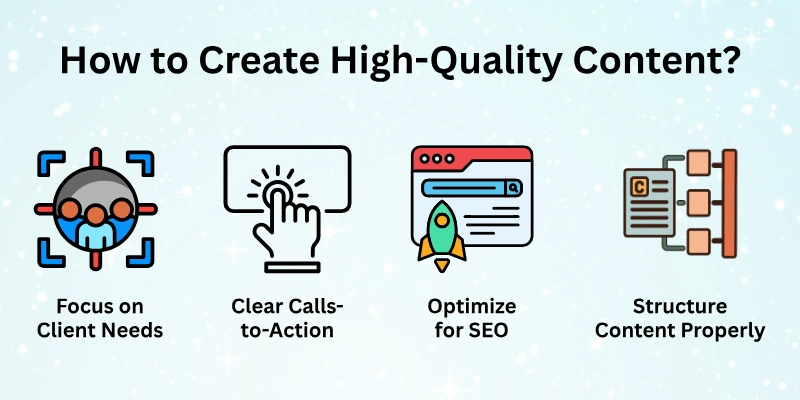
- Focus on Client Needs: Address real concerns using clear, simple language. Avoid legal jargon that could confuse readers.
- Structure Content Properly: Use headings, bullet points, and short paragraphs to make information scannable and digestible.
- Clear Calls-to-Action (CTAs): Guide readers toward the next step, whether scheduling a consultation, calling your office, or downloading a resource.
- Optimize for SEO: Include relevant keywords naturally in titles, headings, body content, image alt text, and internal links.
Content Distribution and Promotion
Publishing content alone isn’t enough. Promote it strategically to reach more potential clients:
- Email Newsletters: Send blogs, guides, or tips directly to subscribers with a brief, compelling summary.
- Social Media: Share content on LinkedIn, Facebook, and YouTube using images, videos, or infographics to attract attention.
- Legal Forums and Q&A Sites: Participate in discussions on platforms like Quora or Reddit, providing helpful answers and linking to relevant content.
- Repurpose Content: Turn blogs into videos, break guides into social posts, or create checklists from FAQs.
- Encourage Sharing: Add social share buttons and make it easy for readers to distribute content to others.
Strategic promotion increases reach, drives engagement, and supports your SEO efforts.
Repurposing Content
Repurposing allows your content to reach more people without creating entirely new material:
- Turn Blogs into Short Videos: Summarize key points visually for audiences who prefer watching.
- Break Guides into Social Posts: Share actionable tips or highlights across social channels.
- Create checklists from FAQs: Provide downloadable resources that simplify complex topics.
Repurposing extends your content’s life, increases visibility, and helps clients engage across multiple platforms.
Updating and Improving Content
Even older content can generate traffic and leads if it’s kept current:
- Add Updated Information: Include recent laws, statistics, or procedural changes.
- Improve Keyword Usage: Refresh keywords to match search trends and client queries.
- Fix Broken Links and Outdated Facts: Ensure all references, examples, and links remain accurate.
Regular updates maintain authority, improve SEO, and enhance user experience.
Common Mistakes to Avoid
Avoid these common pitfalls to make your content marketing more effective:
- Writing Without a Plan: Random posts can confuse readers and dilute your message.
- Using Complex Legal Terminology: Overly technical language can alienate potential clients.
- Ignoring SEO: Without proper optimization, your content may never reach your target audience.
- Neglecting Promotion: Publishing content alone isn’t enough; share it strategically.
- Failing to Track Results: Without monitoring performance, you won’t know what’s working or what needs improvement.
Steering clear of these mistakes ensures your content marketing strategy is efficient, consistent, and more likely to convert visitors into clients.
Final Words
Alright, we’re at the end of our guide, so let’s take a quick look back. We’ve explored how content marketing for law firm websites helps attract potential clients, establish authority, and increase engagement.
With consistent, high-quality content, your website can become a key tool for generating inquiries and building trust. Implement these strategies step by step, and watch your online presence grow stronger.
Thanks for following along, and best of luck applying these tips to your law firm!
FAQs: Content Marketing for Law Firms
Here are the top FAQs about content marketing for law firms, covering key tips to attract clients and grow your online presence:
The best content includes blogs, legal guides, FAQs, case studies, videos, and attorney bios. Each type targets clients at different stages, from research to hiring. Using a mix ensures your firm reaches more people and answers a wide range of legal questions.
Publishing regularly, like one to two posts per week, keeps your website active and visible in search results. Consistency signals expertise to search engines and builds trust with potential clients. Even updating older content frequently can improve performance and engagement.
Focus on client needs by answering common questions in simple language and using real examples. Include clear calls to action like scheduling consultations or downloading resources. Optimizing the content for keywords helps it reach people searching for legal help online.
Track website traffic, time spent on pages, and leads generated from content forms. Social media engagement and shares can also show how well content resonates with clients. Monitoring these metrics helps you improve and focus on strategies that work.
Yes, video content is highly engaging and simplifies complex legal topics. Attorneys can create short educational videos or introduce themselves to build trust. Videos also increase website visits and encourage sharing on social platforms.
Content for lawyers educates and informs rather than directly promoting services. Ads focus on immediate conversion, while content builds trust and authority over time. This approach attracts clients who are searching for answers before they decide on a lawyer.
Repurpose blogs into videos, break long guides into social media posts, or create checklists from FAQs. This saves time while expanding your content’s visibility across different channels. Repurposing also reinforces your firm’s authority in multiple formats.




- Be Respectful
- Stay Relevant
- Stay Positive
- True Feedback
- Encourage Discussion
- Avoid Spamming
- No Fake News
- Don't Copy-Paste
- No Personal Attacks
- Be Respectful
- Stay Relevant
- Stay Positive
- True Feedback
- Encourage Discussion
- Avoid Spamming
- No Fake News
- Don't Copy-Paste
- No Personal Attacks
