Key Advantages and Disadvantages of Referral Marketing in 2026
Published: 28 Jun 2026
Did you know that 83% of consumers trust recommendations from friends and family more than traditional ads?
Understanding the advantages and disadvantages of referral marketing can help businesses use this trusted strategy effectively.
From saving costs to boosting customer loyalty, referral marketing has clear benefits—but it also comes with challenges you should know.
Let’s get started!
Top Benefits of Referral Marketing
Referral marketing is a powerful way for businesses to grow by turning happy customers into promoters.
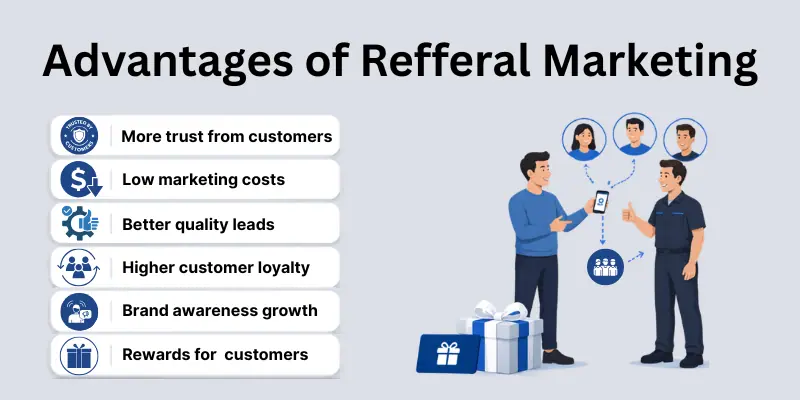
Here are its top advantages:
- More trust from customers
- Low marketing costs
- Better quality leads
- Higher customer loyalty
- Brand awareness growth
- Rewards for existing customers
Let’s explore each of these pros in detail with simple examples:
1. More Trust from Customers
Referral marketing builds trust because people tend to believe recommendations from friends or family more than ads. When someone you know shares a product, you feel it is reliable.
Example: If a friend tells you about a helpful learning app, you are more likely to try it than if you just saw an online advertisement.
2. Low Marketing Costs
This method costs less than traditional advertising because businesses reward customers instead of paying for expensive campaigns. Rewards are often smaller than ad expenses, making it budget-friendly.
Example: Dropbox offered extra storage space to users who referred friends. This helped them grow without spending heavily on ads.
3. Better Quality Leads
Referrals bring customers who are already interested in your product because someone they trust recommended it. These leads are more likely to become loyal customers.
Example: A local gym gets new members when happy clients invite friends. These referrals usually sign up faster than random visitors.
4. Higher Customer Loyalty
Customers who refer others feel connected to your brand. This strengthens loyalty and increases repeat purchases.
Example: Starbucks gives points to customers who refer friends. People return more often and keep sharing the brand.
5. Brand Awareness Growth
Every referral introduces your brand to new people, helping it spread quickly without paid campaigns.
Example: Uber grew fast because every rider could invite friends and earn free rides, spreading brand awareness widely.
6. Rewards for Existing Customers
Referral programs make customers feel appreciated by offering incentives like discounts, points, or free products, motivating them to promote your business.
Example: Amazon gives gift cards to customers who refer someone who makes a purchase, encouraging continued referrals.
Main Disadvantages of Referral Marketing
While referral marketing has many benefits, it also has some drawbacks that businesses should know.
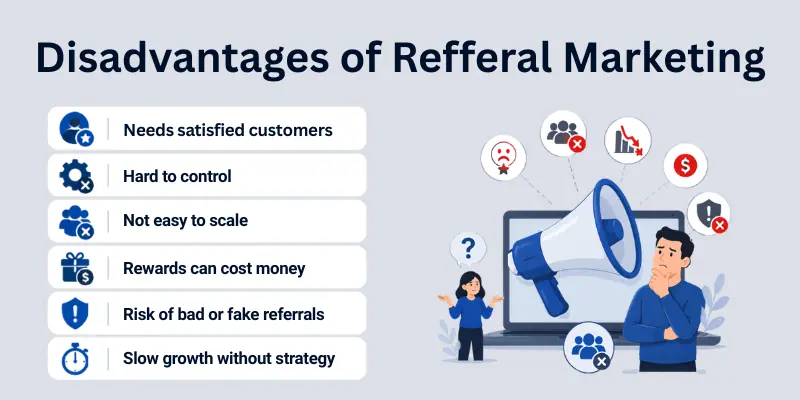
Here are the main disadvantages:
- Needs satisfied customers first
- Hard to control the process
- Not easy to scale to large audiences
- Referral rewards can cost money
- Risk of bad or fake referrals
- Slow growth without a clear strategy
Let’s explore these cons in detail with examples:
1. Needs Satisfied Customers First
Referral marketing only works if customers are happy with your product or service. Unhappy customers will not recommend your business.
Example: A restaurant cannot rely on referrals if customers are dissatisfied with food or service.
2. Hard to Control the Process
You cannot fully control how customers share your brand or what they say. Sometimes referrals may not represent your business accurately.
Example: A customer might exaggerate the features of a software, creating unrealistic expectations for new users.
3. Not Easy to Scale to Large Audiences
Referral marketing grows naturally but slowly. It may take time to reach a big audience without additional marketing support.
Example: A small local store may get a few referrals each month, but it takes longer to expand nationally without ads.
4. Referral Rewards Can Cost Money
Offering rewards costs money, which can add up if many customers participate in the program. Businesses need to balance rewards with profit.
Example: Giving free products for every referral can become expensive for an online store with limited margins.
5. Risk of Bad or Fake Referrals
Some people might try to cheat the system or give fake referrals, which can waste resources and reduce effectiveness.
Example: Online platforms may face fake sign-ups just to get referral bonuses.
6. Slow Growth Without a Clear Strategy
Referral programs need planning. Without clear goals, rules, and tracking, growth can be slow or inconsistent.
Example: A new app without a proper referral plan may not gain enough users even if some people share it casually.
Tips to Improve Your Referral Marketing
Referral marketing works best when you plan it carefully. Here are some simple tips for beginners to make it more effective:
- Use clear rewards customers want: Offer rewards that are valuable and easy to understand, like discounts, points, or free products.
- Track every referral: Keep track of who refers whom, so you can reward customers accurately and see which strategies work best.
- Ask customers at the right time: Request referrals when customers are happy with your product or service, not before.
- Avoid too many rules: Make the referral process simple. Complicated rules can confuse customers and reduce participation.
Common Mistakes to Avoid in Referral Marketing
Referral marketing can bring great results, but some mistakes can reduce its effectiveness. Avoid these common errors:
- Making rewards too small: If rewards are not attractive, customers won’t bother referring others.
- Not tracking results: Without tracking, you can’t see which referrals work or who deserves rewards.
- Ignoring unhappy customers: Referral programs work only when customers are satisfied. Ignoring complaints can stop referrals.
- Overcomplicating the process: Too many steps or confusing rules can discourage customers from participating.
- Relying on referrals alone: Referral marketing works best with other marketing methods. Don’t depend on it entirely.
Final Words
So guys, it’s time to wrap up. In this article, we’ve covered the advantages and disadvantages of referral marketing in detail.
Personally, I recommend starting small and offering rewards that truly motivate your customers. Test what works, track results, and adjust your program as needed.
Don’t wait, create your referral program today and start growing your business with happy customers spreading the word!
FAQs: Advantages and Disadvantages of Referral Marketing
Here are some common questions about referral marketing, answered in a simple way to help you understand how it works and how to use it effectively:
The main advantages include more trust from customers, lower marketing costs, better quality leads, higher customer loyalty, brand awareness growth, and rewards for existing customers.
Disadvantages include needing satisfied customers first, difficulty controlling the process, costs for rewards, risk of fake referrals, and slow growth without a clear strategy.
Offer clear rewards, track every referral, ask for referrals at the right time, and keep the process simple. Avoid common mistakes like small rewards or ignoring unhappy customers.
Yes! Small businesses can benefit greatly because referral marketing is low-cost and builds trust quickly. Just start with a simple program and focus on happy customers.
Rewards that are simple and valuable work best, such as discounts, free products, points, or cash incentives. The key is to motivate customers without overcomplicating the program.
Results can vary, but most businesses see growth within a few weeks to a few months. Referral programs grow naturally as more satisfied customers share your brand.
Yes! Referral marketing works both online (through apps, email, or social media) and offline (through word-of-mouth in stores or events). The principle is the same: satisfied customers share your business.




- Be Respectful
- Stay Relevant
- Stay Positive
- True Feedback
- Encourage Discussion
- Avoid Spamming
- No Fake News
- Don't Copy-Paste
- No Personal Attacks
- Be Respectful
- Stay Relevant
- Stay Positive
- True Feedback
- Encourage Discussion
- Avoid Spamming
- No Fake News
- Don't Copy-Paste
- No Personal Attacks
