Types of Website Traffic: Easy & Complete Beginner Guide
Published: 1 Sep 2026
Many websites get traffic from different sources, but most beginners do not understand where these visitors come from.
The truth is, not all traffic works the same way. Some visitors come from search engines, while others come from social media or direct visits.
In this guide on types of website traffic, I will explain each type in simple words so you can understand it easily.
You will also learn how each traffic source works, why it matters, and how you can use it to grow your website step by step.
Types of Website Traffic
Website traffic means all the visitors who come to your website from different places. These visitors can find you through search engines, social media, emails, ads, or even direct searches.
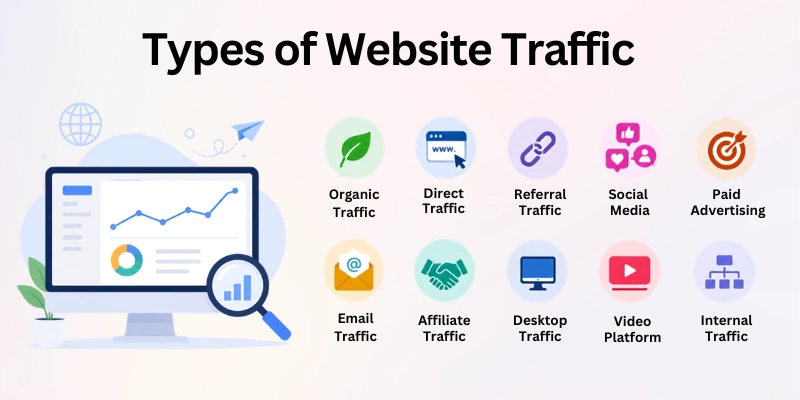
Understanding traffic types helps you see where your audience comes from and how people interact with your site.
Here are the main website traffic types:
- Organic Traffic
- Direct Traffic
- Referral Traffic
- Social Media Traffic
- Paid Advertising Traffic
- Email Traffic
- Affiliate Traffic
- Desktop Traffic
- Video Platform Traffic
- Internal Traffic
Let’s anaylze them in detail.
1. Organic Traffic
Organic Google traffic means people find your website on search engines like Google. They search for something and click on your website without seeing any ad. This traffic is free and comes from good content.
This type of traffic is very valuable because it grows slowly but stays for a long time. If your content is helpful, Google shows it to more people again and again.
- Write helpful content that answers real questions
- Use simple keywords that people search for daily
- Add clear headings and an easy structure
- Update old blog posts to keep them fresh
2. Direct Traffic
Direct traffic means people visit your website by typing your website name in the browser. They already know your brand, so they come directly without searching.
This shows strong trust. People remember your website and come back again. It usually happens when your brand becomes popular.
- Use a simple and easy-to-remember website name
- Share your website link everywhere
- Build trust with good content and design
- Encourage users to bookmark your site
3. Referral Traffic
Referral traffic comes from other websites. When someone clicks your link on another website, they land on your site.
This traffic is very useful because it brings new audiences. It also helps build your website authority.
- Get backlinks from trusted websites
- Write guest posts on blogs
- Share your link in forums or communities
- Build relationships with other website owners
4. Social Media Traffic
Social media traffic comes from platforms like Facebook, Instagram, and Twitter. People click your link from posts, stories, or bio links.
This type of traffic can grow very fast if your content gets attention. It is great for building an audience.
- Post regularly on social platforms
- Share your blog links with clear captions
- Use simple and trending hashtags
- Engage with your audience through comments
5. Paid Advertising Traffic
Paid traffic comes from ads. You pay platforms like Google or Facebook to show your website to users.
This traffic gives quick results, but it costs money. It works well when you target the right audience.
- Start with a small budget
- Target the right audience based on interest
- Write clear and attractive ad text
- Track results and improve your ads
6. Email Traffic
Email traffic comes when people click your website link from emails. These emails can be newsletters or offers.
This traffic is very powerful because users already trust you. They have joined your email list.
- Build an email list with useful content
- Send simple and helpful emails
- Add clear links to your website
- Do not send too many emails
7. Affiliate Traffic
Affiliate traffic comes from people who promote your website or product. They share your link and earn a small commission.
This helps you reach more people without doing all the work yourself. It is a smart way to grow traffic.
- Create an affiliate program
- Give fair commission to partners
- Work with trusted affiliates
- Provide ready-made links and banners
8. Desktop Traffic
Desktop traffic means users visit your website using a computer or laptop. These users often spend more time on websites.
They usually read content carefully and explore more pages. This traffic is important for blogs and detailed content.
- Make your website easy to read on a desktop
- Use a clean layout and a simple design
- Add clear menus and navigation
- Avoid slow-loading pages
9. Video Platform Traffic
Video traffic comes from platforms like YouTube. People watch a video and click your website link from the description or comments.
This traffic is growing very fast because people love video content. It helps you reach a wider audience.
- Create simple and helpful videos
- Add your website link in the video description
- Ask viewers to visit your site
- Use clear titles and thumbnails
10. Internal Traffic
Internal traffic comes from your own website. When users click from one page to another, it counts as internal movement.
This helps users stay longer on your site. It also improves your SEO and user experience.
- Link your pages with each other
- Add related posts in your content
- Use clear buttons and links
- Guide users to the next step
Tools to Track Website Traffic
When you run a website, you need to know what is happening on it. You should know where your visitors come from and what they do after they arrive. This helps you understand what works and what needs improvement.
Traffic tools make this job easy. They show clear data in simple reports. You can use this data to grow your website step by step and make better decisions.
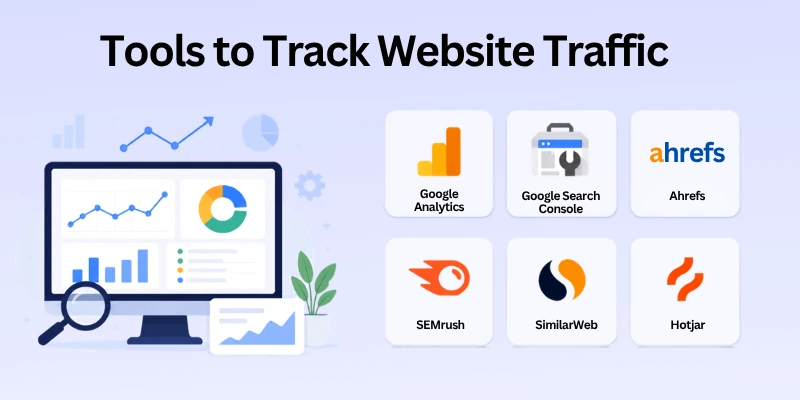
Here are some useful tools you can start with:
Google Analytics
- Track how many people visit your website
- See which pages users like the most
- Find out where your traffic comes from
- Understand how long users stay on your site
Google Search Console
- See how your site appears in Google search
- Check which keywords bring visitors
- Find and fix website errors
- Improve your search ranking step by step
Ahrefs
- Track backlinks and referral traffic
- See which keywords your site ranks for
- Explore new content ideas
- Analyze competitor websites
SEMrush
- Study your competitors’ traffic sources
- Track both paid and organic traffic
- Find keyword opportunities
- Improve your marketing strategy
SimilarWeb
- Get a quick overview of your website traffic
- See traffic sources like social, search, and direct
- Compare your website with others
- Understand audience behavior
Hotjar
- See how users move on your website
- Track clicks using heatmaps
- Understand user behaviour in real time
- Improve design and user experience
Using these tools regularly will help you smartly grow your website. Start with one tool, learn it well, and then move to others as your website grows.
How to Increase Each Type of Website Traffic
Growing website traffic takes time, but you can do it step by step. Each traffic type needs a different approach, so you should work on all of them in a smart way. When you use simple and clear strategies, you can bring more visitors and keep them engaged.
Here are easy ways to increase each type of website traffic:
- Organic Traffic: Write helpful content and use simple keywords people search on Google
- Direct Traffic: Build a strong brand so people remember and visit your site directly
- Referral Traffic: Get links from other trusted websites and blogs
- Social Media Traffic: Share your content regularly on social platforms
- Paid Advertising Traffic: Run targeted ads with a clear message and a small budget
- Email Traffic: Send useful emails with clear links to your website
- Affiliate Traffic: Work with partners who promote your website
- Desktop Traffic: Make your website clean and easy to use on computers
- Video Platform Traffic: Add your website link in video descriptions and content
- Internal Traffic: Link your pages to guide users from one page to another
Conclusion
So guys, it’s time to conclude. In this article, we’ve covered types of website traffic in detail. I personally recommend focusing first on organic and social traffic because they help you build long-term growth without high costs.
Once you understand these basics, you can slowly explore other traffic sources and combine them for better results. Remember, consistency matters more than speed in website growth.
If you found this guide helpful, start applying these methods today and watch your website grow step by step. Keep learning and keep improving your strategy.
FAQs: Types of Website Traffic
Before we end, let’s look at some common questions that beginners usually have about website traffic. These answers will help clear your confusion and give you more clarity about how different traffic sources work.
The main types of website traffic include organic, direct, referral, social, paid, email, affiliate, desktop, video, and internal traffic.
Each type shows how visitors come to your website from different places. Understanding all types helps you improve your overall traffic strategy.
Traffic source types explain where your website visitors come from. These sources include search engines, social media, emails, ads, and other websites.
Here are the main sources:
- Search engines like Google (organic traffic)
- Social media platforms like Facebook and Instagram
- Paid ads on Google or social media
- Referral links from other websites
Paid Traffic for a website means visitors who come from ads on Google, Facebook, or other platforms. You pay money to show your website to the right audience.
It gives quick results but stops when you stop running ads.
Direct traffic shows people already know your website and visit it directly. It means your brand is becoming strong and memorable. This traffic often comes from loyal users and returning visitors.
Social media traffic grows when you share useful and engaging content regularly. Platforms like Facebook, Instagram, and YouTube help bring new visitors. Always add your website link in posts, bios, or captions.
Yes, email traffic is still very powerful for website growth. It brings visitors who already trust your content or brand. You can send newsletters, updates, or offers with website links.




- Be Respectful
- Stay Relevant
- Stay Positive
- True Feedback
- Encourage Discussion
- Avoid Spamming
- No Fake News
- Don't Copy-Paste
- No Personal Attacks
- Be Respectful
- Stay Relevant
- Stay Positive
- True Feedback
- Encourage Discussion
- Avoid Spamming
- No Fake News
- Don't Copy-Paste
- No Personal Attacks
