Types of Link Building: Start Growing Your Website in 2026
Published: 7 Apr 2026
Link building is the process of getting other websites to link to your website. Think of it as a vote of confidence. When another site links to yours, it tells search engines that your content is valuable and trustworthy.
Why does this matter????
Websites with strong links rank higher on Google, get more visitors, and build credibility with their audience. The more quality links you have, the better your chances of standing out online.
In this article, we will explore the different types of link building in simple, easy-to-understand terms. You’ll learn which strategies work best and how to use them to grow your website’s authority.
Now, let’s dive into the main types of link building and why they matter.
Types of Link Building
There are several ways to build links to your website. Each method helps you get more traffic, improve your SEO, and grow your online authority.
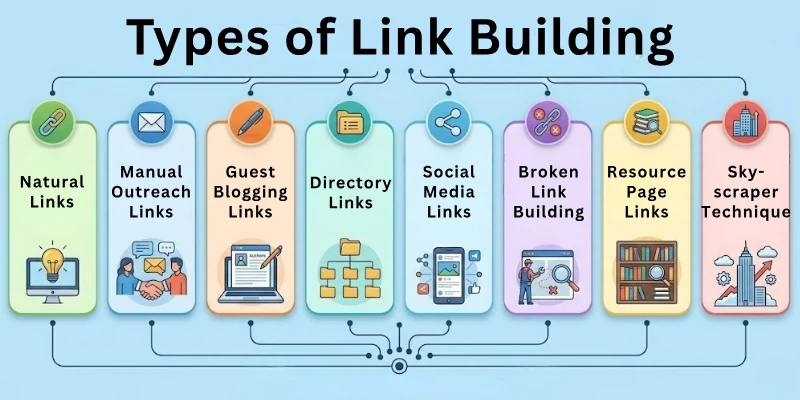
- Natural Links
- Manual Outreach Links
- Guest Blogging Links
- Directory Links
- Social Media Links
- Broken Link Building
- Resource Page Links
- Skyscraper Technique
Let’s look at the main types:
1. Natural Links
Natural links are the most valuable because they happen without you asking. Other websites link to your content simply because it’s helpful or interesting.
- Example: You write a complete guide on “Easy Healthy Recipes,” and a popular food blog shares it in their article. They didn’t ask; they just found it useful.
- Why it works: Search engines see these links as genuine endorsements of your content.
- Tip: Focus on producing high-quality, helpful content. The better your content, the more natural links it will earn.
2. Manual Outreach Links
Manual outreach is when you actively reach out to website owners, bloggers, or influencers and request a link to your content.
- Example: You run a travel website and email a popular travel blog, asking them to feature your “Top 10 Budget Travel Tips.”
- Why it works: Personalised outreach increases your chances of getting noticed and linked.
- Tip: Always explain how your content adds value to their audience. Avoid generic emails; they rarely work.
3. Guest Blogging Links
Guest blogging involves writing articles for other websites or blogs and including a link back to your site.
- Example: You write a “Digital Marketing Tips” post for a marketing blog and include a link to your detailed SEO guide.
- Why it works: You reach a new audience, build credibility, and gain a quality backlink at the same time.
- Tip: Pick blogs relevant to your niche. Low-quality or unrelated blogs won’t help your SEO.
4. Directory Links
Directory links are created by listing your website in online directories or business listings.
- Example: Adding your business to Google My Business, Yelp, or industry-specific directories.
- Why it works: Directories help search engines understand your business and improve visibility.
- Tip: Only use trusted directories. Avoid spammy sites, as they can hurt your SEO.
5. Social Media Links
Sharing content on social media can drive traffic and sometimes generate backlinks when others share your posts.
- Example: Posting your blog on LinkedIn or Twitter, and other bloggers link to it in their articles.
- Why it works: Social signals can increase exposure and lead to natural backlinks.
- Tip: Be active and engage with your audience. The more people see and share your content, the higher the chance of getting links.
6. Broken Link Building
Broken link building is finding broken links on other websites and offering your content as a replacement.
- Example: A website has a broken link to an old SEO guide. You contact them and suggest your updated guide in its place.
- Why it works: Website owners appreciate fixing broken links, and you gain a valuable backlink.
- Tip: Use tools like Ahrefs, SEMrush, or BrokenLinkCheck to discover broken links in your niche.
7. Resource Page Links
Resource page links are when your content is added to a curated list of helpful resources.
- Example: A travel website adds your “Best Travel Tips” article to their “Useful Resources” page.
- Why it works: Resource pages are trusted by both users and search engines, making these links highly valuable.
- Tip: Make your content easy to include and highly relevant to the resource page topic.
8. Skyscraper Technique
The skyscraper technique involves creating better, more detailed content than existing popular pages and reaching out for backlinks.
- Example: A competitor has a basic SEO guide with many backlinks. You create a longer, updated, and visually appealing SEO guide, then contact sites linking to the competitor to suggest your version.
- Why it works: People naturally prefer linking to the best, most helpful content.
- Tip: Analyse the top content first, then add more depth, examples, or updated information to make your content stand out.
Best Practices for Link Building
Building links is powerful, but doing it the right way matters. Follow these tips to get the best results:
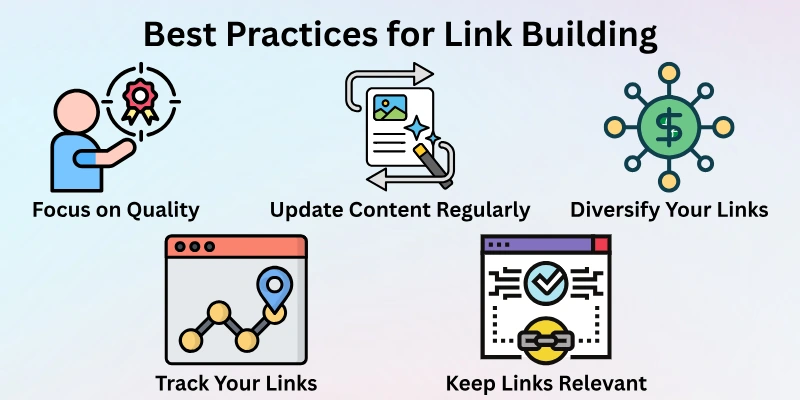
1. Focus on Quality Over Quantity
- One link from a trusted website is better than dozens from low-quality sites.
- Tip: Aim for links from websites that are relevant to your topic.
2. Keep Links Relevant
- Links work best when they match your content.
- Example: A blog about healthy recipes should get links from food or wellness websites, not car blogs.
3. Avoid Spammy Links
- Don’t buy links or use shady tactics. Search engines may penalize your site.
- Tip: Always choose trustworthy sites and real connections.
4. Diversify Your Links
- Use a mix of different types: guest posts, social shares, directories, and natural links.
- Tip: This makes your link profile look natural and strong.
5. Track Your Links
- Keep an eye on which links bring traffic and improve your ranking.
- Tip: Use free tools like Ahrefs, Moz, or Google Search Console.
6. Update Your Content Regularly
- Fresh content attracts more links.
- Example: Update old blog posts with new tips or statistics to get more backlinks.
Common Link Building Mistakes to Avoid
After exploring the different types of link building, it’s important to know what not to do. Making mistakes can slow your SEO progress or even hurt your website’s rankings.
Here are the most common link-building mistakes and how to avoid them:
- Buying Low-Quality Links: Paying for links from spammy websites can harm your site’s reputation. Focus on earning real, natural backlinks instead.
- Overusing Anchor Text: Using the same keywords for every link looks unnatural. Mix it up with different phrases to keep it organic.
- Ignoring Broken or Outdated Links: Dead links on your site or others’ sites can lower your authority. Check your links regularly and fix or replace them.
- Not Diversifying Link Types: Relying on only one type of link limits your SEO growth. Use a mix of guest posts, social links, and resource page links.
- Linking Irrelevant Sites: Links should match your niche. Irrelevant backlinks don’t help SEO and can confuse readers and search engines.
Final Words
In this article, we have covered types of link building in detail, explained how each works, and shared tips to help you grow your website’s traffic and authority. From natural links to the skyscraper technique, every method has its place, depending on your goals and resources.
Personal Recommendation: If you’re just starting, focus first on creating high-quality, helpful content that naturally attracts links. Combine it with guest posts and social sharing to build momentum. Over time, you can explore advanced strategies like broken link building and resource page links to strengthen your SEO further.
Don’t wait to boost your website’s ranking! Pick one link-building method today, implement it consistently, and watch your traffic and credibility grow. Start now and take the first step toward a stronger, more visible website!
FAQs: Types of Link Building
Below are answers to common questions related to the types of link building and how they work in SEO.
The most common type of link building is earning natural links by creating helpful content that other websites want to share. This includes blog posts, guides, infographics, and resources.
- Example: A health blog linking to your “Easy Healthy Recipes” guide is a natural link.
- Tip: Focus on creating content that solves a problem or answers a question for your audience.
Link building is a key factor for search engine ranking because links act like votes of confidence. The more high-quality links your website has, the higher it can rank on Google. This increases visibility, traffic, and trust with your audience.
The best SEO link-building strategy combines multiple methods rather than relying on one. For example:
- Create high-quality, shareable content.
- Guest blog on relevant websites.
- Reach out for resource page links.
- Fix broken links on other sites by offering your content.
This mix helps your website earn strong, natural backlinks over time.
Yes! Even small websites can benefit from link building. By getting links from relevant blogs, directories, and social media shares, small sites can improve rankings quickly. Link-building examples like guest posts or resource page links often give small websites their first traffic boost.
A beginner-friendly link-building campaign can be simple:
- Identify high-authority websites in your niche.
- Create helpful content worth linking to.
- Reach out politely to request links.
- Track your links to see which strategies work best.
Consistency is more important than quantity when building links.
Avoid buying links or using spammy tactics; they can harm your SEO. Focus on relevant, high-quality links instead. Remember: one strong link from a trusted site is better than hundreds of weak links.


- Be Respectful
- Stay Relevant
- Stay Positive
- True Feedback
- Encourage Discussion
- Avoid Spamming
- No Fake News
- Don't Copy-Paste
- No Personal Attacks
- Be Respectful
- Stay Relevant
- Stay Positive
- True Feedback
- Encourage Discussion
- Avoid Spamming
- No Fake News
- Don't Copy-Paste
- No Personal Attacks
