Types of Keywords in SEO for Higher Google Rankings
Published: 5 Apr 2026
If you want your website to show up in Google, you must understand keywords, not just what they are, but the different types and how each one works.
Keywords are the words and phrases people type into search engines when they want information, want to buy something, or want to find a specific site. When you use the right types of keywords in your content and strategy, your pages can reach the right people at the right time.
In this article, you will learn all the main types of keywords used in SEO, how they differ, real examples, and how to apply them to your content strategy like a pro.
Whether you’re new to SEO or want to improve your rankings, this guide will make keyword planning simple and actionable.
Different Types of Keywords
There are many types of keywords, each serving a different purpose. Some are category keywords, some are marketing keywords, and others help people learn, buy, or find specific content.
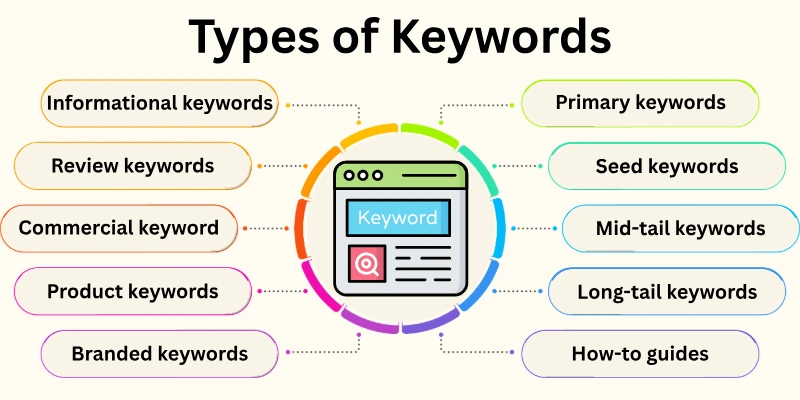
Here is a list of important keyword types in SEO you should know:
- Informational keywords
- Review keywords
- LSI (Latent Semantic Indexing) keywords
- Related vertical keywords
- Commercial keywords
- Transactional keywords
- Product keywords
- Product-specific keywords
- Product-defining keywords
- Branded keywords
- Competitor keywords
- Navigational keywords
- Locational keywords
- Geotargeted keywords
- Market segment keywords
- Market-specific keywords
- Customer-defining keywords
- Customer-centric keywords
- Intent-targeting keywords
- Primary keywords
- Secondary keywords
- Seed keywords
- Short-tail keywords
- Mid-tail keywords
- Long-tail keywords
- Exact match keywords
- Phrase match keywords
- Broad match keywords
- Negative keywords
- Evergreen (long-term) keywords
Let’s cover them in detail.
1. Informational Keywords
Not every search is about buying, many are about learning. Informational keywords attract readers seeking guidance, explanations, or insights. They are perfect for content that educates, solves problems, or clarifies confusion. These keywords help establish authority and trust in your niche.
Key characteristics
- Usually phrased as questions or “how-to” statements
- Low commercial intent
- High engagement potential
- Great for building backlinks
Keywords Examples
- How does SEO work
- Tips for healthy eating
- Benefits of meditation
When to use them
- Blog posts
- Tutorials and guides
- FAQ pages
2. Review Keywords
People love hearing opinions before they buy. Review keywords capture searchers who want comparisons or ratings. They are perfect for showcasing products, sharing experiences, or guiding decisions. Review content builds credibility and influences purchasing behaviour.
Key characteristics
- Include words like “review”, “best”, or “top”
- Medium commercial intent
- Encourages informed decision-making
Examples
- iPhone 15 review
- Best noise-cancelling headphones 2026
- Top email marketing software
When to use them
- Product review blogs
- Comparison articles
- Video content
3. LSI (Latent Semantic Indexing) Keywords
LSI keywords are related terms that give context to your main keyword. They help search engines understand the topic more clearly. Including them naturally enriches content and can help you rank for multiple relevant searches.
Key characteristics
- Semantically linked to the main keyword
- Improves relevance and SEO
- Prevents keyword stuffing
- Expands reach to related searches
Examples
- Main keyword: “digital marketing”
- LSI: online marketing, SEO, content strategy, social media marketing
When to use them
- Blog posts
- Landing pages
- Product pages
4. Related Vertical Keywords
These keywords target subcategories or related niches. They help you attract audiences who are interested in similar products or topics. Related vertical keywords are great for expanding content and connecting to new potential customers.
Key characteristics
- Linked to sub-niches or categories
- Helps diversify content targeting
- Attracts a highly relevant audience
- Supports cross-selling or content expansion
Examples
- Coffee: espresso machines, coffee grinders, specialty beans
- Fitness: yoga mats, protein powders, resistance bands
When to use them
- Niche blogs
- Product recommendation pages
- Cross-category landing pages
5. Commercial Keywords
These keywords target users who are considering a purchase but haven’t decided yet. They indicate research intent and are ideal for content that helps users compare options or evaluate products.
Key characteristics
- Often include “best”, “top”, or “compare”
- Medium to high commercial intent
- Targets research-phase buyers
- Generates qualified leads
Examples
- Best laptops for students
- Compare SEO tools
- Top email marketing platforms
When to use them
- Comparison blogs
- Product/service pages
- Landing pages
6. Transactional Keywords
When a user is ready to buy, they use transactional keywords. These words often trigger product pages or checkout actions. They’re high-converting and critical for driving sales.
Key characteristics
- High purchase intent
- Include “buy”, “order”, or “discount”
- Lower search volume but high conversion
- Targets ready-to-act users
Examples
- Buy iPhone 15 online
- Order protein powder
- Discount laptops
When to use them
- Product pages
- Checkout pages
- Paid ad campaigns
7. Product Keywords
Product keywords refer to general product or service names. They help users find what they’re looking for in a broad sense. They’re useful for visibility and awareness.
Key characteristics
- Directly reference a product or service
- Medium commercial intent
- Can be general or category-level
- Improves product discovery
Examples
- iPhone
- Running shoes
- Email marketing software
When to use them
- Product pages
- Landing pages
- eCommerce stores
8. Product-Specific Keywords
These are more precise than product keywords, often including exact models, specifications, or versions. They attract buyers ready to purchase a specific item.
Key characteristics
- Highly descriptive
- Lower volume but high conversion
- Targets ready-to-buy audience
- Perfect for product campaigns
Examples
- iPhone 15 Pro Max 256GB
- Nike Air Zoom Pegasus 40
- HubSpot Marketing Hub Professional
When to use them
- Product detail pages
- Paid search campaigns
- Email marketing
9. Product-Defining Keywords
These keywords describe the features or benefits of a product. They highlight what makes a product unique and help users understand its value.
Key characteristics
- Focus on attributes or benefits
- Supports product differentiation
- Often combined with commercial keywords
- Helps buyers make informed decisions
Examples
- Lightweight waterproof running shoes
- High-speed fiber optic router
- Organic cold brew coffee
When to use them
- Product pages
- Marketing campaigns
- Landing pages
10. Branded Keywords
Branded keywords mention a specific brand. Users searching these terms already know the brand and are likely further along in the buying journey. They help businesses capture their loyal audience and strengthen brand recognition.
Key characteristics
- Includes the brand name
- Strong commercial intent
- Targets existing brand awareness
- Often lower competition than generic terms
Examples
- Apple iPhone 15
- Nike Air Max
- HubSpot CRM
When to use them
- Brand campaigns
- Retargeting ads
- Product pages
11. Competitor Keywords
Sometimes the best way to find customers is by looking at your competitors. Competitor keywords target the terms that other brands rank for, helping you capture part of their audience. These keywords are great for understanding market gaps and creating content that competes effectively.
Key characteristics
- Mention competitor products or services
- Useful for competitive analysis
- Medium to high commercial intent
- Can drive traffic from your rivals’ audience
Examples
- “HubSpot alternatives”
- “Nike vs Adidas running shoes”
- “Shopify vs WooCommerce”
When to use them
- Comparison blogs
- Paid campaigns
- Competitive SEO strategy
12. Navigational Keywords
Some searches are about finding a specific site or page. Navigational keywords help users reach a brand or platform quickly. Businesses can use them to ensure their pages appear at the top when people are searching for their website or services.
Key characteristics
- Include brand names or website pages
- Low commercial intent but high traffic relevance
- Focused on directing users
- Important for branded visibility
Examples
- Facebook login
- HubSpot CRM login
- Nike official store
When to use them
- Homepage SEO
- Brand campaigns
- App download pages
13. Locational Keywords
These keywords target a specific geographic location. They are essential for local businesses wanting to attract nearby customers. Including locational keywords helps you appear in local search results and Google Maps.
Key characteristics
- Include city, state, or region
- High relevance for local searches
- Can boost foot traffic or local leads
- Often paired with product or service keywords
Examples
- Coffee shops in Boston
- SEO agency in Karachi
- Dentists near me
When to use them
- Local business pages
- Service landing pages
- Google Business listings
14. Geotargeted Keywords
Geotargeted keywords go beyond simple location mentions, they are optimized for regional user intent. They can include neighbourhoods, landmarks, or broader regions, ensuring you reach the right audience in the right place.
Key characteristics
- Optimized for regional or hyperlocal intent
- Improves local SEO and traffic
- Often combined with product or service keywords
- Supports local campaigns
Examples
- Best Italian restaurant in downtown LA
- Digital marketing services near Central Park
- Wedding photographers in Manhattan
When to use them
- Local landing pages
- Location-specific blog posts
- Paid local ad campaigns
15. Market Segment Keywords
Market segment keywords are used to target a specific audience group based on demographics, interests, or behaviour. They are useful for businesses wanting to reach a defined market segment and improve campaign relevance.
Key characteristics
- Focused on audience groups
- Medium commercial intent
- Helps improve conversion rates
- Useful for niche targeting
Examples
- Running shoes for women
- Laptops for students
- Vegan protein supplements
When to use them
- Niche landing pages
- Targeted ads
- Content marketing for specific groups
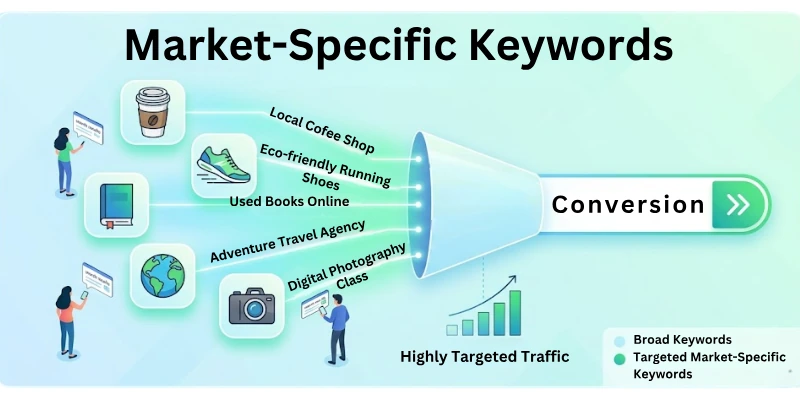
16. Market-Specific Keywords
These keywords relate to a particular industry or market. They help position your content within an industry context and attract highly relevant audiences. Market-specific keywords work well for B2B content and niche products.
Key characteristics
- Industry-focused
- Helps reach specific buyers
- Medium to high commercial intent
- Supports industry-specific campaigns
Examples
- SaaS marketing tools
- Eco-friendly packaging suppliers
- Fintech mobile apps
When to use them
- B2B landing pages
- Industry blogs
- Trade show or event promotions
17. Customer-Defining Keywords
These keywords describe the ideal customer or their traits. They help you align content with audience needs and attract users who fit your buyer persona. This approach improves engagement and ensures content resonates.
Key characteristics
- Focused on audience description
- Targets specific buyer personas
- Medium commercial intent
- Improves content relevance
Examples
- Fitness programs for beginners
- CRM software for small businesses
- Organic skincare for sensitive skin
When to use them
- Audience-targeted blogs
- Landing pages
- Personalized marketing campaigns
18. Customer-Centric Keywords
Customer-centric keywords are all about what your audience wants or needs. These keywords focus on solving problems or fulfilling desires, making them highly engaging. They help create content that speaks directly to your users.
Key characteristics
- Focus on customer problems or goals
- Drives engagement and loyalty
- Medium commercial intent
- Ideal for educational or persuasive content
Examples
- How to lose weight fast
- Best tools for remote teams
- Easy meal prep ideas
When to use them
- Blog posts
- Email marketing content
- Social media campaigns
19. Intent-Targeting Keywords
Intent-targeting keywords are designed around the specific action a user wants to take. They combine learning, buying, or navigation goals to match your content to their search intent. Proper use can significantly improve conversions.
Key characteristics
- Aligns content with user intent
- Can be informational, commercial, or transactional
- Improves conversion rates
- Supports strategic content planning
Examples
- Buy a DSLR camera online
- How to start a YouTube channel
- Top-rated restaurants in NYC
When to use them
- Landing pages
- Blog posts
- Paid campaigns
20. Primary Keywords
Primary keywords are the main focus of a page or post. They define what the content is about and are crucial for SEO. Choosing strong primary keywords helps search engines understand your page and improves ranking potential.
Key characteristics
- Central focus of content
- High relevance to the topic
- Usually high search volume
- Forms the backbone of SEO strategy
Examples
- “Digital marketing” for a blog post on marketing
- “Running shoes” for an eCommerce category page
- “Email marketing software” for a landing page
When to use them
- Page titles
- Headers
- Meta descriptions
21. Secondary Keywords
Secondary keywords support your main topic. They provide context and help search engines understand your content better. These keywords are often related to or variations of the primary keyword and can capture additional search traffic.
Key characteristics
- Complement the primary keyword
- Expand content relevancy
- Can improve rankings for related searches
- Usually less competitive than primary keywords
Examples
- Primary: “Digital marketing”
- Secondary: “Online marketing strategy,” “SEO tips,” “Content marketing ideas”
When to use them
- Blog posts
- Landing pages
- Product descriptions
22. Seed Keywords
Seed keywords are the starting point for keyword research. They are broad, foundational terms that help generate more specific long-tail keywords. Think of them as the root of your keyword strategy.
Key characteristics
- Very general and short
- High search volume but broad intent
- Helps discover related keywords
- Foundation for SEO planning
Examples
- SEO
- Coffee
- Running shoes
When to use them
- Keyword research
- Planning content clusters
- Initial SEO strategy
23. Short-Tail Keywords
Short-tail keywords are usually one to three words. They have high search volume but are very broad and competitive. While they bring traffic, conversion rates may be lower compared to long-tail keywords.
Key characteristics
- High competition
- Broad search intent
- Large traffic potential
- Lower conversion rate
Examples
- SEO
- Coffee
- Laptops
When to use them
- Homepage optimization
- Big authority websites
- Category pages
24. Mid-Tail Keywords
Mid-tail keywords strike a balance between short-tail and long-tail keywords. They are slightly more specific, less competitive, and easier to rank for while still attracting decent traffic.
Key characteristics
- 3–4 words long
- Moderate search volume and competition
- Clearer intent than short-tail
- Higher conversion potential than broad terms
Examples
- Best running shoes
- Affordable SEO tools
- Organic coffee beans
When to use them
- Blog posts
- Category pages
- Product recommendation pages
25. Long-Tail Keywords
Long-tail keywords are highly specific phrases, often four words or more. They attract users with strong intent and are easier to rank for than broad keywords. These keywords are excellent for targeting niche audiences.
Key characteristics
- Very specific search intent
- Low competition
- High conversion potential
- Smaller search volume but more qualified traffic
Examples
- Best waterproof running shoes for women
- How to start a blog in 2026
- Organic fair-trade coffee beans online
When to use them
- Blog posts
- Niche landing pages
- e-commerce product pages
26. Exact Match Keywords
Exact match keywords are search terms that exactly match a keyword you’re targeting. They are widely used in paid ads and precise SEO targeting. They help you control traffic and conversions more predictably.
Key characteristics
- Matches user search exactly
- High-intent targeting
- Useful for PPC campaigns
- Can reduce irrelevant clicks
Examples
- “Buy iPhone 15 Pro Max.”
- “Best waterproof running shoes”
When to use them
- Google Ads campaigns
- Product pages
- High-intent landing pages
27. Phrase Match Keywords
Phrase match keywords allow searches that include the keyword phrase with additional words before or after. They balance reach with relevance and are common in paid campaigns.
Key characteristics
- The keyword must appear in the search in order
- Slightly broader than an exact match
- Retains relevance while reaching more users
- Good for capturing variations of user intent
Examples
- “Best running shoes” → “Best running shoes for men”
- “SEO tools” → “SEO tools for beginners”
When to use them
- Paid ad campaigns
- Landing pages
- Blog posts
28. Broad Match Keywords
Broad match keywords target searches that include variations or related terms. They cast a wider net but may include less relevant traffic. They are commonly used in PPC campaigns to increase reach.
Key characteristics
- Includes synonyms and variations
- Expands audience reach
- Higher traffic potential
- May require negative keywords to filter irrelevant clicks
Examples
- “Running shoes” → “Jogging sneakers”, “Trail shoes”
- “SEO software” → “Online marketing tools”
When to use them
- Paid campaigns for awareness
- Broad content targeting
- Testing new audiences
29. Negative Keywords
Negative keywords prevent ads from showing for irrelevant searches. They improve ad spend efficiency and ensure campaigns reach only the intended audience.
Key characteristics
- Blocks unrelated search queries
- Saves ad budget
- Improves click-through rate
- Ensures audience relevance
Examples
- Running shoes ad → negative keywords: “kids”, “cheap”
- SEO software ad → negative keywords: “free”, “tutorial”
When to use them
- PPC campaigns
- Paid search optimization
- High-traffic ad campaigns
30. Evergreen (Long-Term) Keywords
Evergreen keywords have consistent relevance over time. They continue driving traffic long after the content is published, unlike seasonal or trending keywords. They are perfect for building a long-lasting content strategy.
Key characteristics
- Timeless content relevance
- Continuous traffic potential
- Low maintenance once optimized
- Supports long-term SEO strategy
Examples
- “How to tie a tie”
- “Best productivity tips”
- “Healthy meal ideas”
When to use them
- Blog posts
- Tutorials and guides
- Long-term content marketing
Final Thought
We explored all types of keywords, how they work, and when to use them. From my personal SEO experience, success does not come from chasing high-volume keywords. It comes from understanding intent and matching the right keyword type with the right content.
When you respect the reader’s needs and write naturally, rankings follow. If you apply these keyword types smartly, your SEO strategy will feel more controlled, more human, and far more effective.
If something’s unclear, leave a comment, and I’ll help.
FAQs: Types of Keywords in SEO
Here are more frequently asked questions related to types of keywords for SEO:
SEO keywords come in many types, each serving a specific purpose. Some help users learn, others guide them to buy, and some connect them to a specific page. Altogether, there are around 30–36 commonly recognized types.
Keyword types are different categories of keywords used in SEO and Google Ads to target users effectively. These marketing SEO keywords include market segment, customer defining, product defining, product, competitor, long tail, short tail, and mid-tail keywords.
Each type helps reach the right audience at the right stage of their journey, whether through organic search or paid ads.
The best keywords for SEO are ones that match your business, expertise, and audience. It’s better to choose relevant keywords with moderate search volume than high-volume keywords that don’t relate to your business.
Yes, ChatGPT can help with SEO tasks, like creating content and suggesting internal links. By linking your pages properly, you can improve site structure and help multiple pages rank higher in search results.
Long-tail keywords are generally easier to rank for because they face lower competition and are more specific, attracting users with clear intent.
Yes, a single page can target primary, secondary, and related long-tail keywords. This strategy helps cover more search intent and improves overall SEO performance.


- Be Respectful
- Stay Relevant
- Stay Positive
- True Feedback
- Encourage Discussion
- Avoid Spamming
- No Fake News
- Don't Copy-Paste
- No Personal Attacks
- Be Respectful
- Stay Relevant
- Stay Positive
- True Feedback
- Encourage Discussion
- Avoid Spamming
- No Fake News
- Don't Copy-Paste
- No Personal Attacks
