Types of SMS Marketing – Easy Ways to Increase Results
Published: 7 Mar 2026
SMS marketing is a way for businesses to send messages to their customers. These messages can share offers, updates, or important information.
In this article, we will talk about the different types of SMS marketing. You will learn how each type works and when to use it. We will also give real examples and tips for each type.
This guide will help you understand which SMS messages can reach your customers best. By reading this, you can use SMS marketing more easily and effectively.
Ready to learn? Let’s get started!
SMS Marketing Types
SMS service marketing is a simple and effective way for businesses to reach their customers. It helps share updates, offers, and important information directly to their phones.
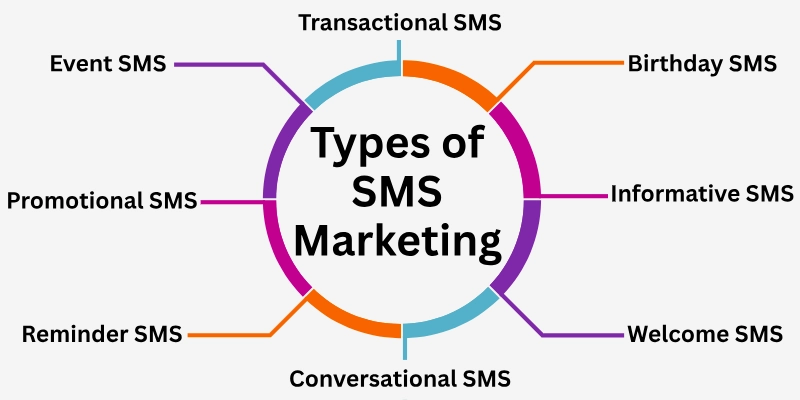
Here are the main types of SMS marketing used by businesses today:
- Promotional SMS
- Welcome SMS
- Transactional SMS
- SMS Coupon Marketing
- Loyalty Program SMS
- Conversational SMS
- Time-Sensitive SMS
- Bulk SMS Marketing
- Reminder SMS
- Event & Webinar SMS
- Feedback & Review Request SMS
- Educational/Informative SMS
- Birthday/Anniversary SMS
Here’s a closer look at all these types.
1. Promotional SMS
Promotional messages are sent to customers to promote products, services, or special offers. They highlight deals, new arrivals, or limited-time discounts. Their purpose is to attract attention and encourage people to take action quickly.
Example: “Flash Sale! Get 30% off all shoes today only. Shop now!”
- Pros: Reaches many customers at once, increases immediate sales, easy to measure results
- Cons: Can feel spammy if sent too often, may lower brand perception if generic
- Forms/Sub-types: Seasonal promotions, product launches, clearance offers
- Tips: Send at peak engagement times, test different messages, and include a clear call to action.
- When to Use: During sales, holidays, or product launches
- Tools/Platforms: Twilio, TextMagic, EZ Texting
2. Welcome SMS
Welcome SMS are sent when a customer signs up, subscribes, or joins a service. They create a friendly first impression and start the relationship positively. These messages can also include a small offer or incentive.
Example: “Welcome to ABC Store! Enjoy 10% off your first purchase.”
- Pros: Encourages first purchase, strengthens customer relationship, makes brand memorable
- Cons: Less effective if generic, may be ignored without personalization
- Forms / Sub-types: Subscription welcome, onboarding messages, registration confirmations
- Tips: Personalize with name, include a small offer, keep tone friendly
- When to Use: Immediately after signup or subscription
- Tools/Platforms: MoEngage, Sendinblue
3. Transactional SMS
Transactional SMS provides customers with important updates about their orders, payments, or accounts. They help customers stay informed and create trust in the brand. These messages are usually short and sent automatically after an action.
Example: “Your order #12345 has been shipped and will arrive on March 20.”
- Pros: Reduces customer support queries, builds reliability, and timely delivery of information
- Cons: Limited marketing impact, must be 100% accurate
- Forms/Sub-types: Order confirmations, shipping notifications, account alerts
- Tips: Include tracking links, send immediately after action, verify details before sending
- When to Use: After purchases, payments, or account changes
- Tools/Platforms: Twilio, ClickSend
4. SMS Coupon Marketing
SMS coupon messages provide customers with discount codes or vouchers. They motivate purchases and increase sales during campaigns or special events.
Example: “Use code SAVE15 to get 15% off today only!”
- Pros: Drives conversions, encourages repeat purchases, easy to track redemptions
- Cons: Can be ignored if sent too frequently, may reduce perceived value if overused
- Forms/Sub-types: Percentage-off codes, free shipping codes, buy-one-get-one offers
- Tips: Highlight expiry dates, target loyal customers, personalize offers
- When to Use: During sales campaigns, seasonal promotions, holidays
- Tools/Platforms: SMSBump, Klaviyo
5. Loyalty Program SMS
Loyalty program SMS informs customers about points, rewards, or exclusive offers. They encourage repeated engagement and strengthen customer relationships over time.
Example: “You have 100 points! Redeem them for a 10% discount today.”
- Pros: Improves customer retention, encourages repeat purchases, and builds brand loyalty
- Cons: Needs a loyalty program in place, may be ignored if rewards are low
- Forms/Sub-types: Points updates, VIP offers, milestone rewards
- Tips: Send on birthdays or milestones, emphasize benefits, keep tone friendly
- When to Use: After purchases, during loyalty campaigns, on anniversaries
- Tools/Platforms: Smile.io, Yotpo
6. Conversational SMS
Conversational SMS allows customers to reply and interact with the business. They improve engagement and customer support by enabling two-way communication.
Example: “Hi Sarah! Did you enjoy your recent purchase? Reply “YES” or “NO”.
- Pros: Collects customer feedback, strengthens relationships, and increases engagement
- Cons: Requires monitoring and response, can be time-consuming
- Forms/Sub-types: Surveys, customer support messages, follow-up questions
- Tips: Keep messages friendly, respond promptly, limit message length
- When to Use: After purchase, for feedback, or customer service inquiries
- Tools/Platforms: Podium, Heymarket
7. Time-Sensitive SMS
Time-sensitive SMS alerts customers about urgent offers, deadlines, or limited-time events. They create a sense of urgency that encourages quick action.
Example: “Hurry! Sale ends in 3 hours. Don’t miss 20% off.”
- Pros: Promotes immediate action, high response rates, and easy to track engagement
- Cons: Can stress customers if overused, effectiveness decreases if used frequently
- Forms/Sub-types: Flash sales, limited-time discounts, event deadlines
- Tips: Highlight deadlines clearly, keep text short, and use a strong call to action.
- When to Use: During time-limited promotions or events
- Tools/Platforms: EZ Texting, SlickText
8. Bulk SMS Marketing
Bulk SMS is sending the same message to a large number of recipients at once. It is used to quickly share announcements or promotions with many customers.
Example: “We are launching a new product. Check it out today!”
- Pros: Reaches large audiences fast, cost-effective, easy to schedule
- Cons: May feel impersonal, requires list management
- Forms/Subtypes: Mass promotions, event announcements, seasonal greetings
- Tips: Segment audience for relevance, personalize messages when possible, avoid spam
- When to Use: Product launches, announcements, promotions
- Tools/Platforms: Twilio, TextMagic
9. Reminder SMS
Reminder SMS notify customers about appointments, renewals, or events. They help reduce missed appointments and keep customers informed.
Example: “Reminder: Your dentist appointment is tomorrow at 3 PM.”
- Pros: Reduces no-shows, improves reliability, and increases customer satisfaction
- Cons: Must be timed correctly, may be ignored if too frequent
- Forms/Sub-types: Appointment reminders, payment reminders, subscription renewals
- Tips: Include date and time, send at optimal times, keep messages short
- When to Use: Before appointments, subscription deadlines, or events
- Tools/Platforms: Appointy, Setmore
10. Event & Webinar SMS
Event SMS promotes webinars, workshops, or live events. They inform participants about the event details and encourage attendance.
Example: “Join our free webinar on social media marketing this Friday at 5 PM. Register now!”
- Pros: Increases event attendance, easy to share information, and provides reminders
- Cons: Requires planning, may be ignored if sent too early
- Forms/Sub-types: Webinar invites, conference updates, workshop announcements
- Tips: Include date, time, and link; send reminders; highlight benefits
- When to Use: Before webinars, workshops, or live events
- Tools/Platforms: Zoom, SMS integration, Eventbrite
11. Feedback & Review Request SMS
Feedback SMS asks customers for opinions on products or services. They help improve service quality and collect social proof.
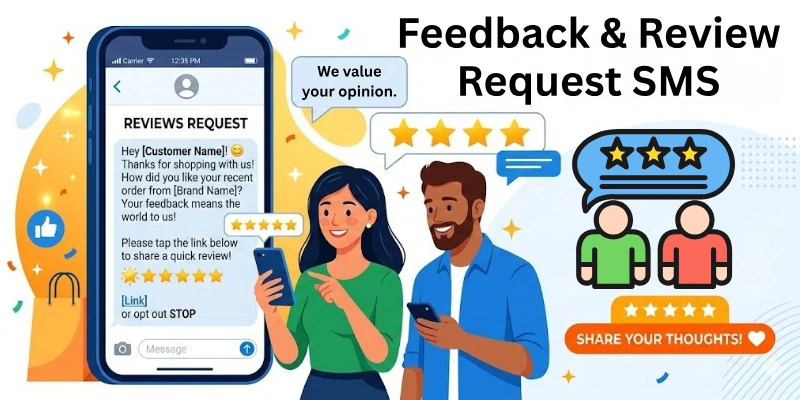
Example: “Hi John! How did you like your order? Reply with your feedback.”
- Pros: Provides insights, improves customer experience, builds trust
- Cons: Needs monitoring, may annoy if sent too often
- Forms/Sub-types: Product reviews, service surveys, post-purchase feedback
- Tips: Keep messages polite, offer incentives, limit frequency
- When to Use: After purchase or service completion
- Tools/Platforms: Podium, Trustpilot, SurveyMonkey
12. Educational/Informative SMS
Educational SMS shares tips, guides, or useful information with customers. They provide value without directly promoting products.
Example: “Tip: Save energy by turning off lights when not in use.”
- Pros: Builds trust, engages audience, positions brand as helpful
- Cons: Less direct for sales, may be ignored if frequent
- Forms/Sub-types: Daily tips, weekly guides, industry updates
- Tips: Focus on actionable information, keep it short, personalize when possible
- When to Use: Regular engagement or educational campaigns
- Tools/Platforms: Sendinblue, MoEngage
13. Birthday/Anniversary SMS
Birthday or anniversary SMS celebrates a customer’s special day. They show appreciation and strengthen relationships. Personalized messages make customers feel valued.
Example: “Happy Birthday, Sarah! Enjoy 15% off on your special day.”
- Pros: Builds loyalty, adds personal touch, increases engagement
- Cons: Needs accurate data, may be ignored if generic
- Forms/Sub-types: Birthday greetings, anniversary messages, milestone rewards
- Tips: Personalize messages, offer small rewards, schedule in advance
- When to Use: On birthdays, anniversaries, or important milestones
- Tools/Platforms: Klaviyo, Yotpo
How to Choose the Right SMS Marketing Type
Choosing the right SMS marketing type helps your messages reach the right people. A good SMS marketing strategy improves engagement and results.
- Goal: Decide if you want more sales, feedback, reminders, or engagement.
- Audience: Consider what your customers like and how they respond.
- Match Campaign Type: Promotional campaigns for offers and discounts. Welcome campaigns for new subscribers. Loyalty campaigns for repeat customers. Reminder campaigns for appointments or deadlines.
- Timing Matters: Send messages at the best time for higher response.
- Add Personalization: Include names or preferences to make messages engaging.
- Test and Adjust: Track results and improve your campaigns over time.
Wrapping Up
We covered the main types of SMS marketing and how each can help businesses connect with customers. From promotions to reminders, each type has a unique role in boosting engagement and sales.
Plan your messages well, personalize them, and follow best practices. Start using these SMS marketing types today to improve your campaigns and grow your business.
If you’re unsure about anything, ask in the comments, and I’ll guide you step by step.
FAQs: Types of SMS Marketing
Here’s everything you need to know about types of SMS marketing, with answers to the most common questions from businesses like yours:
Here are the main types of SMS marketing campaigns:
- Promotional messages, welcome texts, reminders, feedback requests, loyalty updates, and event alerts.
- Each type serves a different goal, like selling products or asking for feedback.
- A good text message campaign marketing plan uses the right type for the right audience.
Yes, SMS marketing campaigns can boost engagement because people often read text messages quickly. Sending the right message at the right time encourages action. Personalized messages get better responses and strengthen connections.
Text messaging campaign marketing works in the following ways:
- Using SMS to share content with a group of people.
- Helps businesses promote offers, send reminders, or get feedback.
- Can increase sales or keep customers engaged.
A promotional SMS campaign sends offers, discounts, or product news to customers. These messages attract attention and increase sales. They work well during sales or special events.
You can follow these best practices for SMS marketing:
- Keep messages short and clear.
- Get customer permission before sending and include a call to action.
- Send at the right time, personalize messages, and test campaigns for better results.
Welcome SMS campaigns greet customers when they join your list. They make people feel valued and can include a small offer. This type helps build trust early.
To choose the right SMS marketing type, consider these points:
- Decide your goal: sales, reminders, feedback, or loyalty.
- Match the campaign type to the goal: promotional, welcome, loyalty, or reminder campaigns.
- Understanding your audience ensures the messages are effective.
Yes, personalizing SMS makes messages more relevant and friendly. You can use names or tailor messages to past behaviour. Personalized messages often get higher engagement.
Yes, good SMS marketing always starts with permission. People must opt in before you send messages. This respects privacy and improves engagement.
Measure success by tracking how people respond to messages. Look at open rates, click rates, and actions taken. Testing results helps improve future SMS campaigns.


- Be Respectful
- Stay Relevant
- Stay Positive
- True Feedback
- Encourage Discussion
- Avoid Spamming
- No Fake News
- Don't Copy-Paste
- No Personal Attacks
- Be Respectful
- Stay Relevant
- Stay Positive
- True Feedback
- Encourage Discussion
- Avoid Spamming
- No Fake News
- Don't Copy-Paste
- No Personal Attacks
