Digital Marketing for Personal Trainers: Increase Leads & Sales in 2026
Published: 9 Aug 2026
Digital marketing for personal trainers is growing fast. Over 80% of people search online to find fitness trainers. If you want more clients and better visibility, using online tools like social media, websites, and email can help you reach them quickly.
In this article, we will cover how to build your online brand, use social media, create a website, run ads, and track your results to grow your fitness business.
Come on, everyone! Let’s jump right in!
What Digital Marketing Means for Personal Trainers
Digital marketing for personal trainers means using the internet to promote your fitness services. It includes websites, social media, emails, blogs, and online ads. Basically, it’s any online method to reach people who might become your clients.
Digital marketing helps more people find you online. When you post workouts, tips, or client success stories, potential clients see your skills. A strong online presence builds trust, attracts more clients, and keeps them coming back. You can reach local people in your area or even clients from other cities.
Why Personal Trainers Must Use Digital Marketing
Digital marketing is not just an option; it’s a must for personal trainers today. It helps you reach more clients and show your expertise online.
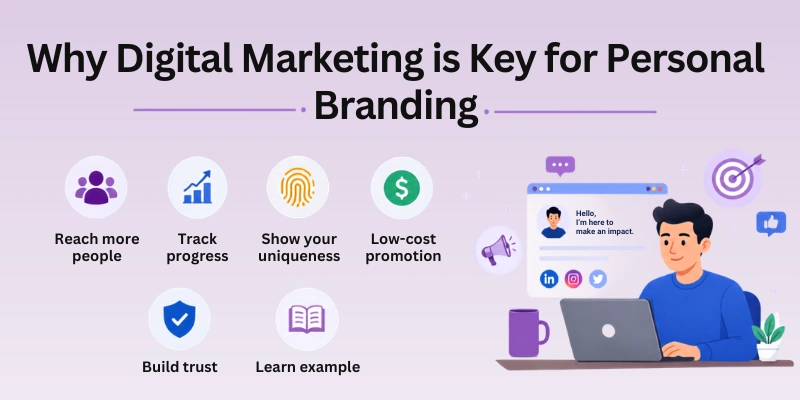
Here’s why it matters:
- Reach more clients online: Most people search the internet to find a personal trainer. Being online makes it easier for them to find you.
- Build trust and authority in fitness: Sharing tips, workout videos, and success stories shows you know your stuff. People trust trainers who have a strong online presence.
- Grow your business faster: Digital marketing attracts more clients without spending too much money on traditional ads.
- Stand out from competitors: Many trainers rely only on word-of-mouth. Being active online gives you an edge.
Understanding Your Audience for Personal Trainer Marketing
Before you start any marketing, you need to know who you want to reach. Understanding your audience helps you create content that attracts the right clients.
- Identify your ideal clients: Think about who needs your help the most. Are they beginners, weight-loss clients, or athletes?
- Know their problems: What challenges do they face? Maybe they struggle with motivation, time, or nutrition.
- Find where they spend time online: Are they scrolling Instagram, watching fitness videos on TikTok, or searching Google for local trainers?
- Use the right message: Share tips, workouts, and advice that solve their problems. When your content speaks directly to them, they are more likely to reach out.
Understanding your audience makes every part of your digital marketing more effective. You save time and get better results because you know exactly who you’re talking to.
Building a Personal Brand as an Online Trainer
Your personal brand shows who you are and what makes you different from other trainers. A strong brand helps people recognize you and trust your expertise.
- Choose a clear style and name: Pick a name and look that represent your training style. This could be fun, serious, or motivational.
- Create a logo and brand colours: Simple logos and consistent colours make your profile and posts look professional.
- Write a clear message: Tell people what you do and who you help. For example, “I help busy adults lose weight with easy workouts.”
- Be consistent online: Use the same name, colours, and style on your website, social media, and emails. Consistency builds trust.
- Show your personality: Share your story, tips, and behind-the-scenes moments. People connect with trainers who feel real.
Building a personal brand makes your digital marketing stronger. When people recognize your style, they are more likely to follow you and become clients.
Creating a Website for a Personal Trainer Digital Marketing
A website is your online home. It shows your skills and services, and makes it easy for clients to contact you.
- Include key pages: Have a Home, About, Services, and Contact page. Keep it simple and clear.
- Add booking options: Let clients schedule sessions online. This saves time for both you and them.
- Show testimonials and results: Share client success stories and before-and-after pictures to build trust.
- Use clear call-to-action buttons: Buttons like “Book Now” or “Contact Me” help visitors take action.
- Make it mobile-friendly: Many people search for trainers on their phones, so your site must look good on small screens.
- Keep it fast: A website that loads quickly makes visitors stay longer and improves your online ranking.
A well-designed website strengthens your digital marketing. It helps clients learn about you, trust you, and take action to work with you.
SEO for Personal Trainers: Get Found Online
SEO (Search Engine Optimization) helps your website appear in Google when people search for trainers. It makes it easier for potential clients to find you.
- Use the right keywords: Include phrases like “personal trainer near me” or “weight loss trainer in [your city].”
- Add local SEO: Mention your city or neighbourhood on your website. This helps local clients find you faster.
- Write helpful content: Blogs, tips, and workout guides improve your chances of showing up in search results.
- Use clear headings and descriptions: Google reads headings (H1, H2) and meta descriptions to understand your site.
- Add images with captions: Pictures with words like “personal trainer workout” improve SEO and engage visitors.
- Update your site regularly: Fresh content shows Google that your site is active and relevant.
Using SEO in your digital marketing for personal trainers helps you get more clients online without paying for ads. It makes your website work harder for you every day.
Social Media Marketing for Personal Trainers
Social media helps you reach more people and show your skills online. It’s a powerful tool for personal trainers.
- Choose the right platforms: Instagram, TikTok, and Facebook work best for fitness content.
- Post workouts and tips: Share short videos, exercise tips, and nutrition advice to attract followers.
- Share client success stories: Show transformations and testimonials to build trust.
- Use hashtags and captions: Hashtags help new clients find your posts. Clear captions explain your content.
- Engage with your followers: Reply to comments, answer questions, and encourage interaction.
- Post consistently: Regular posts keep your audience interested and help you grow faster.
Social media marketing for personal trainers helps you connect with clients, show your expertise, and get more bookings online.
Content Marketing for Personal Trainers
Content marketing helps you share useful information online. It shows your skills and attracts people who need your help.
- Write blog posts: Share tips on workouts, nutrition, and fitness routines. Blogs help people find you on Google.
- Create short videos: Demonstrate exercises, quick workouts, or training tips. Videos grab attention and build trust.
- Answer common questions: Post content that solves problems your clients often ask about, like “How to lose belly fat?”
- Share guides and free resources: Free PDFs or workout plans encourage people to follow you or join your program.
- Be consistent: Regular content keeps your audience engaged and helps you stay visible online.
Content marketing for personal trainers builds trust, shows expertise, and brings more clients to your business without spending a lot on ads.
Email Marketing for Personal Trainers
Email marketing helps you stay in touch with clients and leads. It’s an easy way to build loyalty and get more bookings.
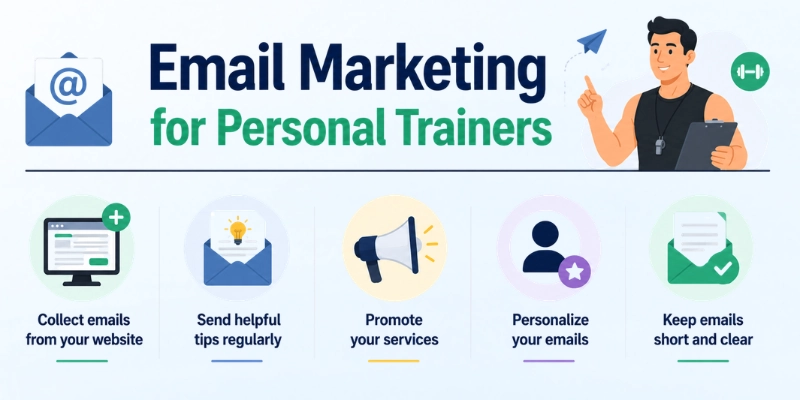
Let’s explore this further
- Collect emails from your website or social media: Offer a free workout plan or fitness tips to get people to sign up.
- Send helpful tips regularly: Share short emails with workouts, nutrition advice, or motivational messages.
- Promote your services: Let subscribers know about new programs, discounts, or online classes.
- Personalize your emails: Use the person’s name and send content that fits their fitness goals.
- Keep emails short and clear: Easy-to-read emails are more likely to be opened and acted on.
Email marketing for personal trainers helps you keep clients engaged, build trust, and encourage repeat sessions without spending a lot on ads.
Paid Advertising for Personal Trainer Marketing
Paid ads help you reach more people quickly. They are useful when you want new clients fast.
- Use Facebook and Instagram ads: Target people in your area who are interested in fitness or weight loss.
- Try Google Ads: Show your services to people searching for personal trainers near you.
- Set a clear budget: Decide how much you want to spend each day or week to avoid overspending.
- Write simple, clear ads: Include what you offer, who you help, and a call-to-action like “Book Now.”
- Track your results: Check which ads bring the most clients and adjust your strategy.
- Test different ad types: Try videos, images, or carousel ads to see what works best.
Paid advertising for personal trainers helps you get clients fast and grow your business while targeting the right audience online.
Tracking Your Digital Marketing Results as a Trainer
Tracking your results shows what works and what doesn’t. It helps you make better decisions and grow your business faster.
- Use website analytics: Tools like Google Analytics show how many people visit your site and which pages they like.
- Check social media insights: Platforms like Instagram and Facebook show post views, likes, and follower growth.
- Monitor email performance: See how many people open your emails and click on links.
- Track ad results: Check which ads bring clients and which ones need improvement.
- Set goals: Decide how many new clients or leads you want each month.
- Adjust strategies: Stop what doesn’t work and focus on what brings results.
Tracking your digital marketing ensures your time and money are used well. It helps you grow your client base more efficiently.
Success Stories in Digital Marketing for Personal Trainers
Seeing real examples can show you what works and inspire your own marketing efforts.
- Trainer A grew clients with Instagram: By posting daily workouts and tips, they doubled their client base in six months.
- Trainer B used a website and SEO: Optimizing their site with “personal trainer near me” helped them get local clients without spending on ads.
- Trainer C tried email marketing: Sending weekly fitness tips and offers kept existing clients engaged and increased repeat bookings.
- Trainer D ran Facebook ads: Targeted ads for beginners brought new clients quickly and built a loyal following.
These success stories show that consistent digital marketing, social media, websites, email, and ads can help personal trainers grow their business and reach more people.
Common Digital Marketing Mistakes Personal Trainers Make
Avoiding these mistakes will save time, money, and help you get better results.
- Not posting consistently: Skipping social media or blogs makes it harder for people to notice you.
- Ignoring website updates: An old or slow website can turn clients away.
- Not tracking results: Without tracking, you won’t know which strategies work.
- Spending money on random ads: Ads without clear goals waste money.
- Copying others: Your brand should be unique. Just copying other trainers won’t attract loyal clients.
- Not engaging with followers: Replying to comments, messages, and questions builds trust and connection.
By avoiding these mistakes, digital marketing for personal trainers becomes much easier and more effective.
Final Words
In this article, we have covered digital marketing for personal trainers, building your brand, creating a website, using SEO, social media, content, email, ads, tracking results, and avoiding mistakes.
My advice: start small, stay consistent, and share real value. Every step brings more clients and trust.
So, why wait? Begin your digital marketing journey today and watch your fitness business grow!
FAQs: Digital Marketing for Personal Trainers
Here are some common questions about digital marketing for personal trainers. These answers will help you understand the topic better and take action:
Instagram, TikTok, and Facebook are great for posting workouts, tips, and success stories. These platforms help you reach local and online clients and build a loyal following.
A website shows your services, testimonials, and makes it easy for clients to contact or book sessions. It builds trust, and people are more likely to choose you over competitors with no website.
SEO (Search Engine Optimization) helps your website appear on Google when people search for personal trainers. It brings clients without paying for ads and makes your business visible 24/7.
Yes! Sending tips, workout plans, or offers keeps clients engaged and encourages repeat bookings. It also reminds people about your services without being pushy.
Start small and test. Use clear goals for each ad, track results, and adjust your budget based on what brings clients. Smart spending ensures you get the best results for your money.
Posting inconsistently, ignoring tracking, copying others, and spending money on random ads can waste time and money. Avoiding these mistakes helps your efforts pay off faster.




- Be Respectful
- Stay Relevant
- Stay Positive
- True Feedback
- Encourage Discussion
- Avoid Spamming
- No Fake News
- Don't Copy-Paste
- No Personal Attacks
- Be Respectful
- Stay Relevant
- Stay Positive
- True Feedback
- Encourage Discussion
- Avoid Spamming
- No Fake News
- Don't Copy-Paste
- No Personal Attacks
