Digital Marketing for Musicians: Promote Your Music Online
Published: 15 Aug 2026
Making great music is just the first step. Today, millions of musicians share their songs online, which makes it easy to get overlooked. That is why digital marketing for musicians is so important. With the right approach, you can reach more listeners, grow your fanbase, and turn your music into a real career.
Digital marketing helps you:
- Share your music with the people who will love it
- Build a loyal fan community that supports your work
- Promote your songs, concerts, and merchandise in smart ways
Whether you use social media, streaming platforms, email newsletters, or paid ads, online promotion is no longer optional. It is the key to being discovered and remembered.
In this guide, we will cover practical strategies that will help you grow your audience, get more streams, and connect with fans in meaningful ways.
What Is Digital Marketing for Musicians?
Digital marketing for musicians is the process of promoting your music and your brand online. It is about using the internet to reach fans, share your songs, and grow your career. This can include social media posts, email newsletters, music streaming platforms, your website, and even paid ads.
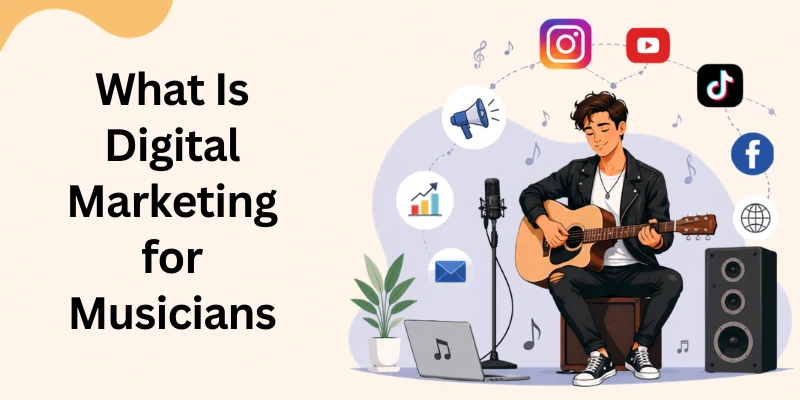
The main benefits are:
- Reach more listeners: Your music can travel far beyond your city or country.
- Build a fanbase: Connect with people who love your style and keep them engaged.
- Boost opportunities: More fans mean more streams, gigs, and merchandise sales.
- Control your brand: You decide how your music and image are presented online.
By doing this consistently, they grow their audience without needing a big record label. This shows how online music marketing and smart music marketing strategies can work together to successfully promote music online.
Build Your Music Brand Online
Your music is unique, and your brand should be too. Building your music brand online means defining your style, your image, and the message you want to share with fans. A strong brand helps people recognize you, remember your music, and connect with you on a personal level.
Here are some tips to get started:
- Define your style: Think about the kind of music you create and the vibe you want to show. Are you upbeat and energetic or calm and soulful? Your style sets the tone for everything you post.
- Create a visual identity: Choose colours, fonts, and design elements that reflect your music. This applies to your website, social media pages, and album art.
- Design a logo: A simple, memorable logo can make your brand instantly recognizable.
- Consistent messaging: Decide on the story you want to tell. This can include your journey as a musician, what inspires your music, or the values you stand for.
Create a Central Hub: Your Music Website
Now that we have covered how to build your music brand online, the next step is to create a central hub for everything you do. Your website is the home base for your music career.
Even if you are active on social media, a website for musicians gives fans, promoters, and media a single place to find everything about you. It shows professionalism and makes it easier for people to connect with your music.
Here’s what every music website should include:
- Bio: Now that visitors are on your site, they want to know your story. Share what makes your music unique and what inspires you.
- Tour dates: So fans can plan to see you live, keep your upcoming shows and events updated.
- Music links: Make it simple for fans to listen. Embed your songs from Spotify, Apple Music, or Bandcamp.
- Merchandise: Give your fans a way to support you directly. Sell t-shirts, albums, or other products on your site.
- Press kit: Make it easy for promoters and journalists to feature you. Include high-quality photos, a short bio, and media links.
Finally, add a clear call-to-action like “Sign up for exclusive songs and updates” to grow your email list and stay connected with your fans.
By following these musician website tips and creating a well-organised site, you make it easier to promote your music online and leave a lasting impression.
Social Media Marketing for Musicians
Now that we have created a central hub with your website, the next step is to take your music to where your fans already spend their time: social media. Social media for musicians is one of the most powerful tools to grow your audience, share your songs, and connect directly with fans.
Choosing the Right Platforms
Not every platform works for every musician, so pick the ones that fit your style and audience:
- Instagram: Great for photos, reels, and stories that show your personality.
- TikTok: Perfect for short, viral music clips and trends.
- YouTube: Ideal for music videos, behind-the-scenes content, and vlogs.
- Facebook: Useful for events, fan groups, and longer posts.
Content Types and Posting Frequency
Once you know your platforms, focus on what to post:
- Videos: Share clips of performances, music videos, or creative snippets.
- Live sessions: Connect in real-time with fans, answer questions, or perform songs.
- Stories: Use daily updates to show behind-the-scenes moments and keep fans engaged.
Consistency is key. Try posting regularly—whether it is a few stories a week, short TikTok clips, or weekly YouTube videos.
Examples of Viral Music Content
Some content ideas that often go viral include:
- A catchy 15-second song clip that encourages fans to duet or remix it on TikTok.
- Behind-the-scenes videos of recording sessions or rehearsals.
- Funny or relatable videos that connect your music to everyday life.
By using music promotion on social media and learning how to promote songs online, you can grow your audience quickly and give your fans multiple ways to interact with your music.
Content Marketing for Musicians
If social media is the stage, then content marketing is how you tell your story and keep fans coming back. Sharing interesting and creative content helps people connect with your music and your personality. Content marketing for musicians is about more than just posting songs-it’s about giving fans a reason to follow you.
Types of Content to Share
- Music videos: Bring your songs to life visually and create memorable moments for fans.
- Lyric videos: Perfect for sing-alongs and easy to share online.
- Behind-the-scenes: Show what happens in the studio, rehearsal, or songwriting process. Fans love seeing the work behind the music.
- Podcasts or interviews: Share your journey, inspirations, and collaborations conversationally.
Repurposing Content Across Platforms
Why post the same thing once when you can make it go further? Repurposing content helps you reach more fans without extra effort:
- Turn a live session into short clips for TikTok or Instagram Reels.
- Use a podcast snippet as an audio story or reel.
- Share behind-the-scenes photos as a carousel post on Instagram or Facebook.
A smart music content strategy, combined with creative content ideas for musicians, makes it easy to promote music online consistently and keep your audience engaged.
Email Marketing for Musicians
If content is the conversation, email marketing is the one-on-one chat that really connects you to your fans. While social media can change quickly, your email list is a direct line to people who genuinely want to hear from you. Email marketing for musicians helps you build a loyal audience that stays engaged over time.
Why Build an Email List
Fans who sign up for your emails are already interested in your music. This gives you a chance to:
- Share exclusive updates and behind-the-scenes content
- Announce new releases or tour dates before anyone else
- Encourage fans to stream your songs or buy merchandise
Tips for Successful Email Marketing
- Exclusive downloads: Offer a free song or demo to anyone who joins your list.
- Early releases: Give subscribers first access to new music or tickets.
- Segmented campaigns: Send different emails to different fan groups—for example, local fans about concerts, global fans about new releases.
Using these strategies for your newsletter for artists or email promotion music campaigns keeps fans connected and gives your music consistent visibility. With the right approach, email marketing can turn casual listeners into long-term supporters.
Optimise Your Music Streaming Profiles
Your music needs to be easy to find. Optimising streaming profiles helps fans discover your songs and keeps them coming back.
Tips for streaming success:
- Complete your profile with photos, bio, and links
- Write keyword-rich descriptions for songs and playlists
- Submit music to playlists to reach new listeners
- Update regularly with new releases and content
Optimising Spotify, Apple Music, or Bandcamp profiles improves music discoverability and helps you promote music online effectively.
Collaborations & Influencer Marketing
Working with other artists and influencers can grow your audience quickly.
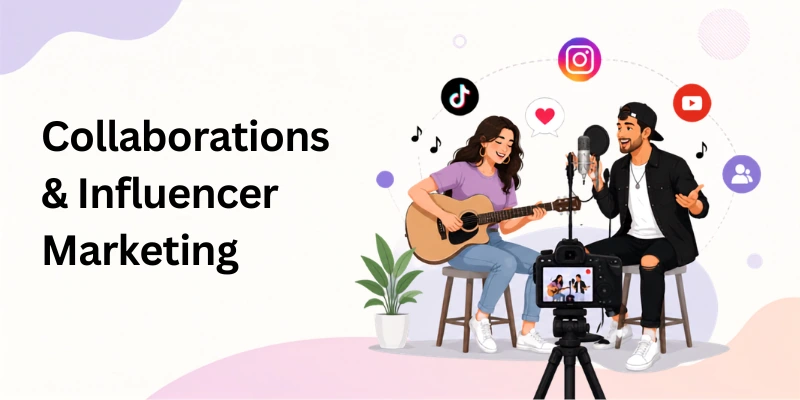
How to collaborate effectively:
- Feature or remix songs with other musicians
- Partner with social media influencers to share your music
- Connect with playlist curators and bloggers for more exposure
Using music collaborations and influencer marketing for musicians helps you promote songs online and reach fans who might not know your music yet.
Music SEO & Online Discoverability
Making your music easy to find online is just as important as creating it. Music SEO and online discoverability help fans, playlist curators, and media outlets find your songs and profiles when they search online.
How to Improve Discoverability
- Use relevant keywords in your website, song titles, and descriptions, like your genre, style, or location.
- Optimize your YouTube video titles, descriptions, and tags for search terms fans are likely to use.
- Include alt text for images and proper metadata for music uploads on streaming platforms.
Tips for Music SEO
- Write descriptive and keyword-rich bios on all your platforms.
- Use a consistent artist name and branding across your website, social media, and streaming profiles.
- Create a blog or news section on your website to share updates, which helps search engines find your content.
Track & Analyse Your Music Performance
Understanding how your music performs online is key to growing your audience. Tracking and analyzing your performance helps you see what works, what doesn’t, and where to focus your efforts.
What to Measure
- Streams and downloads: See which songs are most popular and where they are being played.
- Website traffic: Check which pages fans visit the most and how they found you.
- Social media engagement: Track likes, comments, shares, and follower growth.
- Email metrics: Monitor open rates, click-throughs, and sign-ups from your newsletters.
Tips for Using Data Effectively
- Use tools like Google Analytics, Spotify for Artists, and social media insights to track results.
- Compare different campaigns to see which content or ads get the best engagement.
- Adjust your strategies based on what your fans respond to most.
By tracking these metrics, you can refine your music marketing strategies, make smarter decisions, and reach more listeners. Regularly analyzing performance ensures your promotion efforts are working and helps you grow consistently.
Plan Your Content Calendar for Music
Consistency is key to staying visible and keeping fans engaged. Planning your content calendar helps you organize what to post, when to post, and where to share it, so your music promotion stays on track.
Tips for a Music Content Calendar
- Schedule posts in advance: Plan social media, website updates, and email newsletters to avoid last-minute stress.
- Mix content types: Include music videos, behind-the-scenes clips, live sessions, and fan engagement posts.
- Set weekly or monthly themes: For example, “Songwriting Mondays” or “Fan Friday” to keep your audience anticipating new content.
- Align with releases and events: Make sure posts, emails, and promotions support upcoming singles, albums, or tours.
Using a content calendar for musicians helps you maintain a steady presence online, ensures your fans always have something to engage with, and makes your music marketing more effective overall.
Final Words
In this article, we’ve covered digital marketing for musicians in detail. From building an engaging online presence to leveraging social media and streaming platforms, every step helps musicians reach more fans.
I personally recommend starting with consistent social media content and playlist promotions, as they often deliver the fastest results.
Take action today and grow your fanbase while boosting streams and engagement.
FAQs: Digital Marketing for Musicians
Have questions about Digital Marketing for Musicians? Here are the top FAQs to help you grow your fanbase, increase streams, and boost your music career:
Digital marketing for musicians is the process of promoting your music online to reach more fans and increase streams. It includes social media, SEO, paid ads, content marketing, and email campaigns. Using these strategies helps musicians grow their audience and book more gigs.
Musicians can attract fans by posting engaging content on social media, sharing music videos, and promoting songs on streaming platforms. Running targeted ads and collaborating with influencers also increases visibility. The key is consistent posting and connecting directly with listeners.
The best platforms for musicians include Spotify, YouTube, Instagram, and TikTok, as they have large audiences and engagement tools. Facebook and email newsletters are also effective for updates and promotions. Using multiple platforms ensures you reach fans where they spend time.
Paid advertising allows musicians to reach specific fans based on location, interests, and listening habits. Platforms like Google Ads, Facebook Ads, and Instagram Ads can increase streams and event attendance. Running ads strategically ensures you spend marketing money efficiently for maximum impact.
Musicians should create blogs, videos, behind-the-scenes clips, tutorials, and live performance recordings. Content that tells a story about the music or the artist engages fans more deeply. Sharing tips, experiences, or fan-exclusive material builds loyalty and encourages sharing.
Track metrics like website visits, streaming numbers, social media engagement, and ad conversions to see what works. Tools like Google Analytics, Spotify for Artists, and social media insights help you measure growth. Analyzing this data allows you to refine strategies for better results.
Yes, digital marketing increases visibility and builds a strong fanbase, which makes venues and promoters more likely to book you. Sharing your music, videos, and press coverage online helps showcase your credibility. Consistent online promotion also allows fans to spread your music, attracting more live performance opportunities.


- Be Respectful
- Stay Relevant
- Stay Positive
- True Feedback
- Encourage Discussion
- Avoid Spamming
- No Fake News
- Don't Copy-Paste
- No Personal Attacks
- Be Respectful
- Stay Relevant
- Stay Positive
- True Feedback
- Encourage Discussion
- Avoid Spamming
- No Fake News
- Don't Copy-Paste
- No Personal Attacks
