Beginner’s Guide to Types of SEO for Better Rankings
Published: 2 Apr 2026
SEO sounds simple until results don’t show up. That’s when people realize something is missing. The missing piece is understanding the different types of SEO.
SEO works in layers, not as a single trick. Each type focuses on a specific area of your website, and together, they build strong search visibility and long-term growth.
In this article, we will discuss the types of SEO and explain how each one helps your website rank better. You will also learn which SEO types matter most for beginners and growing businesses.
Now, let’s move on to the main topic.
Types of Search Engine Optimization
SEO is not a single strategy but a combination of techniques that help your website rank higher in search engines.
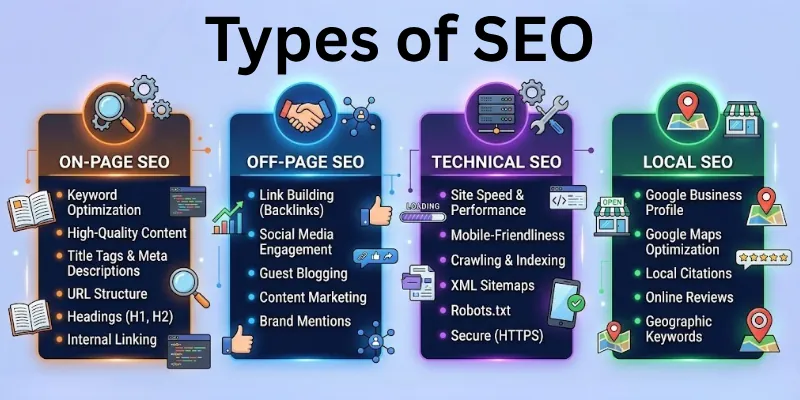
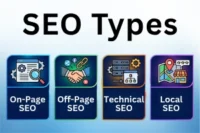
At its foundation, SEO can be divided into four main types:
- On-page SEO
- Off-page SEO
- Technical SEO
- Local SEO
In this section, we’ll explore each type in detail, explain why it matters, and provide practical examples that you can implement on your website today.
By understanding these core types, you can build a strong SEO strategy that covers all essential bases.
1. On‑Page SEO
On-page SEO refers to all the optimization activities you perform directly on your website to make it search engine friendly. It ensures that your content is understandable, valuable, and structured properly so search engines can index it and rank it higher.
It also helps users navigate your site easily, improving engagement and conversions. In short, it’s everything you can control on your web pages to improve search performance.
Key Elements of On‑Page SEO:
- Keywords: Keywords are the search terms your audience uses. Research and use relevant keywords naturally in your content. Place them in the title, headings, meta descriptions, and throughout the content without overstuffing. Tools like Google Keyword Planner or SEMrush can help identify the best keywords.
- Titles (Title Tags): Titles are the first thing users see in search results. A clear, compelling title with the primary keyword increases clicks and rankings. Keep it under 60 characters and make it descriptive.
- Headers (H1, H2, H3…): Use headings to structure content. H1 is the main title, H2s are main sections, and H3s are sub-sections. Proper heading use makes your content easier to read and allows search engines to understand its structure.
- Meta Tags (Meta Description & Meta Keywords): Meta descriptions summarize the page content. They should be concise (around 160 characters), include keywords, and encourage users to click. Meta keywords are less important today, but can be used for minor reference.
- Content Structure: Organize content in short paragraphs, bullet points, and subheadings. Add images, charts, or videos to make it visually appealing. Well-structured content increases readability and user engagement.
- URL Structure: URLs should be clean, descriptive, and include the primary keyword. Example: www.example.com/types-of-seo. Avoid long or complex URLs with unnecessary characters.
- Internal Linking: Link relevant pages within your website to guide users and distribute link authority. It also helps search engines discover new pages.
- Image Optimization: Use descriptive file names and alt text for images. Compress images to improve page speed and provide context to search engines about the visuals.
Examples of On‑Page SEO Optimizations:
- Example: “Adding the target keyword naturally in the first paragraph and headings” → This is something you can literally do on your page.
2. Off‑Page SEO
Off-page SEO focuses on activities outside your website that influence your search rankings. It signals to search engines that your website is trustworthy, authoritative, and relevant.
Off-page SEO often revolves around building credibility, attracting backlinks, and engaging with your audience beyond your website.
Key Elements of Off‑Page SEO:
- Backlinks: Backlinks are links from other websites to yours. High-quality backlinks from authoritative sites improve your domain authority and trustworthiness. Focus on natural, relevant backlinks rather than buying links.
- Social Shares: Sharing your content on social media platforms increases visibility, drives traffic, and indirectly influences rankings through user engagement.
- Brand Mentions: Even without links, mentions of your brand on reputable sites signal authority to search engines.
- Guest Posting: Writing articles for other websites with backlinks to your site helps increase visibility and authority.
- Influencer Marketing: Collaborating with influencers or industry experts can generate exposure and links from authoritative sources.
- Forum and Community Engagement: Participate in niche forums, discussion boards, or Q&A platforms like Quora or Reddit. Providing helpful answers with links can drive traffic and improve SEO.
Examples of Off‑Page SEO Optimizations:
- SEO Example: “Earning a link from an authoritative blog in your industry” → This is an actionable step to improve off-page SEO.
3. Technical SEO
Technical SEO deals with the backend structure of your website that allows search engines to crawl, index, and understand your content efficiently. While it doesn’t directly impact content quality, it ensures your website is accessible, fast, secure, and properly structured for both search engines and users.
Key Elements of Technical SEO:
- Site Speed: Fast-loading pages improve user experience and rankings. Optimize images, use caching, and minimize code to enhance speed.
- Mobile-Friendliness: A responsive design ensures your website works on all devices. Google uses mobile-first indexing, so mobile optimization is critical.
- XML Sitemaps: Sitemaps list all pages on your site, helping search engines find and index content quickly.
- Structured Data (Schema Markup): Schema markup provides extra context about your content to search engines, enabling rich snippets and improved CTR.
- HTTPS Security: A secure website (HTTPS) is trusted more by users and search engines.
- Robots.txt: This file guides search engines on which pages to crawl and which to ignore, preventing indexing of irrelevant content.
- Canonical Tags: Canonical tags prevent duplicate content issues by indicating the main version of a page.
Examples of Technical SEO Optimizations:
- SEO Example: “Compressing images and minifying CSS/JS files to improve speed” → a direct technical task you can implement.
4. Local SEO
Local SEO focuses on optimizing your website to rank for location-based searches. It is crucial for businesses with physical locations or services in specific areas. Local SEO helps your business appear in Google Maps, local searches, and the “map pack” for queries with geographic intent.
Key Elements of Local SEO:
- Google Business Profile (GBP): Create and optimize your profile with accurate business information, photos, and reviews to improve visibility.
- Local Citations: List your business in local directories, maps, and review sites. Ensure NAP (Name, Address, Phone) is consistent.
- Reviews and Ratings: Positive reviews on Google and other platforms increase trust, engagement, and rankings.
- Local Keywords: Include geo-specific keywords in content, titles, meta descriptions, and headings.
- Map Pack Visibility: Optimize to appear in Google’s local map results for relevant queries.
Examples of Local SEO Optimizations:
- Example: “Adding your business location, hours, and contact info to Google Maps” → a concrete local SEO activity.
Specialized SEO Types
Beyond the core SEO types, there are specialized types that focus on specific content formats, platforms, or audience needs. These help you tailor your SEO strategy to get better results for certain kinds of content or users.
- Content SEO
- E‑commerce SEO
- Mobile SEO
- International SEO
- Image SEO
- Video SEO
- Voice SEO
Let’s break them down one by one.
1. Content SEO
Content SEO is about creating high-quality, relevant content that answers users’ search intent. It ensures your articles, blogs, and pages are optimized to attract traffic, engage readers, and satisfy search engines.
Key Elements:
- Value and Relevance: Content must provide useful information and directly address what users are searching for.
- Topic Clusters: Group related content together with a central pillar page linking to supporting pages. This improves authority and organization.
- Internal Linking: Link pages within your website to guide users and distribute page authority.
- Content Updates: Regularly refresh content to keep it current and accurate.
Examples:
- Write blog posts that answer common questions in your industry.
- Creating a pillar page on “Types of SEO” and linking to detailed articles about On-Page, Off-Page, Technical SEO, etc.
- Updating outdated posts with new statistics or examples to maintain relevance.
2. E‑commerce SEO
E-commerce SEO focuses on optimizing product pages, category pages, and the overall online store so that search engines can rank them and potential buyers can find them.
Key Elements:
- Product Titles: Clear, keyword-rich product titles that describe exactly what the item is.
- Schema Markup: Add structured data to products for rich snippets like price, reviews, and availability.
- Filters and Categories: Optimize category pages and filters for search engines.
Examples:
- Using a product title like “Men’s Running Shoes – Lightweight & Breathable” instead of “Shoes 123”.
- Adding schema markup to display ratings, price, and availability in search results.
- Creating SEO-friendly category pages like www.example.com/mens-running-shoes instead of generic URLs.
3. Mobile SEO
Mobile SEO ensures your website works perfectly on smartphones and tablets. With mobile-first indexing, Google primarily uses the mobile version of your site to rank pages.
Key Elements:
- Responsive Design: Your website should adjust to different screen sizes automatically.
- Performance Tweaks: Optimize images, reduce page load time, and avoid intrusive pop-ups on mobile.
Examples:
- Using responsive themes that adapt the layout to phones and tablets.
- Compressing images and removing heavy scripts that slow down mobile loading.
- Ensuring buttons are large and clickable on small screens.
4. International SEO
International SEO targets multi-country or multi-language audiences. It helps your site rank in search engines for different regions or languages.
Key Elements:
- Hreflang Tags: Indicate the language and regional targeting of each page.
- Regional URLs: Use country-specific URLs or subdomains.
- Localized Content: Tailor content to local culture, language, and search habits.
Examples:
- Creating example.com/fr/seo-guide for French users and example.com/de/seo-guide for German users.
- Adding hreflang tags so Google shows the correct page for the right audience.
- Translating content and adapting examples for local relevance.
5. Image SEO
Image SEO optimizes images so that they rank in Google Image search and improve the overall SEO of your pages.
Key Elements:
- Alt Text: Describes the image for search engines and accessibility.
- File Names: Use descriptive, keyword-rich names instead of generic ones.
- Compression: Reduce file size to improve page speed without losing quality.
Examples:
- Naming an image types-of-seo-chart.png instead of IMG123.png.
- Add alt text like “Diagram showing 4 types of SEO strategies.”
- Compressing images using tools like TinyPNG to maintain speed.
6. Video SEO
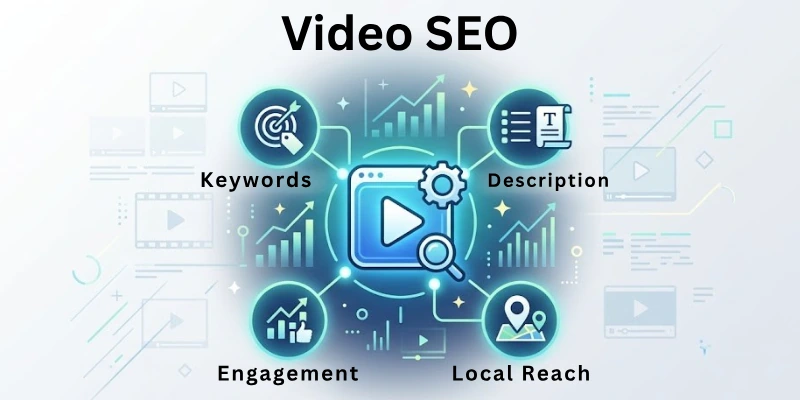
Video SEO optimizes videos to rank in search engines and attract viewers. Videos are increasingly important for engagement and visibility.
Key Elements:
- Transcripts: Adding text transcripts helps search engines understand video content.
- Titles: Keyword-rich, clear video titles.
- Thumbnails: Attractive thumbnails increase click-through rates.
- Schema Markup: Video structured data for rich results.
Examples:
- Adding a transcript below a video tutorial.
- Using a title like “Types of SEO Explained for Beginners”.
- Creating custom thumbnails with clear visuals and text overlay.
- Adding video schema to improve visibility in search results.
7. Voice SEO
Voice SEO optimizes content for voice search queries, which are often conversational and question-based.
Key Elements:
- Conversational Keywords: Target phrases people speak, not just type.
- FAQ Content: Include common questions and answers in your content.
- Natural Language: Write in a clear, simple, and natural tone.
Examples:
- Writing a blog section answering “What are the types of SEO?” for voice search.
- Creating content in question-and-answer format for smart speakers.
- Using long-tail keywords like “How can I improve my website SEO for a local business?”
Emerging and Advanced SEO Types
SEO is constantly evolving. New technologies and strategies are shaping how websites rank and engage users. Here are the key advanced SEO types in 2025+:
- Programmatic SEO: Generate pages at scale using templates and data, e.g., a real estate site creating pages for every neighbourhood.
- AI-Driven SEO: Use AI for content planning, semantic optimization, and topic modelling, e.g., AI suggesting related topics for a blog.
- Search Experience Optimization (SXO): Blend SEO with UX to improve engagement and conversions, e.g., optimizing layout and CTAs to reduce bounce.
- Predictive SEO: Anticipate search intent using trends and analytics, e.g., publishing a guide on “Holiday Shopping Trends 2026” before the season.
- Visual Search SEO: Optimize images to appear in visual search results, e.g., product photos optimized for Google Lens.
- Semantic SEO: Focus on concepts and intent rather than exact keywords, e.g., covering SEO, PPC, and social media in a digital marketing article.
- Entity-Based SEO: Structure content around entities to improve authority, e.g., a profile page for an author linking to books, interviews, and reviews.
SEO by Ethical Approach
SEO can be done in different ways, depending on how safe and honest the methods are. Here are the main types:
- White Hat SEO: Safe and honest methods that follow search engine rules. Example: Writing good content and earning natural links.
- Grey Hat SEO: Riskier methods that may or may not break the rules. Example: Using slightly aggressive link building or changing content automatically.
- Black Hat SEO: Unsafe methods that break rules and can get your site punished. Example: stuffing keywords, hiding content, or buying spammy links.
Wrapping Up
This article has covered all the types of SEO in detail. Each type plays an important role in improving your website’s visibility, traffic, and performance.
When you apply these SEO types together, they create a strong and balanced strategy. Focus on the basics first, stay consistent, and keep improving over time to achieve better rankings and long-term success.
Thanks for reading, and we hope this guide helps you take your first confident step toward better SEO results.
FAQs: Types of SEO
Here are some detailed answers to frequently asked questions about types of search engine optimization, designed to clear your doubts and guide you in using each type correctly for better rankings:
The main types of SEO are on-page SEO, off-page SEO, technical SEO, and local SEO. Each type focuses on a different area of your website. Together, they help your site appear higher in search results and attract more visitors, including local users when needed.
The 4 pillars of SEO are technical SEO, on-page SEO, content, and off-page SEO. These pillars work together to make your website easy for both users and search engines to understand.
Focusing on all four ensures better rankings, more traffic, and overall online success.
The best type of SEO is White Hat SEO. It uses safe, honest, and ethical strategies that follow search engine rules. This type helps your website rank higher without risking penalties and ensures long-term, reliable results.
The 3 C’s of SEO are Content, Code, and Credibility. Content ensures your website has useful information, code makes your site easy for search engines to read, and credibility shows that your website is trustworthy. Together, they help your site rank higher and satisfy both users and search engines.
Yes, you can do SEO yourself. However, it takes time to learn the best practices, understand ranking factors, keep up with algorithm updates, and apply optimization techniques.
While beginners can start on their own, professional SEO specialists have years of experience that can make the process faster and more effective.
The golden rule of SEO is to write for humans first and search engines second. Focus on creating useful, high-quality content that people enjoy and understand. At the same time, follow SEO best practices to help search engines find and rank your site.
Another key idea is to work hard and improve your website rather than trying to copy or compete unfairly with others.


- Be Respectful
- Stay Relevant
- Stay Positive
- True Feedback
- Encourage Discussion
- Avoid Spamming
- No Fake News
- Don't Copy-Paste
- No Personal Attacks
- Be Respectful
- Stay Relevant
- Stay Positive
- True Feedback
- Encourage Discussion
- Avoid Spamming
- No Fake News
- Don't Copy-Paste
- No Personal Attacks
