Easy Guide to Types of PPC Advertising for Beginners
Published: 19 Mar 2026
Picture your ad appearing exactly when someone needs your product. That’s the magic of types of PPC advertising. From quick search ads to eye-catching display banners or social media posts, each type has a unique role.
Learning how each works allows you to reach potential customers at the right time and place. Using PPC wisely can increase clicks, generate leads, and boost sales while making every advertising dollar count.
Let’s begin our journey
15 Types of PPC Advertising
PPC advertising includes different ad formats that help businesses reach the right audience at the right time. Each type works uniquely and serves a specific goal, such as getting traffic, leads, or sales.
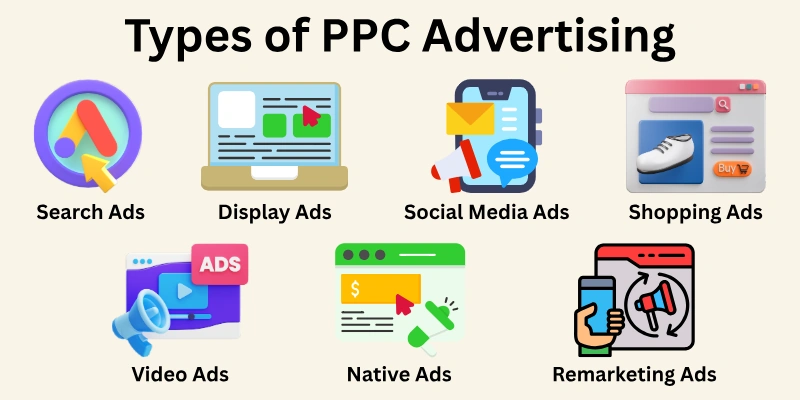
Below is a simple list of the main types of pay per click advertising.
- Search Ads
- Display Ads
- Social Media Ads
- Remarketing Ads
- Shopping Ads
- Local Service Ads
- Video Ads
- Gmail Sponsored Ads
- Amazon PPC Ads
- In-App Ads
- Native Ads
- Call-Only Ads
- App Install Ads
- Discovery Ads
- Affiliate PPC Ads
In the next section, we explain each PPC type with simple examples and use cases.
1. Search Ads
Search ads are text-based ads that appear on search engines like Google and Bing. They show when users search for specific keywords, such as “buy running shoes”. Search ads are great for getting leads and sales quickly because the user is actively looking for a product or service. Clear headlines and strong calls to action work best.
2. Display Ads
Display ads are image or banner ads shown on websites and apps. They appear while people read blogs, news, or browse content online. These ads are perfect for brand awareness. Even if users don’t click, they notice your brand. Bright images and simple messages make display ads more effective.
3. Social Media Ads
Social media ads appear on platforms like Facebook, Instagram, LinkedIn, and TikTok. They can be images, videos, or carousel ads integrated into a user’s feed. These ads work well because you can target users based on age, location, interests, and behaviour. They help build engagement and trust with potential customers.
4. Remarketing Ads
Remarketing ads target people who have already visited your website or app. These ads follow users on other websites or social platforms. Remarketing increases the chance of returning visitors and conversions because users are already familiar with your brand. Offers or promotions often improve results.
5. Shopping Ads
Shopping ads are product-based ads showing images, prices, and store names. They appear on Google Shopping and near search results. These ads work best for e-commerce stores. Users can compare products quickly, and clear images with accurate prices help increase clicks and sales.
6. Local Service Ads
Local Service Ads target users searching for services nearby, like plumbers, electricians, or dentists. They show your business name, phone number, and reviews. These ads are ideal for generating local leads. Users can call your business directly from the ad, making it easy to reach customers.
7. Video Ads
Video ads appear before, during, or after videos, mainly on platforms like YouTube. They can be short clips, tutorials, or brand stories. Video ads are excellent for engaging viewers. They help explain products, tell stories, or increase brand awareness. Short, clear videos usually perform best.
8. Gmail Sponsored Ads
Gmail Sponsored Ads appear inside users’ Gmail inboxes. They look like emails but are labelled as “Ad” and expand when clicked to show more content. These ads allow personal reach. You can send promotions or offers directly to users interested in your products.
9. Amazon PPC Ads
Amazon PPC Ads show on Amazon search results or product pages. They help sellers promote products to buyers actively searching on Amazon. These ads are effective for boosting product sales. Using product images, relevant keywords, and competitive prices improves performance.
10. In-App Ads
In-app ads appear inside mobile apps and games. They can be banners, videos, or interactive formats. These ads are excellent for reaching mobile users. Businesses often use them to promote apps, products, or offers to a targeted mobile audience.
11. Native Ads
Native ads match the look and style of the website or app content. They appear as recommended articles, posts, or suggested content. Native ads are subtle and less intrusive, making them effective for brand awareness and higher engagement.
12. Call-Only Ads
Call-only ads are designed to get phone calls rather than website visits. They appear on mobile search results with a button to call directly. These ads are perfect for businesses like plumbers, lawyers, or service providers. Quick calls often lead to immediate conversions.
13. App Install Ads
App install ads promote mobile app downloads. They appear on social media, search engines, or inside apps, and users can install your app with one click. These ads help increase app downloads and user engagement. Simple visuals and a clear “Install Now” button work best.
14. Discovery Ads
Discovery Ads appear on Google Discover, the YouTube Home feed, and the Gmail Promotions tab. They are visually engaging and match user interests. These ads are excellent for reaching new audiences who may not actively search for your product yet. They help increase brand visibility and traffic.
15. Affiliate PPC Ads
Affiliates run these PPC ads to promote your products or services. Affiliates earn a commission when someone clicks or buys through their ad. These ads are useful for boosting sales without managing all campaigns yourself. They allow businesses to leverage partners to reach more customers.
How to Choose the Right PPC Type
Choosing the right PPC type is important to get the best results for your business. Each type works differently, so you need to match it with your goals, audience, and budget.
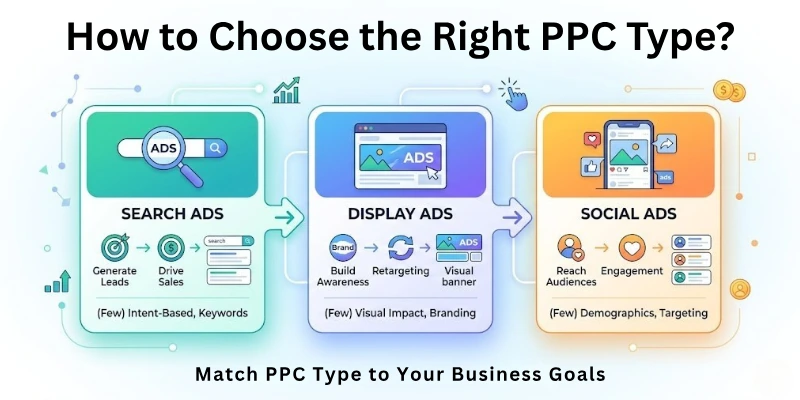
- Goal: Identify your main goal, like sales, leads, or brand awareness.
- Audience: Understand where your audience spends most of their time online.
- Budget: Choose a PPC type that fits your budget and allows testing.
- Platform: Pick the platform that best matches your business type, like Google, Facebook, or Amazon.
- Content Type: Match the ad format with your content, such as video, text, or image.
- Performance Tracking: Ensure you can track results for the PPC type you choose.
Common PPC Mistakes to Avoid
Even small mistakes in PPC campaigns can waste money and reduce results. Avoiding common errors helps your ads perform better and reach the right audience.
- Ignoring mobile users: Many searches happen on mobile devices, so optimize your ads for mobile.
- Not using negative keywords: Exclude irrelevant keywords to prevent wasted clicks.
- Poor ad design: Use clear images, videos, and text to make ads attractive.
- Copying competitors: Create unique ads instead of copying others to stand out.
Wrapping Up
This guide covers the key types of PPC advertising and shows how each can help your business reach its goals. From search and display ads to video, social media, and remarketing, knowing these types makes campaign planning easier.
Using the right PPC strategies can drive traffic, generate leads, increase sales, and strengthen your brand presence. Regular testing and optimization help ensure your ads perform well.
Additionally, I’ve included an FAQs section below to address frequently asked questions and help you better understand PPC advertising.
FAQs: Types of PPC Advertising
Here’s a list of popular questions about the various types of PPC ads:
The main types of PPC ads include search ads, display ads, social media ads, remarketing ads, and shopping ads. Each type reaches people differently, such as on search engines, websites, or social platforms. Using the right type helps your business get more clicks, leads, or sales.
Types of PPC ads, like search ads, appear when someone searches for keywords on platforms like Google or Bing. You pay only when a user clicks your ad. These ads reach people actively seeking products or services, making them very effective.
PPC display advertising helps increase brand awareness.
- They appear on websites, blogs, or apps.
- Users see your business even if they don’t click.
- They are useful for reminding users about your brand.
Social media ads show on platforms like Facebook, Instagram, or LinkedIn. They target users based on interests, age, or location. Search ads show up in search engines based on keywords. Both are paid ads in digital marketing, but they reach people in different places online.
Remarketing ads are shown to people who have already visited your website. They remind users of your products or services and encourage them to return. Benefits include:
- Higher chance of conversion
- Improved brand recall
- More sales opportunities
Yes! Small businesses can benefit from PPC advertising by targeting local customers, controlling their budget, and choosing the PPC types that fit their goals. Even a small daily budget can generate traffic and leads.
Shopping ads show product images, prices, and store names, usually on Google Shopping or near search results. Search ads are text-based. Advertising types in marketing, like shopping ads, are best for e-commerce stores to show products clearly to buyers.
You can run PPC ads on several PPC platforms, including Google Ads, Microsoft Ads, Facebook, Instagram, LinkedIn, and Amazon. Each platform supports different ad types and targeting options.
Beginners should start with simple PPC forms like search ads or social media ads. These are easier to manage and cost-effective and help you understand how PPC works before exploring advanced types.

- Be Respectful
- Stay Relevant
- Stay Positive
- True Feedback
- Encourage Discussion
- Avoid Spamming
- No Fake News
- Don't Copy-Paste
- No Personal Attacks
- Be Respectful
- Stay Relevant
- Stay Positive
- True Feedback
- Encourage Discussion
- Avoid Spamming
- No Fake News
- Don't Copy-Paste
- No Personal Attacks
