Best Types of Mobile Marketing for Easy Engagement
Published: 9 Mar 2026
Have you ever wondered why your phone always seems to know what you want? From messages about discounts to app alerts and social media ads, businesses use mobile marketing to reach you anytime, anywhere.
With more people spending hours on their phones every day, mobile marketing has become one of the most powerful ways for brands to connect with customers.
In this article, we will explore the different types of mobile marketing and show you how each one helps businesses engage users and grow online.
All Types of Mobile Marketing
Mobile phone marketing strategies help businesses reach users directly on their mobile devices. These strategies include different ways to connect, engage, and promote products or services effectively.
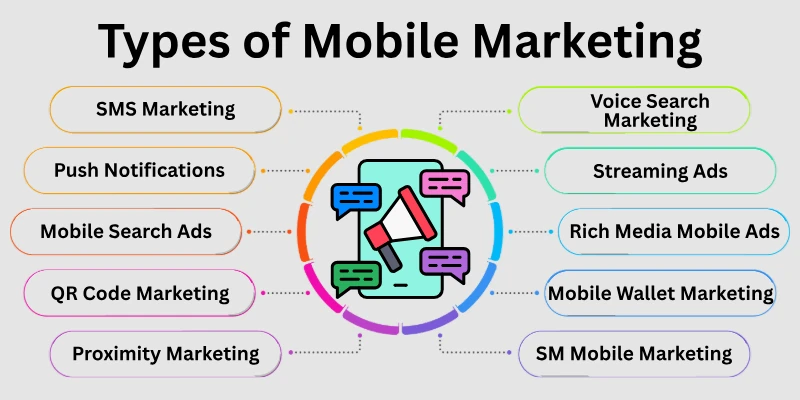
Here are the main mobile marketing types:
- SMS Marketing
- App-Based Marketing
- Push Notifications
- Location-Based Marketing
- Mobile Search Ads
- QR Code Marketing
- Social Media Mobile Marketing
- In-Game Mobile Marketing
- Mobile Video Marketing
- Mobile Wallet Marketing
- Email Marketing for Mobile
- Proximity Marketing
- Voice Search Marketing
- Interactive Mobile Ads
- OTT / Streaming Ads
- Rich Media Mobile Ads
- Augmented Reality (AR) Mobile Marketing
- Mobile Coupon Marketing
- Mobile App Referral Marketing
- Location-Based Social Media Campaigns
- Mobile Contests & Giveaways
- Interactive Polls & Surveys
- Mobile Retargeting Ads
- Influencer Mobile Marketing
These types are just the start. Next, we will explain each one in detail with examples and tips so you can understand how they work and how to use them effectively.
1. SMS Marketing
SMS marketing is sending text messages to a user’s phone to share promotions, updates, or reminders. It is one of the simplest and fastest ways to reach customers directly.
Example: A clothing store sends a text: “Get 20% off on summer shirts today only!” Customers read it and visit the store or shop online.
Tips:
- Always get user permission before sending messages.
- Keep messages short and clear.
- Send messages at appropriate times.
- Include a clear offer or call to action.
- Avoid sending too many messages in a day.
2. App-Based Marketing
App-based marketing promotes products or services within mobile apps. It includes in-app ads, banners, or special messages that appear while users interact with the app.
Example: A shopping app shows a pop-up: “Flash Sale: 30% off shoes for the next 3 hours!” Users click and start shopping immediately.
Tips:
- Place messages or ads in visible but non-intrusive areas.
- Offer rewards or discounts to encourage clicks.
- Track which ads or messages get the most engagement.
- Avoid overloading users with too many pop-ups.
3. Push Notifications
Push notifications are short messages sent by apps to a user’s phone. They appear on the screen even if the app is closed. Businesses use them to share updates, news, or offers that encourage users to take quick action.
Example: A food delivery app sends, “Your favourite pizza is 30% off today!” You tap and open the app to order.
Tips:
- Keep messages short and clear.
- Send at times when users are active.
- Include a reward or benefit like a discount.
- Limit the number of notifications per day.
- Make the message friendly and inviting.
4. Location-Based Marketing
Location-based marketing targets users based on their GPS location. It allows businesses to send relevant offers or updates when a user is nearby a store or event.
Example: A cafe sends a message: “Buy one coffee, get one free when you are near our downtown branch!” Customers nearby take advantage of the offer.
Tips:
- Make offers relevant to the user’s location.
- Send messages at the right time, such as peak hours.
- Avoid sending too many location-based messages.
- Personalize messages for better engagement.
5. Mobile Search Ads
Mobile search ads appear when users search for products or services on mobile search engines like Google. They help businesses reach customers actively looking for what they offer.
Example: Searching “best pizza near me” shows an ad from a local pizzeria at the top of search results.
Tips:
- Use relevant keywords to attract the right audience.
- Include location keywords for local targeting.
- Write clear and compelling ad text.
- Test multiple ad versions to see which works best.
6. QR Code Marketing
QR code marketing uses scannable codes to link users to offers, websites, or apps. Users simply scan the code with their phone camera to access the content.
Example: A clothing store places a QR code on a poster. Scanning it gives a 10% discount code for online shopping.
Tips:
- Place codes where users can easily see them.
- Make sure the linked content is mobile-friendly.
- Track scans to measure engagement.
- Use QR codes for limited-time offers to create urgency.
7. Social Media Mobile Marketing
Social media mobile marketing includes ads and content designed for mobile users on platforms like Instagram, Facebook, or TikTok. It helps brands engage users where they spend most of their time.
Example: A brand runs an Instagram Story ad showing a new product with a “Swipe up to buy” button. Users click and make a purchase instantly.
Tips:
- Use short videos or images for better engagement.
- Create mobile-friendly content.
- Target audiences based on interests and behavior.
- Test different ad formats to see which works best.
8. In-Game Mobile Marketing
In-game mobile marketing places ads inside mobile games. These can be banners, videos, or interactive offers that appear while users play.
Example: A user playing a mobile game sees a video ad: “Watch this ad to earn 50 extra coins!” The user watches the ad and earns rewards.
Tips:
- Make ads non-intrusive to avoid annoying players.
- Offer rewards or incentives for engagement.
- Track which ads perform best for specific games.
- Use interactive ads to increase user participation.
9. Mobile Video Marketing
Mobile video marketing uses short videos on phones to promote products, services, or content. Videos are engaging and easy to consume on the go, making them highly effective for mobile users.
Example: A brand posts a 15-second TikTok video showing a new shoe collection with a “Shop Now” button. Viewers tap and purchase directly from their phones.
Tips:
- Keep videos short and focused.
- Make the content visually appealing.
- Add clear call-to-action buttons.
- Test different video formats to see what performs best.
- Optimize videos for mobile screens.
10. Mobile Wallet Marketing
Mobile wallet marketing sends offers, coupons, or loyalty rewards directly to digital wallets like Apple Pay or Google Pay. It provides a convenient way for users to access deals without extra steps.
Example: A coffee shop adds a discount coupon to users’ digital wallets: “Get 10% off your next coffee purchase.” Users redeem it easily at checkout.
Tips:
- Make the offer clear and easy to redeem.
- Send timely promotions to encourage usage.
- Personalize offers for better engagement.
- Track redemption rates to measure success.
11. Email Marketing for Mobile
Email marketing for mobile means designing emails that are easy to read and interact with on smartphones. Mobile-friendly emails improve engagement because most users check emails on their phones.
Example: A travel company sends a mobile-optimized email: “Book your summer trip today and get 20% off!” Users click through and book directly from their phone.
Tips:
- Use simple layouts for small screens.
- Keep subject lines short and catchy.
- Include clear call-to-action buttons.
- Test emails on multiple devices before sending.
12. Proximity Marketing
Proximity marketing uses Bluetooth, NFC, or beacons to send offers to users when they are near a store or location. It targets customers based on their immediate surroundings.
Example: A retail store uses a beacon to send “Buy 1 get 1 free on jeans today only!” when shoppers walk nearby.
Tips:
- Use relevant and timely offers.
- Ensure users have opted in for location tracking.
- Avoid sending too many messages in a short time.
- Personalize the messages for better impact.
13. Voice Search Marketing
Voice search marketing optimizes content for users who search using voice commands on mobile devices. It helps businesses appear in results when people ask questions verbally.
Example: A user asks their phone, “Where is the nearest pizza place?” A local pizzeria optimized for voice search appears at the top.
Tips:
- Use natural, conversational keywords.
- Focus on local search queries.
- Keep answers clear and concise.
- Test voice search results to see how your business appears.
14. Interactive Mobile Ads
Interactive mobile ads let users engage with the ad directly through taps, swipes, or games. They are more engaging than static ads and encourage active participation.
Example: A mobile game shows a swipeable ad: “Swipe to see our new product colors.” Users interact and explore the product before buying.
Tips:
- Keep the interaction simple and fun.
- Include clear instructions for users.
- Track engagement to see which ads perform best.
- Avoid making the interaction too complicated.
15. OTT / Streaming Ads
OTT or streaming ads appear on mobile streaming apps like YouTube, Netflix, or Hulu. These ads reach users who watch videos on their phones and tablets.
Example: A user watches a short video on YouTube and sees an ad for a new smartphone with a “Learn More” button. They click and visit the website.
Tips:
- Keep videos short and attention-grabbing.
- Include a clear call to action.
- Target audiences based on their interests.
- Track video completion and click-through rates.
16. Rich Media Mobile Ads
Rich media mobile ads include images, animations, or videos that are interactive. They provide a more engaging experience than regular ads.
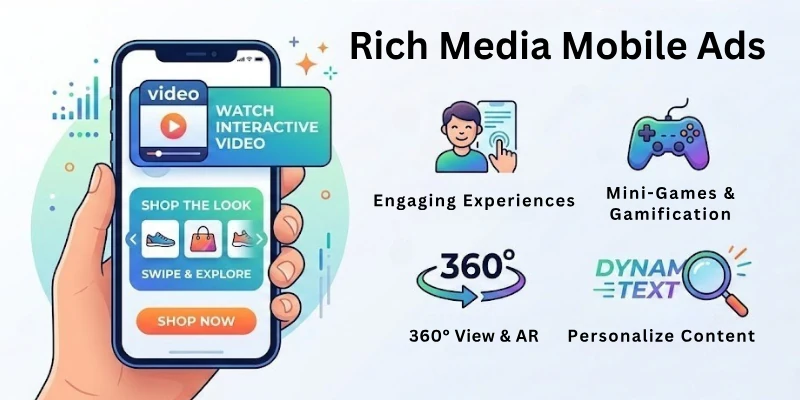
Example: An app shows a moving banner with a tap-to-explore feature: “Discover our latest clothing collection.” Users interact and view products instantly.
Tips:
- Make ads visually appealing and interactive.
- Avoid overloading with too many elements.
- Ensure fast loading times on mobile.
- Track which ad formats perform best.
17. Augmented Reality (AR) Mobile Marketing
AR mobile marketing uses augmented reality to let users interact with products virtually through their phones. It creates immersive experiences that make users feel engaged with the brand.
Example: A furniture store app allows users to point their phone at a room and see how a sofa would look in their home before buying.
Tips:
- Make the experience easy and intuitive.
- Focus on realistic visuals for better impact.
- Use AR for products where visualization matters, like furniture or makeup.
- Encourage users to share their AR experience for more reach.
18. Mobile Coupon Marketing
Mobile coupon marketing sends discounts or promotional codes directly to users’ phones. It encourages purchases and rewards customer loyalty.
Example: A clothing brand sends a mobile coupon: “Get 20% off your next purchase. Show this code at checkout.” Users redeem it easily in-store or online.
Tips:
- Make the coupon easy to use.
- Set an expiry date to create urgency.
- Personalize coupons based on user preferences.
- Track redemptions to measure effectiveness.
19. Mobile App Referral Marketing
Mobile app referral marketing encourages users to invite friends to use the app in exchange for rewards. It helps apps grow organically through word of mouth.
Example: A ride-sharing app gives a free ride credit to users who invite friends. The friends also get a discount on their first ride.
Tips:
- Offer meaningful rewards for both the inviter and the invitee.
- Make sharing simple with just a few taps.
- Track referrals to see which users bring the most new customers.
- Promote the referral feature in-app and via notifications.
20. Location-Based Social Media Campaigns
These campaigns target users on social media based on their location. It helps businesses share relevant content or offers with users nearby.
Example: A local cafe posts a story on Instagram: “Happy Hour from 5 to 7 PM for downtown visitors only!” Nearby users see it and visit.
Tips:
- Keep content specific to the location.
- Post at times when users are likely to be active.
- Use engaging visuals to attract attention.
- Monitor engagement to improve future campaigns.
21. Mobile Contests & Giveaways
Mobile contests and giveaways run on apps or social platforms to engage users and create excitement. They encourage participation and sharing.
Example: A beauty brand runs an Instagram contest: “Share a photo using our product to win a free gift set.” Users participate and promote the brand organically.
Tips:
- Keep participation simple and clear.
- Offer attractive rewards to motivate users.
- Promote the contest across multiple channels.
- Highlight winners to encourage more engagement.
22. Interactive Polls & Surveys
Interactive polls and surveys engage users directly through apps or social media. They collect feedback while keeping users involved.
Example: A food delivery app asks, “Which new pizza flavour should we add next?” Users vote in the app, and the winning flavour is launched.
Tips:
- Keep questions short and easy to answer.
- Use multiple-choice options for quick responses.
- Share results to keep users engaged.
- Reward participation to increase response rates.
23. In-Game Mobile Marketing
In-game mobile marketing places ads inside mobile games. These ads can be banners, videos, or interactive content that engages users while they play.
Example: A player sees an ad in a puzzle game: “Watch this ad to earn extra coins!” The player watches and receives rewards instantly.
Tips:
- Make ads non-intrusive to avoid annoying users.
- Offer rewards to increase interaction.
- Track which ads perform best in different games.
24. Mobile Retargeting Ads
Mobile retargeting ads reach users who have previously interacted with your app or website. They remind users about products or services to encourage conversion.
Example: A user browses shoes in an online store but does not buy. Later, an ad for the same shoes appears on their mobile social media feed, prompting a purchase.
Tips:
- Target users based on previous interactions.
- Personalize ads for better results.
- Avoid showing too many ads to prevent annoyance.
- Test different creatives to see what works best.
How to Choose the Right Mobile Marketing Type
With so many ways to do mobile marketing, it can be confusing to know where to start. The key is to focus on what your audience wants and what your business needs so you can pick the strategies that give the best results.
- Audience: Know who your users are and what they like.
- Goal: Decide whether you want more sales, engagement, or brand awareness.
- Budget: Choose types that fit your marketing budget effectively.
- Platform: Pick platforms your audience uses the most, like apps, social media, or messaging.
- Timing: Select types that work best for your season, campaign, or product launch.
- Content: Use formats that match your message, like videos, text, or images.
- Tracking: Choose types that allow you to measure results easily.
Wrapping Up
In this article, we explored the different types of mobile marketing, from SMS and push notifications to social media ads and interactive campaigns.
Each type has its own way to reach users, engage them, and help businesses grow. By understanding these options, you can choose the right strategies that fit your goals and audience.
Start exploring these mobile marketing types today and see how they can make a real difference for your business.
FAQs: Types of Mobile Marketing
Here are some common questions people ask about mobile marketing types.
Mobile marketing is a way to reach people on their phones or tablets using messages, apps, or ads. It’s important because most people spend a lot of time on their mobile devices, making it easier to connect with them directly.
Look at your audience, goals, and budget. For example, if most of your customers use apps, app-based marketing or push notifications may work best.
Yes! Even small businesses can use SMS, social media ads, or email marketing to reach local customers and grow their audience without spending a lot.
It depends on the type. For push notifications or SMS, once or twice a week is usually enough. Sending too many can annoy users.
Not necessarily. You can start small with social media ads, SMS campaigns, or email marketing. You can adjust your budget as you see results.
Some easy-to-use tools for beginners include:
- Mailchimp: For creating mobile-friendly email campaigns.
- OneSignal: For sending push notifications to app users.
- Buffer: For scheduling social media posts and ads.
- Twilio or TextMagic: For sending SMS campaigns quickly.
- Google Analytics or Firebase: To track campaign performance and user behavior.
These tools are simple and affordable and help you manage mobile marketing effectively.
Yes! By sending offers, updates, or reminders directly to users, mobile marketing encourages engagement and can lead to more purchases.
Use tools like Google Analytics, app analytics, or ad platform insights. They show clicks, conversions, and user engagement so you can improve your campaigns.


- Be Respectful
- Stay Relevant
- Stay Positive
- True Feedback
- Encourage Discussion
- Avoid Spamming
- No Fake News
- Don't Copy-Paste
- No Personal Attacks
- Be Respectful
- Stay Relevant
- Stay Positive
- True Feedback
- Encourage Discussion
- Avoid Spamming
- No Fake News
- Don't Copy-Paste
- No Personal Attacks
