Types of Influencer Marketing – Beginner’s Easy Guide
Published: 8 Mar 2026
Have you ever bought something because your favourite YouTuber or blogger recommended it? That is influencer marketing. It happens when brands ask popular people online, called influencers, to share their products.
People trust influencers more than normal ads because it feels like a friend giving advice. For example, a beauty blogger showing a new skincare product can make you want to try it.
Ever wondered why some brands grow fast online? Influencer marketing is one of the secrets!
In this article, I’ll cover the main types of influencer marketing and give simple examples so you can understand how brands reach their audience.
Influencer Types by Audience Size
Not all influencers have the same number of followers. Some reach a few hundred people, while others can reach millions.
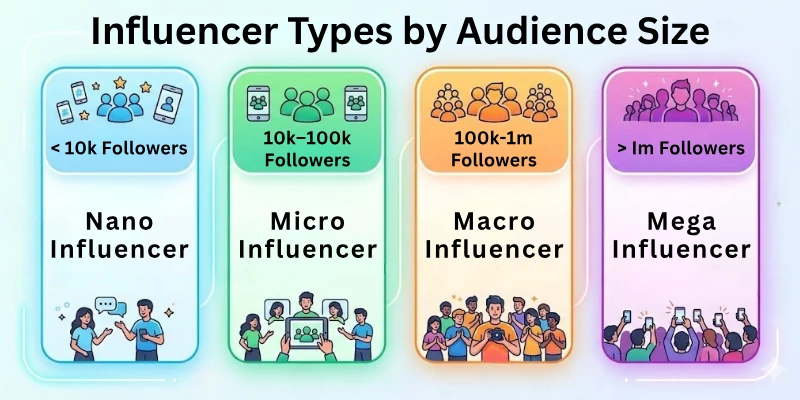
Audience size helps brands decide which influencer is the right fit for their campaign.
1. Nano Influencers
Nano influencers are small social media creators with less than 10,000 followers. Even though their audience is small, people trust them a lot. Their followers see them as friends, not just someone talking about products.
Example: A local blogger sharing crafts or skincare tips recommends a product to friends and followers. People trust their advice because it feels personal.
Why brands love them:
- Trust: Followers believe their recommendations.
- Affordable: Campaigns cost less than bigger influencers.
- Engagement: Followers comment, like, and share actively.
Tip for brands: Work with 3–5 nano influencers together. Their combined reach can create a big impact without spending too much.
Real-life idea: A small bakery works with a local foodie who has 5K followers. The blogger posts about the cupcakes, and their followers may visit the shop or order online.
2. Micro-Influencers
Micro influencers have 10,000 to 100,000 followers. They focus on a specific topic or niche, and their audience is very engaged.
Example: A fitness Instagrammer shares workout tips and gear with followers who trust their advice.
Why brands love them:
- Targeted audience: Their followers match specific interests.
- High engagement: Posts get more comments and shares.
- Affordable: Less expensive than macro influencers.
Tip for brands: Micro influencers are great for reaching a niche audience with authentic recommendations.
3. Macro Influencers
Macro influencers have 100,000 to 1 million followers. They reach a larger audience while keeping decent engagement.
Example: Popular YouTubers reviewing new gadgets or tech products.
Why brands love them:
- Wide reach: They can bring a product to many people at once.
- Credibility: Followers trust them because they are well-known in their field.
- Variety: Good for promotions, reviews, or tutorials.
Tip for brands: Macro influencers work well for campaigns where you want visibility and credibility.
4. Mega Influencers
Mega influencers have 1 million to 10 million followers. They attract a massive audience, often from general topics, trends, or entertainment.
Example: Top TikTok stars promoting a trending product or challenge.
Why brands love them:
- Huge reach: Can create viral attention quickly.
- Trendsetters: Their posts often influence mainstream audiences.
- High visibility: Ideal for brand awareness campaigns.
Tip for brands: Mega influencers are best for big launches or products with wide appeal.
5. Celebrity Influencers
Celebrity influencers are famous personalities with millions of followers across multiple platforms.
Example: Movie stars, singers, or athletes endorsing a brand on Instagram or Twitter.
Why brands love them
- Massive reach: Millions of people see their posts instantly.
- Authority: Followers trust them because of their fame.
- High impact: Can make a product highly desirable.
Tip for brands: Celebrity influencers are suitable for major campaigns and brand-building, but they usually require a large budget.
Audience size is just one way to group influencers. Next, we will look at influencer types based on niche, content style, and partnerships, which also play a big role in successful marketing.
Influencer Types by Role or Partnership
Influencers don’t just differ by the number of followers. They also play different roles in how they work with brands. Some become long-term faces of a brand, while others focus on sharing content or driving sales. Knowing these roles helps you choose the right influencer for your campaign.
6. Brand Ambassadors / Long-Term Ambassadors
Brand ambassadors work with a brand for a long time, often sharing products regularly and attending events. Their audience sees them as the face of the brand, making the promotion feel natural.
Example: A fashion model promoting the same clothing line season after season.
Why they are effective:
- Build a strong, lasting connection with followers.
- Keep the brand visible over time.
- Help shape a loyal fan base for the brand.
Tip: Pick influencers whose values match your brand for better results.
7. Industry Experts
Industry experts are professionals in a specific field who share advice or insights. Their followers value their knowledge, which makes their recommendations meaningful.
Example: A nutritionist explaining the benefits of a health supplement.
Why they are effective:
- Add credibility to your product.
- Perfect for specialized or technical products.
- Can influence purchase decisions because of their authority.
Tip: Collaborate with experts who genuinely use your products to keep it authentic.
8. Guest Blogging Influencers
Guest blogging is when an influencer writes a post on your site or you write on theirs. The influencer then shares it with their audience, bringing new visitors to your website.
Example: A tech blogger writes a guide on your site and promotes it on social media.
Why they are effective:
- Drive traffic to your website.
- Position your brand as credible and trustworthy.
- Provide valuable content that educates readers.
Tip: Choose bloggers who match your niche for the best engagement.
9. Affiliate Marketing Influencers
Affiliate influencers promote products through links or codes and earn a commission on sales. This makes them motivated to encourage followers to take action.
Example: A beauty blogger shares a discount code for skincare products.
Why they are effective:
- You pay only for results, not just exposure.
- Followers are motivated to make purchases.
- Easy to track performance and conversions.
Tip: Monitor performance and reward top-performing affiliates to maximize results.
Influencer Types by Content or Platform
Not all influencers work the same way. Some focus on creating amazing content, while others use specific platforms to reach their audience.
Understanding how they share content can help brands pick the right approach for their campaigns.
10. Content Creators
Content creators focus on producing high-quality posts, videos, or visuals that attract and engage their audience. They often have a unique style and a loyal following who enjoy their creative work.
Example: YouTubers making tutorials or Instagram creators posting reels with tips.
Why they are effective:
- Their content feels genuine and entertaining.
- They attract followers who enjoy their style.
- Perfect for storytelling or demonstrating products.
Tip: Work with content creators whose style matches your brand voice.
11. Sponsored Content Creators
Sponsored content creators make posts or videos specifically paid for by brands. These posts are designed to highlight a product or service in a natural way that fits the influencer’s usual content.
Example: Instagrammers posting about a new smartphone in exchange for payment.
Why they are effective:
- Your product gets professional and polished exposure.
- Influencers can reach their audience authentically while promoting your brand.
- Ideal for product launches or announcements.
Tip: Make sure the sponsored post aligns with the influencer’s usual content so it feels natural.
12. Product Review Influencers
Product review influencers focus on testing and sharing honest opinions about products. Their followers value transparency and rely on their reviews before making purchases.
Example: Beauty YouTubers trying out skincare or makeup products and sharing their experience.
Why they are effective:
- Builds trust through honest opinions.
- Helps potential buyers make informed decisions.
- Excellent for new product launches or detailed reviews.
Tip: Choose reviewers who are genuinely interested in your product for authenticity.
13. Product Collaboration Influencers
Product collaboration influencers work with brands to co-create products or special editions. This type of partnership combines the influencer’s creativity with the brand’s offerings.
Example: A fashion designer collaborating with a clothing brand to create a limited collection.
Why they are effective:
- Creates unique products that attract attention.
- Fans feel involved in exclusive releases.
- Strengthens brand-influencer partnerships.
Tip: Collaborate with influencers who understand your brand and audience preferences.
14. Live Shopping Influencers
Live shopping influencers sell products during live streams. They can answer questions, show product details, and encourage viewers to buy instantly.
Example: Instagram Live sessions where influencers sell fashion items or gadgets.
Why they are effective:
- Creates a sense of urgency for purchases.
- Followers can interact and get instant answers.
- Great for product launches and flash sales.
Tip: Choose influencers who are comfortable on camera and engaging with live audiences.
15. Competitions & Giveaway Influencers
These influencers host contests or giveaways to engage their audience and boost brand awareness. People love winning, so these campaigns get high participation.
Example: Gaming influencers giving away new gaming gear to followers.
Why they are effective:
- Boosts engagement and follower interaction.
- Encourages people to share content and spread the word.
- Can generate excitement around your product.
Tip: Make rules simple and prizes relevant to the audience.
16. Platform-Specific Influencers
Platform-specific influencers are experts on one social media platform. They understand what works best on that platform and know how to reach their followers effectively.
Example: TikTok creators doing viral challenges or Instagram influencers posting reels.
Why they are effective:
- They know the platform’s trends and algorithms.
- Can quickly reach a large, engaged audience.
- Great for campaigns targeting a specific social network.
Tip: Pick influencers who dominate the platform where your target audience is most active.
Influencer Types by Niche/Industry
Influencers can also be grouped by what they focus on or the industry they belong to. Different niches attract different audiences, so picking the right one helps your brand reach the people who really care about your products.
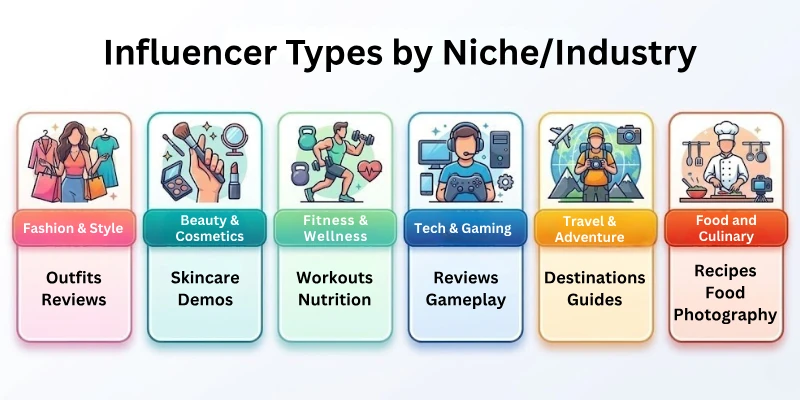
Matching an influencer’s niche with your target audience ensures better engagement and more meaningful results.
17. Lifestyle Influencers
Lifestyle influencers share daily routines, home tips, wellness advice, and personal experiences. They give a glimpse into their everyday life, making followers feel connected.
Example: An influencer posting morning routines, home décor tips, or wellness habits.
Why they are effective:
- Followers relate to their personal experiences.
- Great for promoting products that fit everyday life.
- Can inspire lifestyle changes or habits.
Tip: Use lifestyle influencers for products like home goods, wellness items, or daily essentials.
18. Beauty Influencers
Beauty influencers focus on skincare, makeup, haircare, and personal care. Their followers trust their product recommendations and tutorials.
Example: A beauty YouTuber demonstrating a skincare routine or testing new makeup products.
Why they are effective:
- High engagement through tutorials and reviews.
- Followers often try products based on their suggestions.
- Perfect for launches in the beauty industry.
Tip: Look for influencers whose style matches your brand’s aesthetic.
19. Fashion Influencers
Fashion influencers showcase clothing, accessories, trends, and outfit ideas. Their followers turn to them for style inspiration and recommendations.
Example: An Instagrammer posting seasonal outfits or fashion haul videos.
Why they are effective:
- Followers get ideas and inspiration from their posts.
- Can create demand for new fashion items quickly.
- Help brands stay trendy and visible.
Tip: Collaborate with influencers whose fashion sense aligns with your brand image.
20. Fitness Influencers
Fitness influencers share workouts, nutrition tips, and health advice. They inspire followers to lead healthier lifestyles while promoting relevant products.
Example: A trainer posting home workout routines or protein supplement reviews.
Why they are effective:
- Followers trust their fitness and health recommendations.
- Perfect for promoting sports, health, or nutrition products.
- Can motivate followers to try new routines or products.
Tip: Make sure their fitness style matches your target audience.
21. Food Influencers
Food influencers post recipes, restaurant reviews, and cooking tips. They engage followers with delicious content and practical ideas.
Example: A foodie sharing step-by-step recipes or reviewing local restaurants.
Why they are effective:
- Highly engaging content that followers love to try.
- Ideal for restaurants, food products, or kitchen tools.
- Can inspire immediate action like ordering or cooking.
Tip: Collaborate with food influencers whose style matches your product type.
22. Travel Influencers
Travel influencers share destinations, tips, and personal experiences. Their followers enjoy exploring the world through their eyes.
Example: An influencer posting travel guides, hotel reviews, or adventure experiences.
Why they are effective:
- Followers trust their travel advice.
- Perfect for tourism, travel gear, or hotel promotions.
- Inspires followers to plan trips or try new experiences.
Tip: Partner with travel influencers who visit places your audience is interested in.
23. Tech Influencers
Tech influencers focus on gadgets, apps, software, and reviews. They help followers understand technology better.
Example: A YouTuber reviewing smartphones, laptops, or apps.
Why they are effective:
- Followers rely on their reviews before buying tech products.
- Great for launching new devices or apps.
- Can simplify complex tech topics for followers.
Tip: Work with influencers who specialize in your product category for credibility.
24. Parenting Influencers
Parenting influencers share tips, products, and advice for parents. Their followers are usually mums and dads looking for guidance.
Example: A parent blogger posting about baby products, toys, or parenting hacks.
Why they are effective:
- Followers trust their experiences as fellow parents.
- Perfect for family-friendly products.
- Can provide authentic, real-life recommendations.
Tip: Choose influencers whose parenting style aligns with your audience.
25. Gaming Influencers
Gaming influencers stream gameplay, review games, and share tips with their audience. They have highly engaged and loyal followers.
Example: A gamer streaming a new video game or hosting competitions online.
Why they are effective:
- Followers actively watch and participate in their content.
- Great for promoting games, accessories, or tech gear.
- Can create hype and excitement around launches.
Tip: Work with influencers who match the type of games or products your brand focuses on.
How to Do Influencer Marketing
Influencer marketing is about working with popular people online to promote your brand. Here’s how to do it simply:
- Goal: Decide if you want more sales, website visits, or followers.
- Right Influencer: Choose someone whose followers match your audience.
- Plan the Content: Decide what they will post: photos, videos, reviews, or giveaways.
- Collaborate Clearly: Explain what you want, but let them be creative.
- Track Results: See how many people engaged, clicked, or bought your product.
Final Note
In this article, we looked at the main types of influencer marketing, from nano and micro influencers to celebrities and brand ambassadors. Each type has its own strengths, and the best one for your brand depends on your goals and audience.
Here is a tip: start small, focus on engagement, and build long-term relationships with influencers.
Why wait? Try working with one influencer this month and see the results for yourself. You might be surprised at how much it can help your brand grow.
FAQs: Types Of Influencer Marketing
Here are some FAQs about kinds of influencer marketing to help you understand more.
Influencer marketing can come in many forms. Some focus on the size of the influencer, like nano, micro, macro, and celebrity influencers. Others focus on how they work with brands, such as sponsored content, affiliate marketing, or brand ambassador programs. Each type helps brands reach different kinds of audiences and goals.
Brands use different types of influencer marketing to create a strong influencer marketing plan. Some want to reach a huge audience, so they work with big influencers.
Others want real trust and engagement, so they choose smaller, niche creators. Picking the right type helps campaigns connect better with the audience and get meaningful results.
Influencers are often grouped by followers:
- Nano: under 10K
- Micro: 10K–100K
- Macro: 100K–1M
- Mega/Celeb: 1M+
Smaller influencers usually have closer connections with their audience, while bigger ones reach many people at once.
Sponsored content is when a brand pays an influencer to post about their product or service.
- This can be a photo, video, or story.
- The influencer usually shows the product in a way that fits their style.
This type helps brands get visibility in a natural-feeling post.
In affiliate influencer marketing, the influencer shares a special link or code. When someone buys using that link, the influencer earns a small commission.
This method helps brands pay only when there are real sales.
Yes. Small businesses can work with nano or micro influencers to reach local or niche audiences.
- These influencers often have strong trust with their followers.
- They are usually more affordable for small campaigns.
This makes influencer marketing an option even with a small budget.
Yes, brands can track results from campaigns. They look at things like
- Engagement (likes, comments)
- Clicks or visits to a website
- Sales or conversions from influencer links
Tracking helps brands know which types work best for them.
Micro influencers have smaller audiences but stronger connections with their followers, often in a specific niche. Macro influencers reach many people, but the audience may feel less personal.
Choosing between them is an important step in your influencer marketing strategy. Micro influencers build trust, while macro influencers give wide visibility.

- Be Respectful
- Stay Relevant
- Stay Positive
- True Feedback
- Encourage Discussion
- Avoid Spamming
- No Fake News
- Don't Copy-Paste
- No Personal Attacks
- Be Respectful
- Stay Relevant
- Stay Positive
- True Feedback
- Encourage Discussion
- Avoid Spamming
- No Fake News
- Don't Copy-Paste
- No Personal Attacks
