Kinds of Facebook Ads: A Beginner’s Guide to Better Ads
Published: 21 Mar 2026
Every minute, Facebook users watch over 100 million hours of video. With such a massive audience, businesses can’t afford to post generic ads and hope for results. Understanding the kinds of Facebook ads is key to reaching the right people effectively.
In this guide, we’ll break down each ad type, explain how it works, and show beginners how to use them to grow followers, boost sales, and make campaigns that actually perform.
Without any further pause, let’s go deep and examine all the details you shouldn’t miss.
Types of Facebook Ads
Facebook offers a variety of ad formats, and understanding the different types of ads can help you achieve your marketing goals. Choosing the right type allows you to reach the right audience, boost engagement, and grow your business effectively.
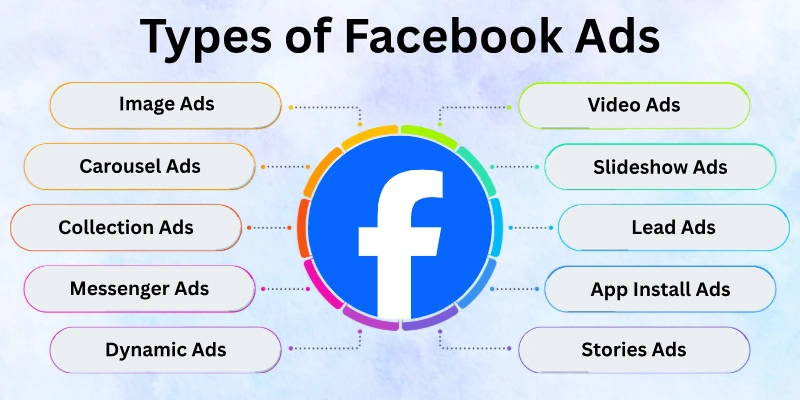
Here’s a breakdown of all the Facebook ad types.
- Image Ads
- Video Ads
- Carousel Ads
- Slideshow Ads
- Collection Ads
- Instant Experience Ads
- Lead Ads
- Messenger Ads
- Sponsored Messages
- Stories Ads
- Offer Ads
- App Install Ads
- Dynamic Ads
Now, we’ll cover the types of Facebook advertising.
1. Image Ads
Image ads use a single, eye-catching photo to communicate a message quickly. They are simple to create but can make a strong impact when paired with the right caption. This ad type is effective at stopping users mid-scroll and can help establish brand recognition through visual appeal.
Best for:
- Product promotion
- Brand awareness campaigns
- Announcements and offers
Tips:
- Use bright, high-quality images
- Keep text concise
- Focus on one main product or idea
Example: A bakery posting a photo of a freshly baked cake with an “Order Now” caption.
2. Video Ads
Video ads let businesses show movement, sound, and storytelling in one format. They capture attention more effectively than static images and allow for more complex messages. This type of ad is ideal for showing products in action, teaching users how to use a product, or telling short brand stories that connect emotionally.
Best for:
- Product demonstrations
- How-to guides or tutorials
- Brand storytelling campaigns
Tips:
- Keep videos short, 15–30 seconds
- Add captions for muted viewing
- Include a strong hook in the first 3 seconds
Example: A café showing how a new coffee drink is made from start to finish.
3. Carousel Ads
Carousel ads include multiple images or videos in a single swipeable ad, allowing users to explore several products or messages at their own pace. This interactive format encourages engagement and helps businesses tell a mini-story across the cards. It’s effective for highlighting different aspects of a product or promoting multiple items together.
Best for:
- Showcasing multiple products
- Step-by-step guides or tutorials
- Highlighting different product features
Tips:
- Use 3–5 cards per ad
- Keep text short and consistent
- Include clear calls-to-action on each card
Example: An online shoe store showing different styles in a single carousel ad.
4. Slideshow Ads
Slideshow ads combine multiple images, text, and optional music to create lightweight, video-like content. They are fast to load, which makes them suitable for users with slower internet connections. Slideshow ads allow advertisers to communicate a story or feature multiple products without investing in full video production.
Best for:
- Low-budget video storytelling
- Highlighting multiple features or products
- Engaging audiences in regions with slow internet
Tips:
- Use 3–10 images
- Include background music for engagement
- Maintain smooth transitions
Example: A travel agency showing top holiday destinations in a short slideshow.
5. Collection Ads
Collection ads provide a full-screen, interactive experience where users can browse multiple products from one ad. They are designed to give a mobile shopping-like experience, letting potential customers explore options without leaving Facebook. This format is effective for e-commerce stores and product showcases.
Best for:
- E-commerce stores
- Showcasing multiple products
- Mobile shopping experiences
Tips:
- Lead with your most popular product
- Use high-quality visuals
- Include a strong call to action
Example: A clothing store showcasing winter collection items in one ad.
6. Instant Experience Ads (Canvas Ads)
Instant Experience ads are immersive, full-screen mobile ads that combine videos, images, text, and buttons. They allow users to scroll, swipe, or tap through content, which increases interaction and attention. These ads are effective for telling stories, showcasing products, or creating an engaging first impression.
Best for:
- Storytelling campaigns
- Product catalogs
- Lead generation campaigns
Tips:
- Keep content simple but interactive
- Include clickable buttons for easy navigation
- Use strong visuals and headlines
Example: A fitness brand showing a step-by-step workout routine with clickable product links.
7. Lead Ads
Lead ads are designed to collect user information directly on Facebook, making sign-ups easy without leaving the platform. They reduce friction for potential customers and help businesses generate contacts efficiently. These ads work well for building email lists or registrations quickly.
Best for:
- Newsletter subscriptions
- Free downloads or trials
- Event registrations
Tips:
- Offer something valuable in exchange for info
- Keep forms short
- Use a clear call to action
Example: A fitness coach giving a free workout plan in exchange for an email signup.
8. Messenger Ads
Messenger ads appear directly in Facebook Messenger and invite users to start a conversation with a business. This format allows for personal interactions and makes users feel more connected. Messenger Ads are effective for providing support, sharing promotions, or engaging customers directly.
Best for:
- Customer support
- Appointment bookings
- Personal offers
Tips:
- Use conversational, friendly language
- Respond quickly to inquiries
- Include buttons like “Book Now” or “Get Offer”
Example: A hair salon offering appointment slots via Messenger.
9. Sponsored Messages
Sponsored messages are sent directly to people who have previously interacted with your business in Messenger. They are useful for reminders, updates, or re-engagement campaigns. This format allows businesses to reach customers personally and encourage repeat actions.
Best for:
- Re-engaging past customers
- Reminders for sales or events
- Special promotions
Tips:
- Personalize messages for each recipient
- Avoid spamming; limit frequency
- Include actionable links
Example: An e-commerce store sending a discount code to previous buyers.
10. Stories Ads
Stories ads are full-screen, vertical ads within Facebook and Instagram Stories. They are designed for fast, immersive engagement and are ideal for visual storytelling. Stories Ads help brands create content that feels natural and encourages users to interact quickly.
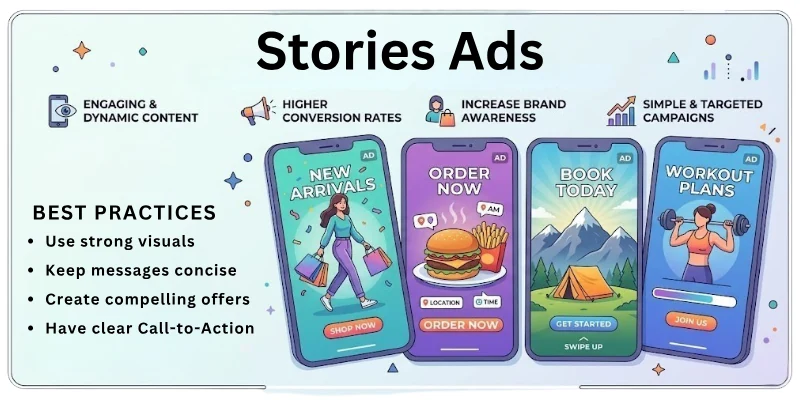
Best for:
- Flash sales or limited offers
- Quick product promotions
- Engaging brand stories
Tips:
- Keep text minimal and bold
- Use bright, attention-grabbing visuals
- Include a clear call-to-action like “Swipe Up”
Example: A bakery showing “Today’s Special” with a swipe-up link to order.
11. Offer Ads
Offer ads allow businesses to share discounts, deals, or coupons directly with their audience. They are effective at generating immediate interest and driving users to take action. This type of ad helps create urgency and encourages both online and in-store engagement.
Best for:
- Seasonal promotions
- Product launches
- Drive in-store traffic
Tips:
- Highlight the discount clearly
- Set an expiration date
- Use strong visuals matching the offer
Example: A clothing store offering 20% off for the weekend.
12. App Install Ads
App install ads encourage users to download an app directly from Facebook. They simplify the installation process and help businesses grow their app user base quickly. This ad type is ideal for promoting mobile apps or games with a clear and immediate call to action.
Best for:
- Mobile apps and games
- Free trial promotions
- Increasing app installs
Tips:
- Show app interface or main feature
- Include a clear call to action
- Target users interested in similar apps
Example: A fitness app showing a demo workout with an “Install Now” button.
13. Dynamic Ads
Dynamic ads automatically display products based on user behaviour, like browsing history or past purchases. They increase relevance and conversion by showing users items they are more likely to buy. These ads are efficient for retargeting and personalized shopping campaigns.
Best for:
- Retargeting customers
- Personalized shopping experiences
- Seasonal promotions
Tips:
- Keep product catalog updated
- Use high-quality images
- Include clear calls to action
Example: An online store showing shoes that a user viewed but didn’t buy.
How to Choose Your Facebook Ad Type
Choosing the right ad on Facebook can feel confusing, but it doesn’t have to be. Knowing the different ad types Facebook offers will help you reach the right people and get better results. Here’s a simple way to pick the best one for you:
- Goal: Ask yourself what you want from this ad. Do you want more sales, website visits, video views, or just to get noticed? Knowing these factors makes everything easier.
- Audience: Who do you want to see your ad? Younger people might like Stories or interactive ads, while others might prefer simpler formats.
- Content: Use what you already have. Do you have good photos? Go for images in Facebook ads. Multiple product pictures? Try Carousel Ads. Got a video? Video or story ads are perfect.
- Engage: Do you want people to just see your ad or interact with it? Instant Experience Ads are immersive, while Messenger Ads let you chat directly with them.
- Budget: Some ads are cheaper than others. Slideshow ads give video-like effects without spending a lot.
- Test and Learn: Try different ad types that Facebook has. See what works, keep the winners, and improve the ones that don’t.
Wrapping Up
This article has discussed the kinds of Facebook Ads and how each one can help you reach your goals. By understanding these ad types, you can choose the right format for your audience, content, and budget.
Remember to test different options, see what works, and improve over time. With the right approach, even beginners can create campaigns that attract attention, drive engagement, and grow their business step by step.
FAQs: Kinds of Facebook Ads
To help you understand Facebook advertising better, here’s a list of frequently asked questions about the different FB ad types and how they work.
There are many types of Facebook ads, including Image Ads, Video Ads, Carousel Ads, Slideshow Ads, Collection Ads, Instant Experience Ads, Lead Ads, Messenger Ads, Stories Ads, Dynamic Ads, and more. Each type shows your message differently and suits different goals like sales, engagement, or lead collection.
Difference:
- Image ads use a single picture to share a clear message.
- Video ads use moving visuals to tell a story or show products in action.
They both appear in feeds, but videos often attract more attention because they show motion and sound.
Lead Ads let people submit their contact details right inside Facebook without leaving the app. These ads are useful when you want to collect emails or sign‑ups for newsletters, events, or offers.
Stories Ads are vertical, full‑screen ads that show between short stories on Facebook and Instagram. They grab attention quickly and are ideal for fast messages, short offers, or seasonal promotions because they fill the whole screen and feel immersive.
Reason:
- Carousel Ads: Let you show many images or videos people can swipe through.
- Collection Ads: Open a full‑screen experience to browse products.
Carousel ads are great for showing different products, while collection ads work well for mobile shopping.
Dynamic Ads show personalized products to users based on their past actions, like what they viewed on your website. These types of Facebook ads help retarget people who have already shown interest, making them a strong choice for e‑commerce businesses.



- Be Respectful
- Stay Relevant
- Stay Positive
- True Feedback
- Encourage Discussion
- Avoid Spamming
- No Fake News
- Don't Copy-Paste
- No Personal Attacks
- Be Respectful
- Stay Relevant
- Stay Positive
- True Feedback
- Encourage Discussion
- Avoid Spamming
- No Fake News
- Don't Copy-Paste
- No Personal Attacks
