Advantages and Disadvantages of Outbound Marketing
Published: 17 Jan 2026
Outbound marketing is a way for businesses to reach customers by sending their message directly to them. This can include things like TV ads, emails, phone calls, social media ads, and billboards.
This article guides you through the advantages and disadvantages of outbound marketing so you can understand both the good and bad sides before choosing the right strategy for your business.
Want to know if outbound marketing fits your business? Keep reading, and this guide will help you decide in simple, easy-to-understand terms.
Advantages of Outbound Marketing
Outbound marketing has many benefits for businesses of all sizes. It helps your brand reach people rapidly and directly. With the right strategy, it can bring more customers and boost your sales in a short time.
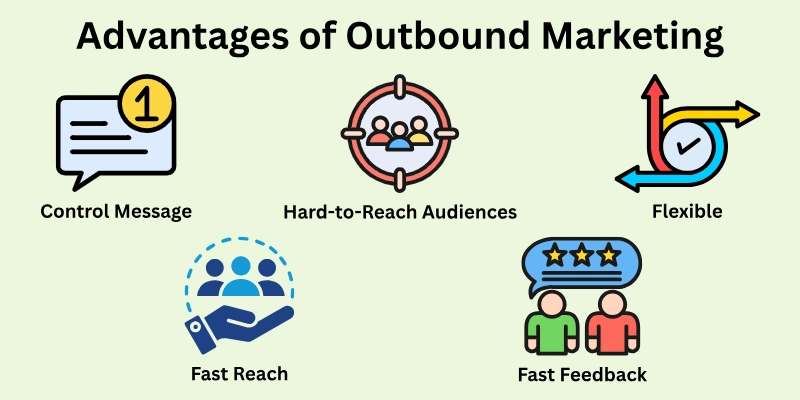
Below, we outline the key benefits of outbound marketing in simple terms.
- Wide and Fast Reach
- Control the Message and Timing
- Scalable and Flexible
- Useful for Broad or Hard-to-Reach Audiences
- Chance for Quick Results and Fast Feedback
Now, we will explain each one clearly.
1. Wide and Fast Reach
Many businesses can reach a large number of people very quickly using outbound marketing. This is useful for new products or services that need attention fast. Ads on TV, social media, or emails can reach hundreds or thousands of people.
Because the message goes directly to the people, there is no need to wait for them to find you. It helps create brand awareness quickly. Fast reach also lets you test new ideas and see which ones work best.
- Shows your product to many people quickly
- Good for product launches or promotions
- Helps create brand awareness fast
- Lets you test ideas and see results quickly
- Can reach people who do not know your brand
2. Control the Message and Timing
Businesses have full control over what people see and when they see it. Planning ads, emails, or calls around your schedule keeps messages clear and consistent.
Messages can focus on special events or sales at the right time. Content can also be changed anytime if needed. This ensures the right message reaches the right people effectively.
- Decide what message to send
- Choose when people will see it
- Keep your brand message consistent
- Focus on special events or sales
- Easily update or change content
3. Scalable and Flexible
Marketing efforts can easily grow or shrink depending on your budget. Digital ads and email campaigns make scaling simple. Starting small is possible, and you can expand later as needed.
Both small businesses and large companies benefit from this flexibility. Different methods can be tried to see which works best. Spending can be adjusted quickly without wasting money. It also helps businesses respond to trends or customer needs faster.
- Can adjust efforts based on budget
- Start small and expand easily
- Works for both small and large businesses
- Try different methods to see what works
- Quickly respond to customer needs
4. Useful for Broad or Hard-to-Reach Audiences
This method can reach people who may not know about your business yet. Ads on social media, TV, or billboards can show your brand in many locations. It helps spread awareness to new customers.
Growing businesses or those launching new products find this very useful. Outbound marketing also helps reach audiences that are hard to find with other methods. More people knowing your brand can lead to more customers.
- Reach people who do not know your brand
- Show ads in many locations
- Increase brand awareness
- Target audiences hard to reach otherwise
- Introduce new products to many people
5. Chance for Quick Results and Fast Feedback
Fast results are possible with outbound marketing. Leads, inquiries, or sales can come soon after a campaign starts. This is very helpful for promotions, sales events, or product launches. Businesses can quickly see how people respond to their messages.
Feedback can then be used to improve future campaigns. Fast results make outbound marketing practical for companies that want quick attention or action.
- Get leads and responses quickly
- Useful for sales or promotions
- Helps test which campaigns work best
- Receive fast feedback from people
- Adjust future campaigns based on results
Disadvantages of Outbound Marketing
Outbound marketing is not perfect. It has some downsides that businesses need to consider. Understanding these drawbacks can help you plan better campaigns and avoid wasting time or money.
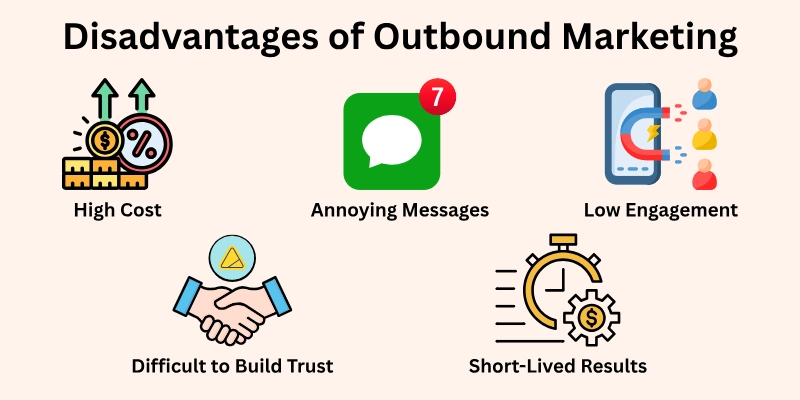
Below, we explain the main disadvantages of outbound marketing in simple terms.
- High Cost
- Annoying Messages
- Low Engagement
- Difficult to Build Trust
- Short-Lived Results
Here is a detailed look at all of them.
1. High Cost
Traditional outbound methods like TV ads, billboards, print ads, or large campaigns can be very expensive. Small businesses may struggle to afford these costs.
Even digital campaigns can become costly if you want to reach a large number of people. High costs make it harder for small or new businesses to compete with bigger companies.
- TV, print, and billboards cost a lot
- Digital campaigns can also get expensive
- Small businesses may have budget limits
- Big campaigns require careful planning
- High cost may reduce return on investment
2. Annoying Messages
Sometimes people do not like unsolicited messages, calls, or ads. This can make your audience annoyed or frustrated. When people feel interrupted, they may ignore your message or even develop a negative opinion about your brand.
Poorly timed or too frequent messages can hurt your business image.
- Unwanted ads may annoy people
- Calls or emails can feel spammy
- Frequent messages can reduce trust
- Can create a negative brand image
- Timing matters to avoid bothering people
3. Lower Engagement or Relevance for Many Recipients
Because outbound marketing reaches a wide audience, many people may not be interested in your product. This can result in lower engagement.
Not every recipient is a potential customer, so leads may sometimes be low-quality. It is harder to connect with people who are not already aware of your business.
- Many people may not care about your product
- Engagement can be low
- Leads may be less interested or low-quality
- Hard to reach only interested customers
- Wide reach does not always mean good results
4. Difficult to Build Trust
Generic ads and messages often do not connect with individuals personally. It is difficult to build trust or long-term relationships using only outbound methods.
People usually respond better to personalized content or helpful information. Without personalization, your campaigns may feel distant or impersonal.
- Generic messages do not connect well
- It’s hard to build trust quickly
- Long-term relationships are difficult
- Personalization is limited
- Campaigns may feel impersonal
5. Short-Lived Results
Outbound marketing can bring quick responses, but results may not last long. It is often focused on short-term goals like sales or promotions. If people ignore the messages, money and effort can go to waste.
For long-term brand growth, outbound marketing alone may not be enough. Combining it with content-based or inbound methods works better.
- Quick results but short-lived impact
- Focuses on short-term goals
- Risk of wasted money if ignored
- Not ideal for long-term brand building alone
- Works best when combined with other strategies
When Outbound Marketing Works Best
Outbound marketing is most effective when used at the right moment for the right goal. It can quickly bring attention to your business, but using it wisely makes all the difference. Here’s when it works really well:
- Ideal for launches, promotions, or special events: If you are introducing a new product or running a special offer, outbound marketing can spread the word fast and grab attention.
- Great for quick visibility: Want many people to notice your business quickly? Ads, emails, calls, and social media promotions can reach a wide audience fast.
- Reaches new customers: Outbound marketing helps introduce your brand to people who may not have heard about it before.
- Not enough for long-term relationships alone: Relying only on outbound can feel pushy or impersonal, making it harder to build loyal customers.
- Works best with content or inbound methods: Combining helpful content, blogs, or inbound strategies keeps people engaged, builds trust, and encourages them to connect with your brand.
Tips to Use Outbound Marketing Smartly
Outbound marketing can work very well, but only if you plan and use it carefully. Following a few smart tips can help your campaigns reach the right people, save money, and get better results:
- Add Value: Combine ads with helpful content.
- Know Your Audience: Target the right people for better results.
- Check Results: See what works and improve campaigns.
- Manage Budget: Spend wisely and avoid overspending.
- Keep It Simple: Use clear, easy-to-understand messages.
Final Note
In this guide, we have covered the advantages and disadvantages of outbound marketing. It can help your business grow quickly, but it may not build long-term relationships on its own.
My suggestion is to balance outbound marketing with content or inbound methods and manage your budget carefully to avoid mistakes. By using it wisely, you can enjoy its benefits while minimizing risks.
Don’t stop here; explore the FAQs to discover more practical advice you can use right away.
FAQs: Advantages and Disadvantages of Outbound Marketing
Here are helpful FAQs to understand the benefits and risks of outbound marketing.
Outbound marketing can help your business reach many people quickly and create fast awareness. However, it can be costly and sometimes annoying to your audience. Balancing it with other marketing methods can reduce its drawbacks.
Small businesses can benefit from outbound marketing by quickly reaching new customers. The downside is that traditional ads like TV or print can be expensive. Using digital campaigns and targeted messages can make it more affordable.
Outbound marketing helps spread the word fast when you have a new product, service, or special offer. It creates quick visibility and grabs attention. However, it works best when combined with helpful content to keep people interested.
You can track digital ads, emails, or calls to see who responds or engages. This helps you know what works and what doesn’t. Monitoring results lets you improve campaigns and save money.
Outbound marketing can reach many people fast and generate quick leads. Inbound marketing takes time but builds trust and long-term relationships. Using both together often gives the best results.
Yes, outbound marketing can feel interruptive or annoying to people. It may not always reach the right audience, and some campaigns can be expensive. Planning carefully can reduce these issues.
Target the right audience, use clear messages, and combine outbound with helpful content or inbound strategies. Monitoring campaigns regularly also improves results. This way, you get the benefits while avoiding common problems.
Yes, one of the main advantages of outbound marketing is that it introduces your business to new audiences. This is useful for awareness campaigns or reaching broad markets quickly. Make sure the message is relevant to get better engagement.
Outbound marketing is best for short-term goals like sales or promotions. For long-term brand building, it should be combined with content marketing and inbound methods. This helps build trust and loyal customers over time.
Use targeted campaigns, monitor results, and manage your budget carefully. Combine outbound with inbound marketing or helpful content. This approach reduces risks and makes your campaigns more effective.




- Be Respectful
- Stay Relevant
- Stay Positive
- True Feedback
- Encourage Discussion
- Avoid Spamming
- No Fake News
- Don't Copy-Paste
- No Personal Attacks
- Be Respectful
- Stay Relevant
- Stay Positive
- True Feedback
- Encourage Discussion
- Avoid Spamming
- No Fake News
- Don't Copy-Paste
- No Personal Attacks
