Advantages and Disadvantages of Inbound Marketing for Beginners
Published: 19 Jan 2026
Many small business owners struggle with high marketing costs and low results. Inbound marketing can solve these problems if used correctly.
By learning the advantages and disadvantages of inbound marketing, you can save money, attract the right audience, and grow steadily. At the same time, you must be aware that results take time, and consistent effort is needed.
This guide explains both the benefits and challenges, so you can plan smarter and avoid wasting time or resources on strategies that don’t work.
Advantages Of Inbound Marketing
Marketing gives many benefits that can help you grow in a better and smarter way. I have used inbound marketing for years, and it always gives steady, real results that feel worth the effort.
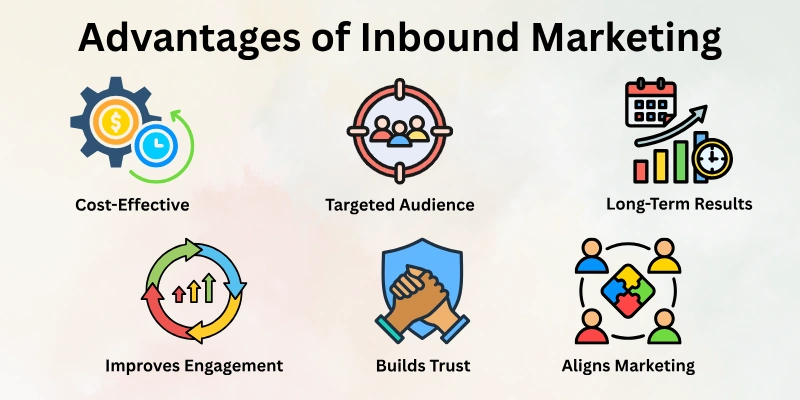
Here is the list of benefits of inbound marketing:
- Cost-Effective
- Builds Trust and Credibility
- Attracts Targeted Audience
- Long-Term Results
- Improves Customer Engagement
- Aligns Marketing and Sales
Now, let’s cover them in detail.
1. Cost-Effective
Cost-effective means inbound marketing helps you save money. You don’t need to spend on big TV ads or billboards. You can create simple content like blogs, videos, or social posts that bring people to you. Once you publish the content, it keeps working without any extra cost.
I like this benefit the most because good content keeps bringing new visitors every day. You do not pay each time someone clicks or reads. This makes it easier for small businesses to grow even with a low budget.
- Content brings traffic without extra spending.
- One blog post can work for months.
- Small businesses can grow at a low cost.
- Helpful content can rank on Google.
- Works well when you answer simple questions.
2. Builds Trust and Credibility
This means people start trusting your brand because you share helpful and honest information. When you guide people with simple tips, they feel safe with you. Over time, they see you as an expert. This trust makes them return to you when they need help.
In my own work, trust always brings better results than ads. When people trust you, they choose you without thinking twice. It also improves word of mouth because people share helpful content with others.
- Helpful content builds trust.
- People see you as an expert.
- Trust increases repeat visitors.
- Trust improves conversions.
- Good information gets shared more.
3. Attracts Targeted Audience
Inbound marketing brings people who already want your product or service. They come because they searched for something you explained. This means they are more interested and ready to learn. You attract the right audience instead of chasing random people.
I always notice better results when targeted people visit. They read more, stay longer, and convert faster. This saves time and effort because you talk to the right people.
- Bring people who need your service.
- Saves time by reaching the right audience.
- Leads stay longer on your page.
- Helps you understand customer needs.
- Improves conversions.
4. Long-Term Results
Long-term results mean your content keeps working for months or even years. One helpful blog can bring traffic every day. People keep finding it in search results. This creates steady and stable growth.
In my own work, long-term content felt like having a helper who works all day. I don’t need to pay again for the same traffic. It reduces stress because your content keeps giving results even when you stop posting for a while.
- Content works for a long time.
- Gives daily traffic without effort.
- Helps build a strong online presence.
- Reduces long-term marketing cost.
- Creates stable business growth.
5. Improves Customer Engagement
Customer engagement means your audience interacts with your brand. They read, comment, send messages, or share your content. This connection makes them feel closer to your business. They learn more about your products in a simple and natural way.
I have seen engaged customers turn into loyal customers. When they interact, they trust you more. This creates a friendly bond that helps you understand their needs.
- People interact with your content.
- Helps build a strong relationship.
- Increases loyalty.
- Makes your brand more human.
- Helps you understand your audience better.
6. Aligns Marketing and Sales
Alignment means marketing and sales work together smoothly. Marketing brings warm leads using helpful content. Sales teams then talk to people who already know about your product. This makes the whole process faster and cleaner.
In my experience, teams work better when they share the same goals. Sales teams get better leads. Marketing can track what content helps the most. This reduces confusion and improves results.
- Marketing brings ready leads.
- Sales teams get better conversations.
- Helps both teams follow one plan.
- Reduces confusion.
- Improves overall business growth.
Disadvantages Of Inbound Marketing
While inbound marketing has many advantages, it also has a few drawbacks that you should know. Understanding these disadvantages will help you make better decisions and avoid common mistakes.
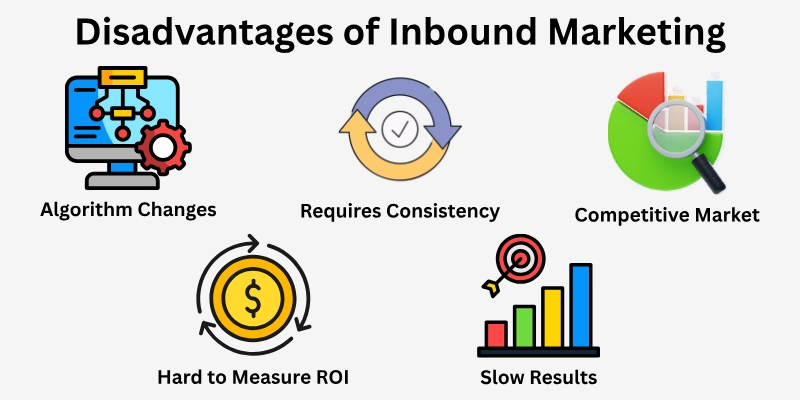
Here is the list of disadvantages of inbound marketing:
- Slow Results
- Requires Consistency
- Competitive Market
- Hard to Measure ROI Initially
- Content Saturation and Algorithm Changes
Now I will explain each point in detail.
1. Slow Results
Slow results mean that inbound marketing takes time to work. You create content today, but people may take weeks or months to find it. Search engines also need time to rank your pages. So you may not see quick traffic or leads at the start.
In my own work, this slow start sometimes feels tough. You invest time, but the results come later. If a business needs quick leads, this delay can feel frustrating. It also requires patience and trust in the process.
- Results do not come fast.
- Search engines take time to rank content.
- You may not see early traffic.
- Not ideal for urgent campaigns.
- Needs patience and steady effort.
2. Requires Consistency
Consistency means you must keep creating content regularly. You need to post blogs, videos, or social updates again and again. If you stop, your traffic slows down. Inbound marketing works only when you keep showing up.
I learnt this the hard way when I paused my content for a few months. My traffic dropped, and it took time to build it again. Many beginners struggle because keeping a steady schedule is not easy.
- Needs regular posting.
- Traffic slows if you stop.
- Hard to maintain long-term.
- Needs planning and discipline.
- Works only with steady effort.
3. Competitive Market
A competitive market means many brands create the same type of content. Everyone wants to rank on Google and attract the same audience. This makes it hard to stand out. You must work harder to create content that feels different and useful.
I see this with almost every niche today. When many people write about the same topic, new content struggles to shine. It takes more research and creativity to get noticed.
- Many brands target the same topics.
- Hard to stand out.
- Requires more creativity.
- Needs deeper research.
- Takes more time to rank.
4. Hard to Measure ROI Initially
ROI means return on investment. In inbound marketing, it can be hard to track results in the beginning. You spend time on content, but you may not know how much profit it brings. New pages also take time to show numbers.
I often see beginners feel confused when they do not see clear results. Without clear numbers, planning becomes harder. This can also make small businesses feel unsure about their strategy.
- It’s hard to track early results.
- ROI becomes clear after months.
- Beginners may feel confused.
- Not ideal for quick sales.
- Needs good tracking tools.
5. Content Saturation and Algorithm Changes
Content saturation means the internet already has too much content. Most topics have thousands of articles. Algorithm changes mean search engines change how they rank pages. These changes can affect your traffic overnight.
I have seen websites lose traffic because of simple algorithm updates. Even good content can drop in search results. You need to stay updated and improve content often.
- Too much content online.
- Hard to rank in crowded topics.
- Search updates can lower traffic.
- Needs regular content updates.
- Requires constant learning.
Inbound Marketing for Different Businesses
Inbound marketing works for almost any business, but each type of business can use it differently. Understanding how it fits your business helps you get the best results.
- Small Businesses: They can use blogs, social media, and simple guides to attract local customers without spending much money. Inbound marketing helps them build trust and grow slowly but steadily.
- E-commerce Stores: These businesses can use product blogs, email campaigns, and tutorials to attract buyers. It helps increase traffic and encourage repeat purchases.
- B2B Companies: B2B businesses can create whitepapers, case studies, and helpful guides to attract other companies. It builds credibility and generates qualified leads.
- Service-Based Businesses: Freelancers, consultants, or agencies can share tips, success stories, and how-to guides to reach potential clients. Inbound marketing helps them showcase expertise.
- Startups: New companies can use content marketing to create awareness. Sharing helpful content allows them to reach the right audience and grow brand recognition quickly.
SEO vs. Inbound Marketing: What’s the Difference?
Many people confuse SEO and inbound marketing, but they are not the same. I have used both in my projects, and understanding the difference really helps plan better strategies.
- SEO (Search Engine Optimization): SEO focuses on improving your website so it ranks higher in search engines. It includes using keywords, optimizing pages, and building links. Its main goal is to get more people to find your website when they search online.
- Inbound Marketing: Inbound marketing is a broader strategy that includes SEO but also blogs, social media, email marketing, and lead nurturing. Its goal is not only to attract visitors but also to engage them, build trust, and turn them into loyal customers.
- Key Difference: SEO is a part of inbound marketing. Think of SEO as a tool that helps inbound marketing work better. Inbound marketing is the full journey: attract, engage, and convert.
Why it matters:
I have seen many businesses focus only on SEO and miss out on building relationships with their audience. Combining SEO with inbound marketing gives long-term traffic, trust, and more sales.
Key points:
- SEO improves search rankings and visibility.
- Inbound marketing attracts and engages the right audience.
- SEO is a part of inbound marketing.
- Inbound marketing focuses on long-term growth and trust.
- Using both together gives the best results.
Final Note
In this guide, we have covered the advantages and disadvantages of inbound marketing. I recommend using it carefully by weighing its advantages against the challenges.
Consistency, planning, and learning from results help manage risks effectively. With a smart approach, inbound marketing can bring steady growth over time.
I hope you enjoyed this guide! Don’t forget to look at the FAQs below, where you will find extra insights that can improve your marketing strategy.
FAQs: Pros and Cons of Inbound Marketing
Want to know more about the advantages and disadvantages of inbound marketing? Here are some questions that can help you understand better.
Inbound marketing means you attract people to your business by giving helpful content, not by pushing ads on them. You create blogs, social posts, or useful guides. This makes people find you when they search or want help. Digital inbound marketing feels gentle and useful, not pushy. You build trust and relationships rather than interrupt people.
In many cases, results do not come fast with inbound marketing. You must keep doing good content and give it time. Many businesses see growth after several months. If you stop early, you may not get full value. So you must stay patient to get the full inbound experience.
Yes. Inbound marketing systems can help small businesses without big budgets. You can publish simple content and reach people interested in what you offer. This helps you get leads slowly but steadily. It gives you a chance to compete with bigger businesses by building trust and offering value.
Yes, but it can be tricky at first. You can use tools to track visits, leads, or engagement. Still, linking those numbers to sales takes time. Many times, you need a full inbound experience before you see real profit and clear data.
Inbound marketing has some risks. It needs regular work, like writing content and updating it. If you stop, results drop. Also, many other businesses use it too, so you may face high competition. Sometimes content gets lost among many others.
Not always. Inbound marketing works best when your customers use the internet and search online. If your audience does not seek info online, inbound may not help. For some types of business, other marketing ways might suit better.
Yes. To get the best results, you need good content writing, basic SEO knowledge, and maybe some social media skills. Without those, inbound marketing may not work well. That is because your content must be clear, helpful, and easy to find



- Be Respectful
- Stay Relevant
- Stay Positive
- True Feedback
- Encourage Discussion
- Avoid Spamming
- No Fake News
- Don't Copy-Paste
- No Personal Attacks
- Be Respectful
- Stay Relevant
- Stay Positive
- True Feedback
- Encourage Discussion
- Avoid Spamming
- No Fake News
- Don't Copy-Paste
- No Personal Attacks
