Key Advantages and Disadvantages of Facebook Marketing in 2026
Published: 14 Jan 2026
Have you ever noticed how Facebook feels like a busy online marketplace where brands meet people every single day? For businesses, it has become a powerful place to share their message, reach new customers, and grow.
But when we look at the advantages and disadvantages of Facebook marketing, we see that it is not always simple to handle. Some things make it very helpful, while some things make it challenging.
So what exactly makes Facebook marketing strong, and what makes it a bit tricky? Let’s explore this and understand how it truly works for businesses today.
Advantages of Facebook Marketing
Facebook marketing offers many benefits that can help businesses grow faster. By using Facebook, companies can understand the pros and cons of Facebook advertising while reaching millions, saving money, and connecting directly with their audience.
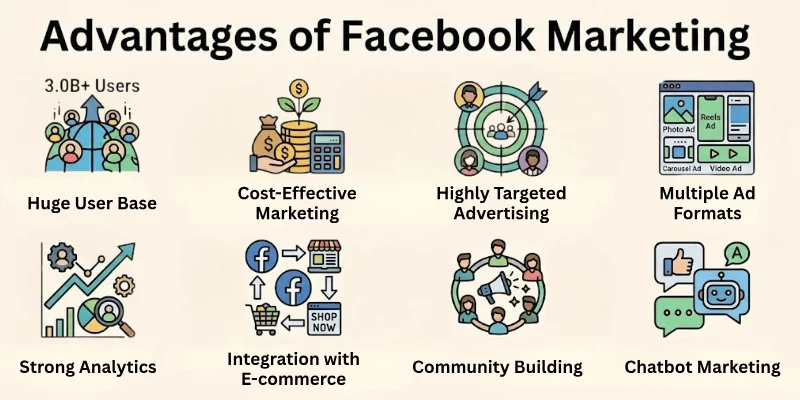
Here is the list of advantages and disadvantages of Facebook advertising, starting with the pros.
- Huge User Base
- Cost-Effective Marketing
- Highly Targeted Advertising
- Multiple Ad Formats
- Strong Analytics & Insights
- Integration with E-commerce & Websites
- Community Building & Brand Awareness
- Messenger & Chatbot Marketing
Let’s explore the main advantages that make Facebook marketing so popular.
1. Huge User Base
People from all over the world use Facebook every day. This gives businesses a massive audience to show their products or services. Brands can reach teenagers, adults, and older customers easily, which helps increase sales.
Even small businesses can gain attention without spending much money. Large audiences allow companies to connect with both local and global customers, opening opportunities for growth.
- Billions of active users worldwide.
- Reach people from many countries.
- Helps businesses grow faster.
- Small businesses can find customers easily.
- Connect with different age groups.
2. Cost-Effective Marketing
Running Facebook ads is cheaper than TV, radio, or newspaper advertising. Businesses can start with a small budget and increase it gradually. Paying for clicks or views gives control over spending.
Analytics tools help companies see what works best. By optimizing ads in real time, businesses can get better results and more sales without wasting money.
- Start ads with a small budget.
- Pay only for clicks or views.
- Track performance in real time.
- Adjust ads for better results.
- Affordable for small businesses and startups.
3. Highly Targeted Advertising
Businesses can show ads to specific people on Facebook. You can select age, location, interests, and behaviours so your ads reach those most likely to buy your product.
Facebook also allows Lookalike Audiences, which find people similar to your current customers. Targeting this way improves results and saves money by reaching the right audience.
- Target by age, location, or interest.
- Ads reach people likely to buy.
- Helps small budgets work better.
- A lookalike audience finds new customers.
- Ads are more effective and save money.
4. Multiple Ad Formats
Facebook offers images, videos, slideshows, and carousel ads. Videos can tell stories, show products, or share tips, making ads more engaging.
Testing different ad types helps businesses find what works best. Creative campaigns grab attention and encourage people to take action.
- Use images, videos, and slideshows.
- Tell stories with video ads.
- Try different ads to see what works.
- Make campaigns more engaging.
- Reach different audiences with varied formats.
5. Strong Analytics & Insights
Facebook provides detailed analytics for posts and ads. Businesses can track reach, clicks, engagement, and audience behaviour to see what works best.
By using these insights, companies can improve campaigns and save money. Data-driven decisions increase sales and marketing efficiency.
- Track ad reach and clicks.
- Understand engagement levels.
- Learn about audience behaviour.
- Adjust campaigns for better results.
- Make smarter marketing decisions.
6. Integration with E-commerce & Websites
Businesses can link Facebook to online stores like Shopify or WooCommerce. Customers can browse and buy products without leaving Facebook.
Lead forms and tracking pixels help brands collect customer data and improve sales funnels. This integration makes shopping easier and increases conversion rates.
- Sell products directly on Facebook.
- Collect customer information.
- Track purchases and leads.
- Improve sales funnels.
- Provide a smooth shopping experience.
7. Community Building & Brand Awareness
Facebook helps businesses build loyal communities. Pages, groups, and posts allow regular interaction with followers, increasing trust and recognition.
Sharing tips, news, or behind-the-scenes content strengthens brand presence. Loyal communities encourage repeat purchases and word-of-mouth promotion.
- Build pages and groups for followers.
- Share helpful tips and news.
- Increase brand trust.
- Encourage repeat business.
8. Messenger & Chatbot Marketing
Messenger allows direct communication with customers. Chatbots can answer questions, guide orders, and provide information instantly.
Automated messaging saves time and improves customer satisfaction. Small businesses can handle multiple inquiries efficiently without hiring extra staff.
- Answer questions instantly.
- Use chatbots for orders and FAQs.
- Improve customer experience.
- Save time on support.
- Provide real-time assistance.
Disadvantages of Facebook Marketing
While Facebook marketing is useful, it has drawbacks that can affect results. Understanding them helps businesses plan campaigns carefully.
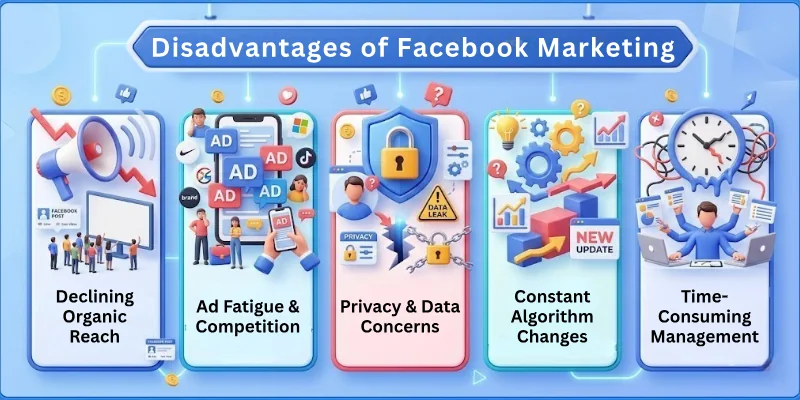
Here are the main disadvantages to consider before using Facebook marketing.
- Declining Organic Reach
- Ad Fatigue & Competition
- Privacy & Data Concerns
- Constant Algorithm Changes
- Time-Consuming Management
Let’s cover them in detail.
1. Declining Organic Reach
These days, users see fewer free posts. Companies may need to pay for advertisements because they can’t rely on organic reach to get noticed.
Small companies with limited budgets may struggle to reach their audience. Paid campaigns become necessary to maintain visibility.
- Free posts reach fewer people.
- Paid ads are often needed.
- Small budgets may limit reach.
- Organic engagement can be low.
- It’s hard to get noticed without ads.
2. Ad Fatigue & Competition
Many companies advertise on Facebook daily. Users see multiple ads, which can cause them to ignore your content.
To be engaging, advertisements need to be updated frequently. Variety and creativity help companies draw in customers and avoid audience fatigue.
- Users see too many ads.
- Ads can become boring quickly.
- Must refresh ad content often.
- High competition makes standing out hard.
- The audience may ignore repeated ads.
3. Privacy & Data Concerns
Facebook gathers information to efficiently target advertisements. Because of privacy concerns, users may avoid the platform or block advertisements.
Rules and regulations, like Apple’s iOS changes, can limit tracking. Businesses must comply with laws and adjust campaigns regularly.
- Users worry about privacy.
- Tracking rules change often.
- Ads may not reach everyone.
- Must follow privacy laws.
- Campaigns need constant updates.
4. Constant Algorithm Changes
Facebook changes its algorithm regularly, affecting which posts appear on feeds. Even high-quality content may reach fewer people. Businesses must keep adjusting strategies to maintain engagement and visibility. Regular monitoring is essential for success.
- Algorithm changes affect visibility.
- Organic posts may reach fewer users.
- Must adapt campaigns often.
- Engagement can drop suddenly.
- Strategy must be updated regularly.
5. Time-Consuming Management
Managing Facebook campaigns requires daily effort. Posting content, replying to comments, and monitoring ads take time and attention. Without consistent management, campaigns may fail. Businesses must dedicate resources and stay active to achieve results.
- Posting and replying take time.
- Ads require daily monitoring.
- Must track performance continuously.
- Consistency is important.
- Poor management reduces success.
Tips to Maximize Facebook Marketing Success
To get the best results from Facebook marketing, try following these smart and easy tips:
1. Enjoyable Content
Share simple, helpful, and fun content that your audience likes. Use clear images, short videos, and easy words. When people enjoy your posts, they stay longer and interact more.
- Share simple tips and ideas.
- Use bright images.
- Post short videos.
- Write in easy words.
- Keep your message clear and friendly.
2. Use Facebook Ads Smartly
Start with a small budget and try different ads. Look at the pros and cons of Facebook ads to see which ones get more likes, comments, or clicks. Then, invest more in the ads that work best.
- Start with low spending.
- Test different images and videos.
- Change ad text to see what works.
- Check ad results daily.
- Spend more on winning ads.
3. Engage With Your Audience
Reply to comments and messages quickly. People like brands that talk to them. This helps build trust and keeps followers happy.
- Reply to comments fast.
- Answer questions clearly.
- Say ‘thank you’ when people interact.
- Be friendly and helpful.
- Keep the conversation going.
4. Use Facebook Groups
Create or join groups where your target audience spends time. Groups help you share helpful content and build stronger relationships.
- Join active groups.
- Share simple tips.
- Help people with their problems.
- Ask questions to start talks.
- Build trust by staying active.
5. Post Consistently
Share posts regularly so people remember your brand. A steady posting schedule helps your business stay visible.
- Set days to post.
- Share at the same time each day.
- Keep posts short and clear.
- Use a mix of videos and images.
- Stay active every week.
6. Track Your Results
Use Facebook Insights to see what works. Check which posts get more likes, comments, and shares. This helps you make better content in the future.
- Check Insights weekly.
- Study your best posts.
- Improve weak posts.
- Check the times when your audience is engaged.
- Make new plans based on results.
Conclusion
We have covered the advantages and disadvantages of Facebook marketing in this article. By knowing what works and what can be challenging, businesses can plan better and achieve real results.
With the right planning, creativity, and consistency, Facebook can turn into a powerful tool to reach the right audience and build a strong brand. Success comes to those who use the platform thoughtfully and stay active.
FAQs: Advantages and Disadvantages of Facebook Marketing
Have questions about the pros and cons of Facebook marketing? Let’s answer them quickly so you can use Facebook smarter.
Facebook marketing has both benefits and challenges. Here’s a quick look:
Advantages:
- Reach many people.
- Grow your brand.
- Increase sales.
- Connect with customers.
- Build trust.
Disadvantages:
- Algorithms change.
- High competition.
- Limited organic reach.
- Needs consistent effort.
- Ads may be ignored.
Facebook ads help businesses reach the right people easily. Here are the main advantages:
- Reach your target audience.
- Use different ad formats (photo, video, carousel, slideshow).
- Promote products in Marketplace or Messenger.
- Show interactive ads like playable or collection ads.
- Increase visibility and engagement quickly.
Facebook lets you target people based on age, location, interests, and behaviours. You can also use custom audiences or lookalike audiences. This helps your ads reach people most likely to engage with your brand.
Yes! Even small businesses can reach local or global customers. Creative posts, consistent engagement, and smart targeting help small brands grow quickly. Facebook marketing is affordable and flexible for any budget.
The 20% rule says that only 20% of a Facebook ad image can have text. If the text is more than this, Facebook may limit the ad’s reach or not run it at all. This rule helps ads look clean, clear, and more engaging for users.
The 3-2-2 method is a simple way to plan Facebook ads for better results. You test 3 ad creatives, 2 target audiences, and 2 offers at the same time. This helps businesses see what works best, engage more people, and get better returns.


- Be Respectful
- Stay Relevant
- Stay Positive
- True Feedback
- Encourage Discussion
- Avoid Spamming
- No Fake News
- Don't Copy-Paste
- No Personal Attacks
- Be Respectful
- Stay Relevant
- Stay Positive
- True Feedback
- Encourage Discussion
- Avoid Spamming
- No Fake News
- Don't Copy-Paste
- No Personal Attacks
