Advantages and Disadvantages of Social Media Marketing
Published: 14 Jan 2026
Many people get confused because online trends change very fast, and brands grow rapidly on social apps. Today, more than half of the world’s population uses social platforms daily, and businesses want to stay in front of these users. This is where social media marketing helps, as it allows brands to reach people easily and directly.
But it’s important to know both the good and bad sides. It can help your business grow, but it can also cause problems if you do not handle it well. Knowing both sides helps you make better choices.
In this article, you will learn the main advantages and disadvantages of social media marketing, so you can use it in a simple, smart, and safe way.
Advantages of Social Media Marketing
Social media marketing has many advantages. Here, we will discuss some of the main pros in detail and show how they can help a business succeed.
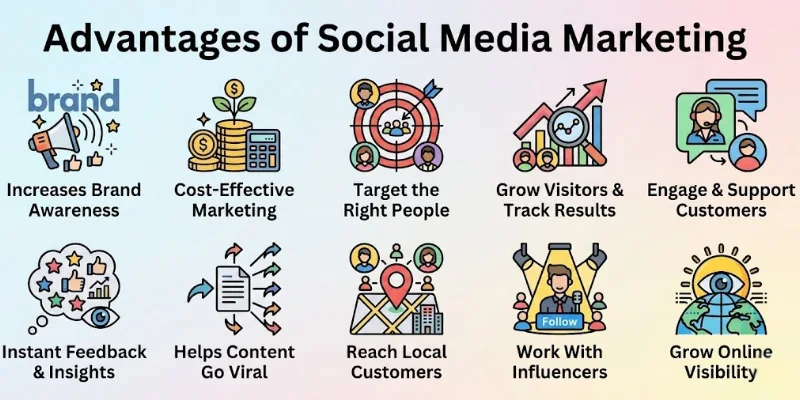
Here’s a list of the top benefits of social media marketing:
- Increases Brand Awareness
- Cost-Effective Marketing
- Target the Right People
- Grow Visitors & Track Results
- Engage & Support Customers
- Instant Feedback & Insights
- Helps Content Go Viral
- Reach Local Customers
- Work With Influencers
- Grow Online Visibility
Let’s take a closer look at these points.
1. Increases Brand Awareness
Platforms like Facebook, Instagram, and Twitter help your brand get noticed by many people. When more people see your brand, they remember it and trust it. This makes your business grow faster. Using social platforms regularly can make your brand more popular.
It works by sharing posts, videos, and images that show what your brand is about. People who like or share your content help others notice your brand too. Consistent posting can make your brand known to a larger audience.
- Share posts and images to attract attention.
- Use hashtags to reach more people.
- Post regularly to stay visible.
- Collaborate with other brands to expand reach.
- Encourage followers to share your content.
2. Cost-Effective Marketing
Social media marketing is cheaper than TV, print, or radio ads. Small businesses can promote their products without spending a lot. Paid ads on platforms like Facebook or Instagram are also affordable and effective.
You can create posts, videos, or ads at a low cost. This saves money while still reaching many people. It makes social media a great option for businesses of all sizes.
- Use free posting options on social media.
- Run small ads for better results.
- Focus on targeted marketing to save money.
- Share content that engages users organically.
- Track spending to avoid overspending.
3. Target the Right People
Digital channels allow you to show posts or ads to specific people. You can target by age, location, gender, or interests. This means your content reaches people who are more likely to be interested in your brand.
Reaching the right audience increases engagement and sales. It also saves time and money because you are not wasting resources on people who may not care about your product.
- Use targeting tools on social platforms.
- Choose the audience based on location and age.
- Focus on interests related to your product.
- Track which audience reacts best.
- Adjust targeting for better results.
4. Grow Visitors & Track Results
Social media brings people to your website or online store. More visitors mean more chances to sell products or get subscribers. Sharing links, posts, and videos encourages people to click and visit your website.
You can also track likes, shares, comments, clicks, and reach. This data shows what works and what doesn’t. Using these insights helps improve future campaigns.
- Share website links in posts and stories.
- Track clicks and shares to measure success.
- Use analytics tools to see visitor behaviour.
- Focus on posts that drive the most traffic.
5. Engage & Support Customers
Marketing platforms let you connect with your customers easily. You can reply to messages, comments, and questions. Engaging with your audience builds trust and loyalty over time.
It also helps solve problems fast. Fast replies show that your brand cares about its customers. Regular engagement improves your brand reputation and keeps followers happy.
- Respond to comments and messages quickly.
- Thank customers for positive feedback.
- Solve complaints politely and fast.
- Ask questions to start conversations.
- Share tips and helpful content regularly.
6. Instant Feedback & Insights
Your social profiles give you feedback immediately. People can comment, like, or share their opinions on your posts. This helps you know what your audience likes or dislikes.
You can also track trends and study what competitors are doing. These insights help make better marketing and product decisions in less time.
- Read comments and messages carefully.
- Conduct polls to get opinions.
- Monitor trends in your industry.
- Watch competitors’ activities.
- Adjust content based on feedback.
7. Helps Content Go Viral
One of the main pros of social media marketing is that a single good post can reach thousands or even millions of people. Viral content increases your brand’s visibility very quickly. When people share your posts, your message spreads faster.
Videos, images, or creative and funny posts usually go viral. The more people share, the bigger the audience your brand reaches. Viral content can also attract new followers and customers.
- Create engaging and creative content.
- Use videos, images, and infographics.
- Encourage followers to share posts.
- Use trending hashtags for better reach.
- Post at times when most people are online.
8. Reach Local Customers
Platforms let you target people in your city or region. This is very helpful for small or local businesses. Local posts and ads attract nearby customers easily.
By reaching local people, you increase foot traffic to stores or local orders. It also helps build a community around your brand.
- Use location-based targeting in ads.
- Share local news or offers.
- Encourage locals to share your posts.
- Join local groups to promote your business.
- Post about events happening in your area.
9. Work With Influencers
Influencers can promote your brand to their followers. Collaborating with influencers increases your reach and credibility. People trust influencers’ recommendations more than normal ads.
Influencer marketing helps you reach new audiences and improve brand awareness. It is a fast way to grow followers and potential customers.
- Partner with influencers related to your niche.
- Ask influencers to share posts or reviews.
- Collaborate for giveaways or promotions.
- Choose influencers with real engagement.
- Track influencer campaign results.
10. Grow Online Visibility
Active social media profiles improve your online presence. Shared content increases visibility on search engines and platforms. Being visible online makes it easier for customers to find your brand.
Regular posting and engagement also improve your reputation. A strong online presence attracts more followers, traffic, and potential sales.
- Post consistently on social media.
- Share content across multiple platforms.
- Optimize profiles for search visibility.
- Encourage followers to engage and share.
- Track growth to improve strategies.
Disadvantages of Social Media Marketing
While social media marketing offers many benefits, it also has some drawbacks. Understanding these cons in detail is important so you can use them wisely and avoid problems.
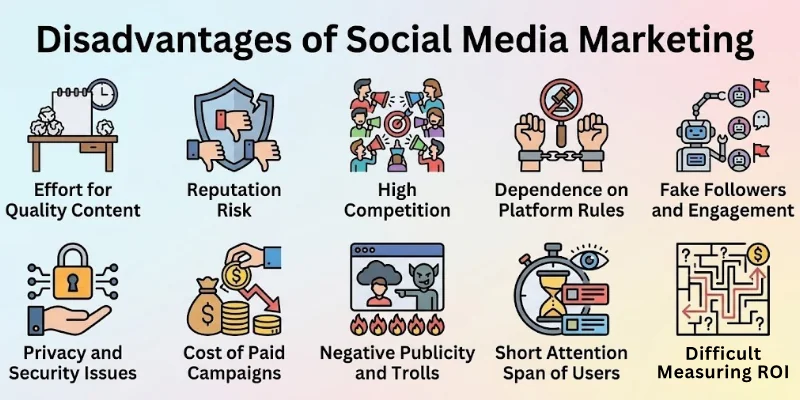
Here’s a quick list of the main cons of social media marketing.
- Time & Effort for Quality Content
- Reputation Risk
- High Competition
- Dependence on Platform Rules
- Fake Followers and Engagement
- Privacy and Security Issues
- Cost of Paid Campaigns
- Negative Publicity and Trolls
- Short Attention Span of Users
- Difficult Measuring ROI
Now, we will look at each one closely.
1. Time & Effort for Quality Content
Social media marketing takes a lot of time and effort. Businesses need to create posts, videos, images, and captions regularly. They also have to reply to comments and messages. Doing all these tasks every day can be hard for small teams.
High-quality content requires careful planning and creativity. If a business does not maintain consistent and attractive content, followers may lose interest. This constant demand can make social media marketing stressful.
- Posting daily consumes a lot of time.
- Creating images and videos requires extra effort.
- Writing captions takes creativity.
- Responding to comments adds workload.
- Small teams may feel overworked.
2. Reputation Risk
A single negative comment, review, or mistake can hurt a brand’s reputation. Social media is public, so issues spread quickly. Customers may lose trust if a brand appears careless or unprofessional.
Even small errors can have a large impact. Negative publicity can stay online for a long time and influence how people view a business. A brand’s reputation is sensitive and can be lost quickly.
- One bad post can reach thousands rapidly.
- Negative feedback can harm customer confidence.
- Small mistakes get noticed easily.
- Recovering from a damaged reputation takes time.
3. High Competition
Millions of businesses post on social media every day. Users see many posts from different brands, so it is hard to stand out. Smaller businesses often struggle to get noticed among bigger brands.
Without unique or creative content, brands can be lost in the crowd. Competition forces businesses to work constantly to keep attention and visibility.
- Many brands compete for user attention.
- Posts can be ignored quickly.
- Small brands have less visibility.
- Users have many alternatives.
- Continuous effort is needed to stay noticed.
4. Dependence on Platform Rules
Social media platforms often change their rules and algorithms. When this happens, your posts may not reach as many people as before. Businesses cannot control these sudden changes.
Reliance on platforms can make marketing results unpredictable. A change in algorithm can lower engagement or make previously successful posts ineffective.
- Algorithm changes can reduce reach.
- Visibility depends on platform rules.
- Engagement can drop suddenly.
- Paid ads may lose effectiveness.
- Results are influenced by the platform.
5. Fake Followers and Engagement
Some followers and interactions on social media are fake or automated. Likes, shares, and comments may not represent real customers or engagement.
Fake engagement makes metrics misleading. Brands may appear popular, but these numbers do not show actual interest or potential sales.
- Bots can inflate likes and comments.
- Metrics may give false impressions.
- Fake followers do not buy products.
- Engagement numbers may be misleading.
- Identifying fake accounts is difficult.
6. Privacy and Security Issues
Social media accounts can be hacked, and sensitive information can be stolen. Customer data or private business information may be exposed online.
Security risks can harm a business’s trust and reputation. Constant online threats make social media marketing risky if not monitored carefully.
- Accounts can be hacked easily.
- Customer information can leak.
- Sensitive data may be misused.
- Security breaches harm trust.
- Online threats are ongoing.
7. Cost of Paid Campaigns
Paid social media campaigns can become expensive. Poorly managed advertising may waste money and not deliver results.
Smaller businesses may struggle to afford ads while competing with bigger brands. Spending on campaigns without guaranteed results can be frustrating and costly.
- Ads can be expensive for small businesses.
- Poor targeting wastes money.
- Costs rise quickly in competitive niches.
- Small budgets may have limited reach.
- Results are not always guaranteed.
8. Negative Publicity and Trolls
Some users post harmful, offensive, or spam comments. Trolls can damage a brand’s image and distract from positive content.
Negative posts can spread quickly and get noticed by many people. Public criticism can overshadow the brand’s achievements or products.
- Trolls post harmful content publicly.
- Negative comments reduce trust.
- Spam can affect visibility.
- Bad publicity spreads fast.
- Brand reputation can suffer.
9. Short Attention Span of Users
Users scroll quickly and often forget posts within seconds. Capturing attention is challenging because people see so many posts every day.
Posts can be ignored or lost among other content. Brands must compete constantly to remain visible, making marketing demanding and fast-paced.
- Users scroll past content quickly.
- Posts are often forgotten.
- Difficult to maintain attention.
- Engagement drops without constant posting.
- Content can easily be overlooked.
10. Difficulty Measuring ROI
It is hard to know exactly how social media affects sales or leads. Not all results are clear, and engagement does not always lead to profit.
Businesses may struggle to see which campaigns or posts create real impact. Tracking success is challenging, making planning and budgeting difficult.
- It’s hard to link posts to sales or leads.
- Engagement does not guarantee results.
- Tracking ROI is complicated.
- Results may not be obvious.
- Planning and budgeting become harder.
Tips to Maximize Advantages and Reduce Disadvantages
Social media marketing can be highly beneficial, but it also presents its challenges. These simple tips can help you use it well and avoid problems:
- Plan Your Content: Make a schedule for posts. This saves time and keeps your profile up to date.
- Respond to Customers Quickly: Reply to messages and comments politely. It builds trust and shows you care.
- Focus on Quality: Share useful and interesting posts. Good content attracts more people and keeps them engaged.
- Use Analytics: Check likes, shares, and clicks. Analytics help you know what works and what does not.
- Set a Budget Carefully: Spend money only on ads that reach the right audience. Avoid wasting money on ads that do not work.
- Learn and Adapt: Social media rules and trends change often. Keep learning to stay effective.
- Handle Negative Feedback Calmly: Always respond politely to complaints. Solve problems quickly to protect your brand.
- Engage Regularly: Post often and interact with followers. Active profiles get more attention and growth.
By following these tips, businesses can enjoy the benefits of social media marketing while avoiding most of its challenges.
Final Words
That’s a simple look at the advantages and disadvantages of social media marketing. By understanding both, you can make smarter decisions for your business.
Plan your posts, engage with your followers, and use social media effectively to enjoy its benefits without big problems.
Remember, social media works best when you are consistent and provide value to your audience. Keep learning and improving, and your business will grow over time.
Need more help with the pros and cons of SMM? Write a comment below.
FAQs: Advantages and Disadvantages of Social Media Marketing
To help you learn more, here are some frequently asked questions about the pros and cons of social media marketing.
Social media marketing helps businesses reach more people, build their brand, and connect with customers. But it can also bring negative comments, take time, and face risks like cyber threats.
Some common problems of social media marketing include:
- Posts may not reach everyone.
- There are too many other brands online.
- Negative comments are visible to everyone.
- Algorithms and platform rules can change.
Social media marketing can take time every day to post content and reply to followers. Planning posts in advance can save time. Businesses need consistency to get good results.
The best platforms depend on your audience. Popular platforms include:
- TikTok
- YouTube
Choosing the right platform helps your business reach the right people
SMM panels are popular because they:
- Combine many services in one place for convenience.
- Give quick results to improve visibility and engagement.
- Help businesses grow their marketing without hiring large teams.
- They are cheaper than traditional advertising methods.
The 4 main pillars of social media marketing are
- Identity
- Content
- Visibility
- Interaction
Social media marketing is very effective when planned well. Over 77% of marketers see more returns on their investment. Companies with a strong social media presence can grow up to 31% faster than those without.



- Be Respectful
- Stay Relevant
- Stay Positive
- True Feedback
- Encourage Discussion
- Avoid Spamming
- No Fake News
- Don't Copy-Paste
- No Personal Attacks
- Be Respectful
- Stay Relevant
- Stay Positive
- True Feedback
- Encourage Discussion
- Avoid Spamming
- No Fake News
- Don't Copy-Paste
- No Personal Attacks
