Top Advantages and Disadvantages of Email Marketing in 2026
Published: 14 Jan 2026
Email marketing may look simple, but it plays a big role in online business. Many companies use it every day to share news, deals, and updates.
But not all emails work the same way, and some messages never reach people. That is why you need to understand the advantages and disadvantages of email marketing before you begin.
This guide will explain how email can help you grow and the issues you may face along the way. With clear and easy points, you will learn how to use email the right way.
Advantages of Email Marketing
Email marketing offers many benefits that help businesses grow and reach more customers. It is an easy way to share news, offers, and useful information.
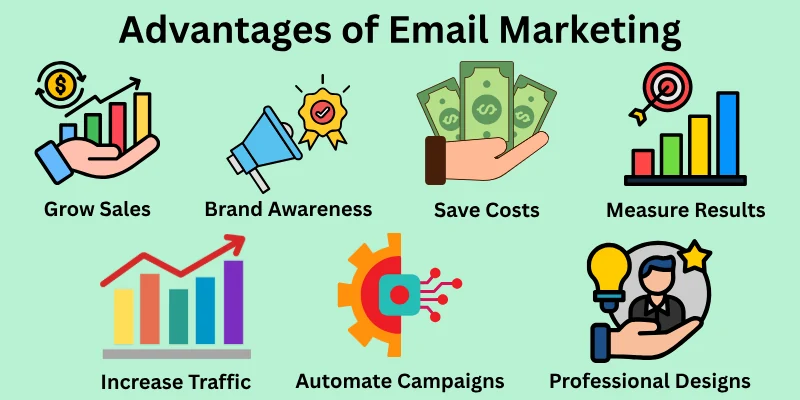
Here is the list of pros of email marketing:
- Increase Traffic
- Grow Sales
- Measure Results
- Save Costs
- Boost Customer Loyalty
- Automate Campaigns
- Professional Designs
- Enhance Brand Awareness
Let’s look at them in detail.
1. Increase Traffic
Email marketing is an easy way to get more people visiting your website. By adding links to your emails, readers can check your products, services, or blog posts. This keeps people connected and encourages them to return regularly.
Targeted emails to the right audience make your content more effective. More visitors mean a higher chance of turning them into customers.
- Brings more visitors to your website
- Encourages readers to explore your products or services
- Increases online visibility
- Supports other marketing channels
2. Grow Sales
Email marketing gives you an extra way to sell products. You can send offers, discounts, or updates directly to interested people. Personal emails make people more likely to click and buy.
Regular emails keep your audience informed and your brand visible. This helps you earn more revenue without spending extra on ads.
- Promotes products or special offers directly
- Encourages repeat purchases
- Increases revenue opportunities
- Works alongside other sales channels
3. Measure Results
One of the best features of email marketing is that you can track everything. You can see who opens emails, clicks on links, or interacts with content. This data shows what works and what doesn’t.
Analyzing results helps you improve future campaigns. When you know what your audience likes, your emails work better and get more attention.
- Tracks open rates, clicks, and engagement
- Shows what content works best
- Helps improve future campaigns
- Gives better returns on your spending
4. Save Costs
Email marketing is very affordable compared to other marketing methods. You can reach hundreds or thousands of people without spending much money. This makes it ideal for small businesses and startups.
Even with a small budget, one of the key benefits of email marketing is that it can give strong results. It is a cost-effective way to grow your audience and business quickly.
- Reaches a large audience at low cost
- Cheaper than print, TV, or paid ads
- Offers high ROI
- Saves money for other business needs
5. Boost Customer Loyalty
Regular emails help build strong relationships with your audience. Sharing tips, updates, or exclusive offers keeps readers interested and encourages them to stay with your brand.
This helps people trust your brand. Loyal customers are more likely to return and refer your brand to others.
- Keeps audience engaged consistently
- Builds long-term trust and loyalty
- Encourages repeat purchases
- Makes customers recommend your brand
6. Automate Campaigns
Automation saves time and ensures consistency in email marketing. Emails can be sent automatically when someone signs up, buys, or takes another action.
Automation helps send the right messages to the right people at the right time. You can focus on your strategy while maintaining smooth communication.
- Sends emails automatically based on actions
- Saves time on repetitive tasks
- Ensures timely delivery of messages
- Keeps campaigns consistent
7. Professional Designs
Email templates make it easy to create professional-looking emails. Well-designed emails grab attention, are easy to read, and reflect your brand consistently.
Templates save time and ensure every email looks polished. Professional design increases the chances that subscribers will read and engage.
- Uses pre-designed templates for a polished look
- Keeps branding consistent
- Saves time on design
- Makes emails attractive and easy to read
8. Enhance Brand Awareness
Emails keep your brand visible in your audience’s inbox. Sharing useful content, updates, or offers helps people remember your business and recognize your brand.
Sending emails regularly builds trust. Subscribers are more likely to buy or recommend your brand to others, naturally expanding your reach.
- Keeps your brand visible regularly
- Strengthens brand identity
- Shares helpful updates and offers
- Builds trust and recognition
Disadvantages of Email Marketing
Email marketing also has some disadvantages that you should be aware of. These points show the issues that can make your email campaigns less effective.
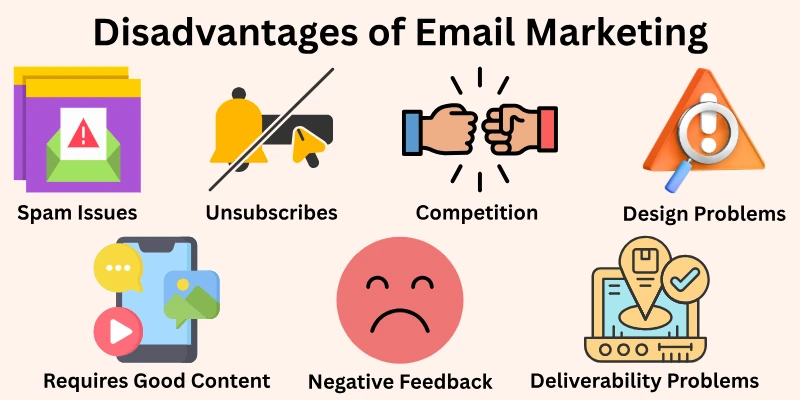
Let’s look at the main cons of email marketing.
- Spam Issues
- Requires Good Content
- Unsubscribes
- Deliverability Problems
- Design Problems
- Risk of Negative Feedback
- Competition
We will discuss each drawback in detail.
1. Spam Issues
Spam issues happen when emails are marked as unwanted by users or email providers. This stops your message from reaching people’s inboxes. Sending too many emails or using words that look “spammy” increases this problem.
To avoid spam issues, you need to follow good rules and send only useful content. Make sure your email list is clean and your subject lines are clear.
- Avoid using all capital letters in subject lines
- Don’t add too many links or images
- Only send emails to people who opted in
- Keep messages relevant and helpful
- Regularly clean your email list
2. Requires Good Content
Email marketing only works if your content is strong and interesting. Poor or boring emails make people ignore your messages. Every email must have a clear message that gives value to the reader.
Focus on writing short, simple, and helpful content. Make sure each email solves a problem or shares something useful.
- Write clear and simple sentences
- Use helpful tips or information
- Avoid long, complicated paragraphs
- Keep your message focused on one topic
- Add a call to action in every email
3. Unsubscribes
People can leave your email list anytime if they feel annoyed or receive too many emails. High unsubscribe rates mean your emails are not matching what people want.
To keep subscribers, send only useful and relevant emails. Let people choose how often they get messages.
- Respect subscriber preferences
- Send emails only when necessary
- Personalize content to the audience interest
- Avoid overloading users with messages
- Encourage readers to stay with useful content
4. Deliverability Problems
Deliverability problems happen when emails don’t reach the inbox. Spam filters, technical errors, or wrong email addresses can stop emails from being delivered.
Test your emails before sending and keep your email list clean. Follow best practices to improve delivery rates.
- Check for broken links or images
- Avoid spammy words in subject lines
- Use verified sender addresses
- Clean inactive or invalid emails regularly
- Monitor open and click rates
5. Design Problems
Emails can look different on phones, computers, or apps. A poorly designed email can confuse readers or make them ignore your message.
Use simple, clean, and responsive designs. Test emails on different devices to ensure they look good everywhere.
- Use short paragraphs and bullet points
- Keep images small and simple
- Use readable fonts and sizes
- Test emails on multiple devices
- Maintain consistent colours and style
6. Risk of Negative Feedback
Negative feedback happens when readers complain, mark emails as spam, or share bad reviews. It can hurt your brand reputation if emails are annoying or irrelevant.
One drawback of email marketing is sending too many emails or emails that are not useful. Always send helpful messages and respect what your subscribers like.
- Send only helpful and relevant content
- Avoid annoying pop-ups or messages
- Monitor complaints and feedback
- Give easy unsubscribe options
- Respond politely to complaints
7. Competition
Inboxes are crowded with many emails from different businesses. Your emails must compete for attention or risk being ignored.
Stand out with short subject lines, useful content, and personalization. Make sure your emails give value and grab interest.
- Write interesting and clear subject lines
- Personalize emails with names or interests
- Focus on one clear message per email
- Avoid copying other brands’ content
- Test different strategies to see what works
Examples of Successful E-mail Marketing
Email marketing works best when it gives value to the customer or encourages action. Here are some simple examples of how businesses use it successfully:
1. Discount and Sale Emails
Many shops send emails to tell customers about special discounts or sales. For example, a clothing store may send an email saying, “50% off all shoes this weekend!” People open these emails and visit the website or store to buy products.
2. Newsletter Emails
Websites and blogs often send newsletters to share useful tips or news. A cooking website, for instance, may send a weekly email with new recipes. Subscribers read these emails to learn new things and stay connected to the brand.
3. Personalized Emails
Some businesses send emails that match a customer’s interests or past purchases. For example, if someone bought a phone, the store might email them about phone cases or accessories. Personalized emails make customers feel special and encourage them to buy again.
4. Reminder Emails
Companies use emails to remind customers about important things. For instance, an online store may send an email saying, “You left items in your cart!” This helps customers complete their purchase.
5. Appreciation Emails
Businesses often thank customers to build trust. For example, after a purchase, a store may send an email: “Thank you for shopping with us! Here’s a 10% coupon for your next order.” This makes customers feel appreciated and encourages repeat buying.
These examples show that email marketing is not just about sending messages; it helps businesses connect with customers, increase sales, and build loyalty.
Conclusion
In this article, we’ve covered the advantages and disadvantages of email marketing. Email marketing can help you grow your business, build relationships, and reach many people, but it also requires attention to content, design, and frequency.
My advice is to plan each email, send useful content, and respect your subscribers’ choices. By following these simple steps, you can reduce problems and increase results.
Take action now, start creating your first email campaign and watch how it helps your business reach more people easily.
FAQs: Advantages and Disadvantages of Email Marketing
These are the top questions people ask about the pros and cons of email marketing.
Email marketing is a way for businesses to send messages to customers using email. It has many advantages, like being low-cost, fast, and able to reach many people. But it also has disadvantages, such as emails going to spam, privacy rules, or annoying people with too many emails.
The 4 P’s of email marketing are Product, Price, Place, and Promotion. These are important ideas that help businesses plan their marketing. In email marketing, they guide how to create effective emails that reach the right people and encourage them to take action.
Email marketing is very useful because it can help businesses get more people to take action, like visiting a website or buying a product. On average, about 3 out of 100 people click a link in an email, while only 0.5 out of 100 click a link from a tweet. This means email is about 6 times more likely to get people to act than social media.
To use email marketing effectively, follow these simple steps:
- Define your audience
- Set goals
- Choose a platform
- Build and segment your list
- Create and test emails
The 5 C’s of effective email communication are:
- Clear
- Cohesive
- Complete
- Concise
- Concrete
The 4 P’s of email marketing are:
- Product
- Price
- Place
- Promotion
These key elements help businesses plan effective email campaigns and reach the right customers.



- Be Respectful
- Stay Relevant
- Stay Positive
- True Feedback
- Encourage Discussion
- Avoid Spamming
- No Fake News
- Don't Copy-Paste
- No Personal Attacks
- Be Respectful
- Stay Relevant
- Stay Positive
- True Feedback
- Encourage Discussion
- Avoid Spamming
- No Fake News
- Don't Copy-Paste
- No Personal Attacks
