Digital Marketing for Pharmacy: See Results Fast in 2026
Published: 5 Aug 2026
Did you know that over 70% of people search online before buying medicines or visiting a pharmacy? This shows how important it is for pharmacies to be visible on the internet.
Digital marketing for pharmacy helps your store reach more customers, share health tips, and grow sales. By using online tools, pharmacies can compete with bigger stores and stay connected with their community.
Let’s dig in and see how your pharmacy can succeed online!
What is Digital Marketing for Pharmacy?
Digital marketing for pharmacies means using the internet to promote your pharmacy and reach more customers. It helps people find your store online, learn about your medicines, and get health advice.
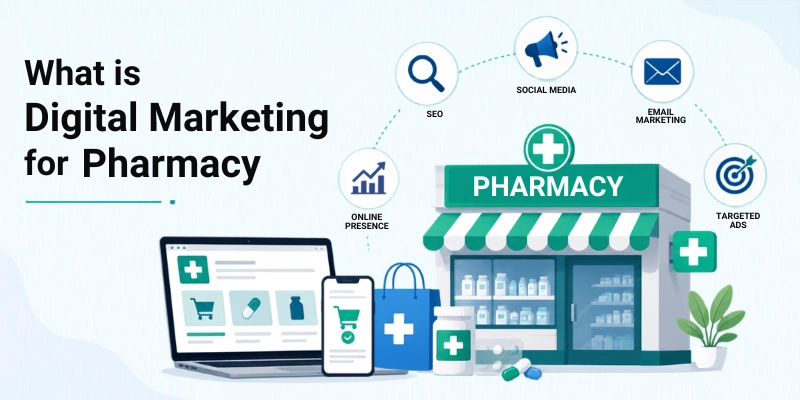
Pharmacies can use websites, social media, emails, and online ads to connect with customers. For example, you can share health tips on Facebook, let people order medicines online, or send email reminders for refills.
All these activities make your pharmacy more visible and help customers trust and choose your store.
Why Digital Marketing Matters for Pharmacies
Digital marketing is very important for pharmacies because it helps your store grow and connect with customers online.
Here are the main reasons why pharmacies need it:
- Reach local customers easily – Show your pharmacy to people searching for medicines near them.
- Build trust and credibility – Share health tips, reviews, and reliable information to gain customer confidence.
- Increase sales and customer engagement – Promote products, send reminders, and interact with customers to boost sales.
- Compete with bigger stores – Small pharmacies can compete with larger chains by being visible online.
- Save time and resources – Online marketing can reach many customers without spending too much on traditional ads.
- Stay updated with trends – Keep your pharmacy current with online trends, new tools, and customer needs.
Key Digital Marketing Strategies for Pharmacy
Digital marketing for pharmacy is all about using the internet to grow your store, reach more customers, and build trust.
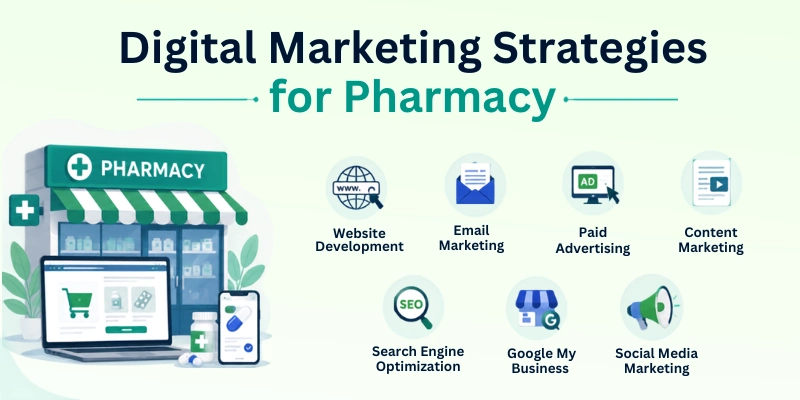
Here are the most important strategies you can use:
1. Pharmacy Website & SEO (Search Engine Optimization)
A website is your pharmacy’s online shop. It shows customers what you offer and how to contact you.
- List your medicines and services clearly (e.g., prescription drugs, OTC medicines, health supplements).
- Use keywords like “buy medicines online,” “local pharmacy near me,” or “home delivery pharmacy” so people can find you easily.
- Include a health tips blog, like “How to prevent cold and flu” or “Tips for diabetes care.”
- Make your website mobile-friendly, since many customers search on phones.
2. Local SEO for Pharmacies
Most pharmacy customers live nearby. Local SEO makes sure they can find your store.
- Add your pharmacy to Google Maps and local business directories.
- Use location-based keywords in your website and posts, e.g., “pharmacy in [city name]” or “medicine delivery near me.”
- Encourage customers to leave online reviews. Good reviews increase trust and attract more local visitors.
- Share photos of your store and team to make it recognizable and friendly.
3. Social Media Marketing for Pharmacies
Social media is a powerful way to share health information and promotions.
- Post health tips, medicine guides, and seasonal advice, e.g., “Tips to stay healthy during flu season.”
- Show your products, new stock, and special offers visually with images or short videos.
- Respond to questions and comments quickly to build customer trust.
- Run local social media campaigns to promote home delivery or vaccination services.
4. Email Marketing for Pharmacies
Emails help you communicate directly with your customers.
- Send medicine refill reminders or prescription renewal notices.
- Share health tips, seasonal advice, and new products.
- Include special offers or discounts for loyal customers.
- Keep emails short, simple, and helpful—avoid overwhelming customers with too much text.
5. Paid Advertising (Google Ads & Social Media Ads)
Paid ads help your pharmacy appear in front of people searching for medicines or health services.
- Use Google Ads for searches like “buy blood pressure medicines near me.”
- Run Facebook or Instagram ads for local promotions like flu shots or new vitamin stock.
- Track your ad results to see which campaigns bring more customers and sales.
6. Content Marketing for Pharmacies
Sharing useful health information makes your pharmacy trustworthy.
- Write simple guides, like “How to manage cold and flu” or “Healthy diet tips for diabetics.”
- Share short videos explaining medicine use or health advice.
- Post content regularly to keep your pharmacy visible online.
7. Online Reputation Management for Pharmacies
Your online reputation affects whether customers trust your pharmacy.
- Encourage satisfied customers to leave positive reviews on Google or Facebook.
- Respond politely to negative reviews and solve complaints quickly.
- Share customer testimonials, e.g., someone praising fast home delivery or helpful staff.
- Highlight professional certifications or pharmacist expertise to build credibility.
Measuring Success & Tools for Pharmacy Digital Marketing
To make sure your digital marketing works, you need to track results and use the right tools. This helps your pharmacy know what is working, what needs improvement, and how to reach more customers efficiently.
- Track Website Visitors – See how many people visit your pharmacy website and which pages they view most (like your medicine list or health blog)
- Monitor Social Media Engagement – Check likes, shares, comments, and messages on your posts to see which content customers like.
- Measure Email Performance – Track open rates, click rates, and how many people use offers or reminders from emails.
- Check Online Reviews – Monitor your pharmacy’s reviews on Google, Facebook, and other platforms to maintain a good reputation.
- Use Simple Digital Tools:
- Google My Business – Show your pharmacy on Google Maps and track local searches.
- Canva – Create simple social media posts or flyers.
- Mailchimp – Send emails and manage customer lists.
- Basic SEO Tools – Use tools like Ubersuggest to find keywords and improve website visibility.
- Analyze Paid Ads – Check which Google or social media ads bring more customers and adjust the budget accordingly.
- Set Goals & Reports – Decide what matters most: more website visitors, more prescriptions filled, or more social media engagement. Track progress weekly or monthly.
Final Words
In this article, we’ve covered digital marketing for pharmacies in detail. From my experience, starting with a simple website and local social media posts works best for small pharmacies.
Focus on building trust with your customers online before trying complex campaigns. Take the first step today by setting up your pharmacy online and connecting with your local community!
FAQ: Digital Marketing for Pharmacy
Here are some of the most frequently asked questions about pharmacies:
Even small pharmacies can compete with bigger stores using digital marketing. Simple tools like Google Maps, social media posts, and email reminders help you reach nearby customers. It improves visibility, builds trust, and encourages repeat visits.
Facebook and Instagram are popular for pharmacy marketing because they let you share health tips, promotions, and updates. WhatsApp can also be used for direct customer communication. Posting regularly and engaging with followers helps your pharmacy stay visible online.
Local SEO makes your pharmacy appear in searches for people near you, like “pharmacy near me” or “medicine delivery in [city].” Adding your pharmacy to Google Maps and encouraging reviews boosts your local visibility. This helps attract new customers from your area.
Pharmacies should share helpful content like medicine guides, health tips, and seasonal wellness advice. Short videos, blog posts, and infographics work well to engage customers. Good content builds trust and encourages people to choose your pharmacy.
Track website visits, social media engagement, email open rates, and online reviews. Use tools like Google Analytics, Google My Business, and Mailchimp to monitor results. This helps you understand what works and improve your marketing strategies.



- Be Respectful
- Stay Relevant
- Stay Positive
- True Feedback
- Encourage Discussion
- Avoid Spamming
- No Fake News
- Don't Copy-Paste
- No Personal Attacks
- Be Respectful
- Stay Relevant
- Stay Positive
- True Feedback
- Encourage Discussion
- Avoid Spamming
- No Fake News
- Don't Copy-Paste
- No Personal Attacks
