Types of Affiliate Marketing: Make Money Online in 2026
Published: 6 Mar 2026
More people are earning real money online than ever before, and affiliate marketing is a big reason why. Some affiliates now make over $50,000 a year without creating their own products or working fixed hours.
That kind of freedom sounds exciting, but it only works if you understand the types of affiliate marketing first. Each type follows a different path and needs a different level of effort, trust, and skill.
In this article, we’ll break down the main affiliate marketing types in a simple, honest way so you can choose the one that fits your goals and start the right way.
Affiliate Marketing Types
There are several ways you can earn as an affiliate. Each type works a little differently and suits different strategies. Knowing them helps you pick the best way to start and grow.
Here’s a list of the main types of affiliate marketing strategies:
- Unattached Affiliate Marketing
- Related Affiliate Marketing
- Involved Affiliate Marketing
- Coupon & Deal Affiliate Marketing
- Comparison-Based Affiliate Marketing
- Review-Based Affiliate Marketing
- Niche Website Affiliate Marketing
- PPC (Pay-Per-Click) Affiliate Marketing
- Loyalty Affiliate Marketing
- Cashback Affiliate Marketing
- Local Affiliate Marketing
- SaaS Affiliate Marketing
- Subscription Affiliate Marketing
Keep reading to explore each type.
1. Involved Affiliate Marketing
Involved affiliate marketing is when you personally use a product and share it with your audience. It builds trust because people see that you genuinely know the product. This type is great for bloggers, YouTubers, and content creators who want a steady income.
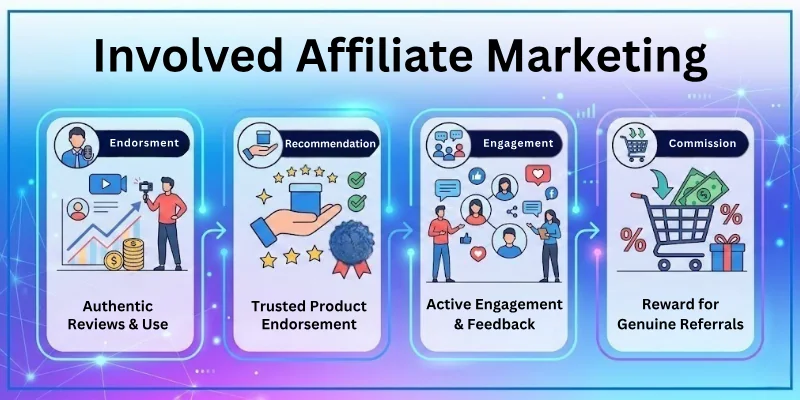
It lets you explain products in your own words and show their real value. Many marketers prefer it because it can increase clicks and sales. It also helps maintain long-term relationships with your audience. Using this type can make your affiliate marketing more reliable and effective.
- Pros: Builds credibility, increases conversion, supports audience loyalty
- Cons: Requires testing products, may need upfront investment
- Tools/Platforms: Amazon Associates, ShareASale, CJ Affiliate
- Tips to Succeed: Be honest, focus on quality content, and share real reviews
2. Unattached Affiliate Marketing
Unattached affiliate marketing means promoting products without using them yourself. Anyone can start this type without prior experience. It works well for beginners and allows sharing links online to earn commissions from clicks or sales.
It reaches large audiences quickly and is often used by email marketers, social media promoters, and website owners. This type can help you earn while learning the basics of affiliate marketing.
- Pros: Easy to start, no experience needed, low risk
- Cons: Lower trust with the audience, smaller conversion rate
- Tools/Platforms: ClickBank, Impact, FlexOffers
- Tips to Succeed: Focus on traffic, use clear calls-to-action, and monitor link performance
3. Related Affiliate Marketing
Related affiliate marketing is promoting products that fit your niche, even if you haven’t used them. It matters because it matches your audience’s interests and increases the chance of sales.
This type works well for niche websites, blogs, and social media pages. It helps maintain engagement and build authority. Many marketers use it to monetize content effectively.
- Pros: Higher engagement, relevant targeting, easier promotion
- Cons: Requires niche knowledge, may need research
- Tools/Platforms: ShareASale, Rakuten, Awin
- Tips to Succeed: Pick products that fit your niche, create focused content, and track results
4. Pay-Per-Sale Affiliate Marketing
Pay-per-sale affiliate marketing pays you only when someone buys a product through your link. It rewards real results, not just clicks. This type is best for serious marketers focused on profit.
E-commerce companies often use it to ensure affiliates bring actual sales. It encourages high-quality promotion and directly links effort to income.
- Pros: High earning potential, rewards real sales, and encourages quality
- Cons: Earnings may start slow; requires trust
- Tools/Platforms: Amazon Associates, Shopify Affiliate, CJ Affiliate
- Tips to Succeed: Promote high-converting products, write persuasive content, and track performance
5. Pay-Per-Click Affiliate Marketing
Pay-Per-Click Affiliate Marketing pays you every time someone clicks your link. You don’t need a sale to earn. It works well for websites, blogs, and social media pages with high traffic.
This type allows beginners to start quickly and generate passive income. Combining it with ads or emails can increase exposure and early revenue.
- Pros: Quick to start, earns from clicks, no need for sales
- Cons: Low earnings per click, needs high traffic
- Tools/Platforms: Google Ads, PropellerAds, Media.net
- Tips to Succeed: Focus on high-traffic platforms, optimize links, and track click rates
6. Pay-Per-Lead Affiliate Marketing
Pay-per-lead affiliate marketing earns commission when someone signs up or fills out a form. It generates income without requiring a purchase. It works well for newsletters, free trials, or registrations.
Companies use it to grow their customer base. This type allows earning even with low traffic and can lay a foundation for long-term marketing.
- Pros: Beginner-friendly, earns without sales, builds leads
- Cons: Lower commission than sales, needs a targeted audience
- Tools/Platforms: Leadpages, HubSpot, AWeber Affiliate Programs
- Tips to Succeed: Promote lead magnets, target the right audience, and test forms
7. Two-Tier Affiliate Marketing
Two-tier affiliate marketing pays you for your sales and for sales made by affiliates you refer. It creates multiple income streams. It works well for marketers building teams or networks.
Many companies use it to expand their programs quickly. This type can boost earnings faster than single-level programs.
- Pros: Extra income, encourages team growth, scalable
- Cons: Depends on referred affiliates, needs management skills
- Tools/Platforms: ClickBank, JVZoo, Refersion
- Tips to Succeed: Recruit active affiliates, track performance, and guide your team
8. Multi-Tier Affiliate Marketing
Multi-tier affiliate marketing is similar to two-tier but has multiple levels of commissions. It creates several income layers from different affiliates.
This type works well for network-focused marketers. Many programs use it to encourage growth and motivate affiliates. It can increase earning potential over time.
- Pros: Multiple income streams, scalable, motivates network growth
- Cons: Complex tracking, relies on active teams
- Tools/Platforms: MarketHealth, Post Affiliate Pro, Omnistar Affiliate
- Tips to Succeed: Build strong teams, monitor performance, provide resources
9. Cookie-Based Affiliate Marketing
Cookie-based affiliate marketing tracks users through cookies to credit sales. It ensures affiliates get paid even if purchases happen later. This type works well for online stores and e-commerce. It protects against lost commissions and provides accurate tracking.
- Pros: Accurate tracking, longer credit period, protects earnings
- Cons: Cookies can expire, depends on user devices
- Tools/Platforms: Amazon Associates, ShareASale, CJ Affiliate
- Tips to Succeed: Promote consistently, remind the audience, and use reliable tracking
10. Mobile Affiliate Marketing
Mobile affiliate marketing promotes products via phones or apps. It matters because most users browse and shop on mobile. It works well for apps, bloggers, and social media marketers. Mobile campaigns reach wide audiences quickly and integrate easily with apps, SMS, and social media.
- Pros: Large audience, high engagement, quick reach
- Cons: Small screens limit content; needs mobile optimization
- Tools/Platforms: Google Ads Mobile, AppLovin, Branch
- Tips to Succeed: Optimize for mobile, use short links, track mobile metrics
11. Email Affiliate Marketing
Email affiliate marketing uses email campaigns to promote products. It matters because email often has high conversion rates. It works for bloggers, businesses, and marketers with mailing lists.
You can share links, offers, and product info directly. It allows consistent communication and personalized promotions.
- Pros: High conversion, direct reach, easy tracking
- Cons: Needs email list, risk of spam filters
- Tools/Platforms: Mailchimp, AWeber, ConvertKit
- Tips to Succeed: Personalize emails, avoid spammy links, segment the audience
12. Social Media Affiliate Marketing
Social media affiliate marketing promotes products on platforms like Instagram, Facebook, or TikTok. It matters because it reaches millions of users daily. This type works well for influencers, content creators, and brands. You can share links in posts, stories, or bios. It allows interactive engagement and visibility.
- Pros: Large audience, visual appeal, interactive
- Cons: Needs active presence, algorithm changes affect reach
- Tools/Platforms: Instagram, TikTok, Facebook Affiliate Programs
- Tips to Succeed: Post consistently, use visuals, engage the audience
13. Content Affiliate Marketing
Content affiliate marketing promotes products through blogs, videos, guides, or articles. It helps educate the audience and encourages purchases. It works well for websites, YouTube, and educational platforms.
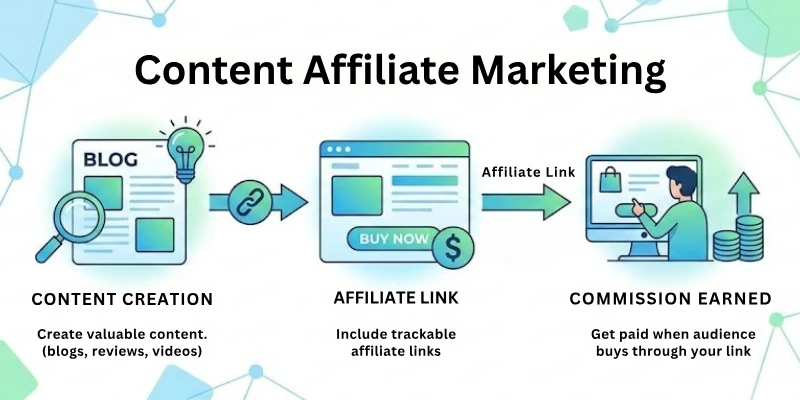
Integrating affiliate links naturally builds trust and authority. This type can generate long-term traffic and sales.
- Pros: Builds authority, long-term traffic, natural promotion
- Cons: Requires content creation, slower results
- Tools/Platforms: WordPress, YouTube, Medium
- Tips to Succeed: Create quality content, include links naturally, focus on SEO
Affiliate Marketing Tools You Must Use
After exploring all the affiliate types, it’s important to know the tools that make your work easier. These tools help you track links, manage campaigns, and boost your earnings effectively.
Useful Tools:
- Tracking Tools: Monitor clicks, sales, and conversions (e.g., Voluum, ClickMeter)
- Link Management Tools: Shorten and organize links for easy sharing (e.g., Bitly, ThirstyAffiliates)
- SEO & Keyword Tools: Find high-traffic keywords for your campaigns (e.g., SEMrush, Ahrefs)
- Email Marketing Tools: Build lists and send promotions (e.g., Mailchimp, AWeber, ConvertKit)
- Content Creation Tools: Make blogs, videos, or graphics easily (e.g., Canva, WordPress, Grammarly)
- Affiliate Networks & Platforms: Find products to promote and manage campaigns (e.g., Amazon Associates, ShareASale, CJ Affiliate)
Final Note
We’ve covered all the main types of affiliate marketing and how they work. Now it’s up to you to choose the one that fits your style and audience. Take it step by step, focus on helping people, and be honest in your promotions.
The more value you give, the more your audience will trust you. Keep learning, stay consistent, and little by little, you can turn affiliate marketing into a steady way to earn online.
Start your affiliate journey today, and don’t forget to check out our other guides to grow your online income even faster!
FAQs: Types of Affiliate Marketing
Here are the key questions beginners ask about affiliate marketing types and their answers.
To understand affiliate marketing, you should know the main points that make it work:
- Promote products or services online to earn money.
- Share special affiliate links with your audience.
- Earn a commission when someone buys or takes action.
- Easy to start, even for beginners.
To succeed, choose a type that fits your style, pick the right products, and use tools for tracking and promotion. Focus on building trust with your audience and sharing useful content.
An affiliate marketing system is the process or setup you follow to earn commissions. It includes choosing products, creating links, sharing them, tracking performance, and getting paid.
The main types are:
- Involved
- Unattached
- Pay-Per-Sale
- Pay-Per-Click
- Content
Common models include pay-per-sale, pay-per-click, pay-per-lead, and multi-tier. Each model determines how you earn commissions based on actions like sales, clicks, or leads.
Affiliate branding means promoting products in a way that matches your personal or website brand. It builds trust, makes your promotions more credible, and increases conversions.
Yes:
Beginners can start with simple types like unattached or content affiliate marketing. Using the right system and learning as you go makes it easier to grow your earnings.




- Be Respectful
- Stay Relevant
- Stay Positive
- True Feedback
- Encourage Discussion
- Avoid Spamming
- No Fake News
- Don't Copy-Paste
- No Personal Attacks
- Be Respectful
- Stay Relevant
- Stay Positive
- True Feedback
- Encourage Discussion
- Avoid Spamming
- No Fake News
- Don't Copy-Paste
- No Personal Attacks
