Advantages and Disadvantages of Pinterest in 2026 for Creators
Published: 22 Jan 2026
Pinterest can be a powerful platform, but it is not perfect for everyone. Before you invest your time and effort, it’s smart to understand both sides clearly.
In this blog post, we will cover all the pros and cons of Pinterest in detail, so you know exactly what to expect.
From driving long-term traffic and boosting brand visibility to dealing with slow results and high consistency needs, this guide will help you decide if Pinterest truly fits your goals.
Now, let’s shift our focus and understand the real Pinterest pros and cons.
Benefits of Pinterest
Pinterest has many advantages for both casual users and businesses. It’s more than just a place to scroll—it helps you find ideas, save inspiration, and even grow your audience online.
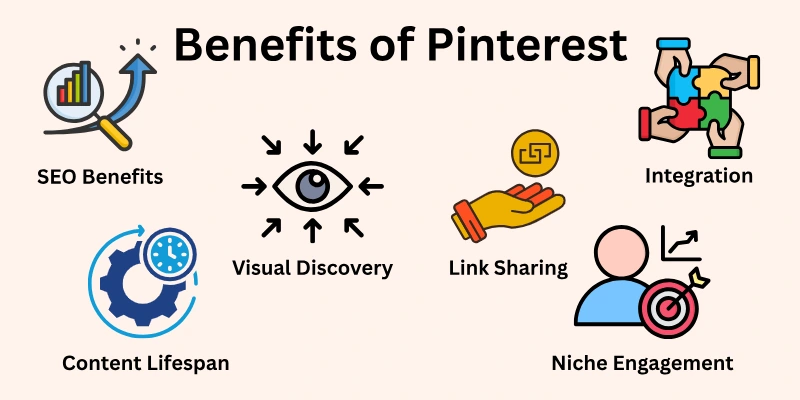
Here’s a breakdown of the main advantages of Pinterest.
- Visual Discovery & Inspiration
- Longer Content Lifespan
- Traffic & SEO Benefits
- Easy Link Sharing
- Accessibility & Integration
- Community & Niche Engagement
Let’s explore each point of the pros of Pinterest in depth.
1. Visual Discovery & Inspiration
Pinterest makes it easy to explore new ideas through pictures. You can discover creative projects, recipes, fashion looks, or home décor tips all in one place. Saving ideas in boards helps you plan and organize projects effortlessly.
- Discover trends and new ideas quickly
- Organize inspiration in boards for easy access
- Perfect for creative planning
- Explore topics beyond your usual interests
2. Longer Content Lifespan
Pins stay relevant for months, unlike posts on other social media platforms that disappear fast. Even older content can attract views, which gives your efforts a long-term impact.
- Content remains discoverable over time
- Attracts new viewers naturally
- Works well for evergreen ideas
- Reduces the need for constant posting
3. Traffic & SEO Benefits
Pinterest acts like a search engine for ideas. With the right keywords and descriptions, your pins can send visitors to your blog, website, or online store. This makes it a smart tool for driving traffic and growing your audience.
- Increases website visits through clickable pins
- Boosts search visibility
- Supports content discovery over time
- Helps bloggers and businesses expand reach
4. Easy Link Sharing
Every pin can include a link, so users can go straight from Pinterest to your content. This makes sharing products, blog posts, or services simple and effective.
- Directly connects users to your website
- Promotes products or resources easily
- Supports online marketing goals
- Encourages more engagement with your content
5. Accessibility & Integration
Pinterest works on any device, letting you browse, save, or post ideas wherever you are. It also connects smoothly with other platforms, making sharing your pins straightforward.
- Works on phones, tablets, and computers
- Syncs with social media and websites
- Let’s you manage content anywhere
- Keeps ideas organized and easy to access
6. Community & Niche Engagement
Pinterest lets people connect over shared interests. Following boards, saving each other’s pins, and exploring niche communities make it easy to discover new ideas and engage with like-minded users.
- Connects with people who share your hobbies
- Encourages idea exchange and inspiration
- Helps small communities grow
- Reaches audiences interested in specific topics
Pinterest Cons
While Pinterest is a great platform, it has some drawbacks that users and businesses should be aware of. Knowing these can help you use it more effectively.
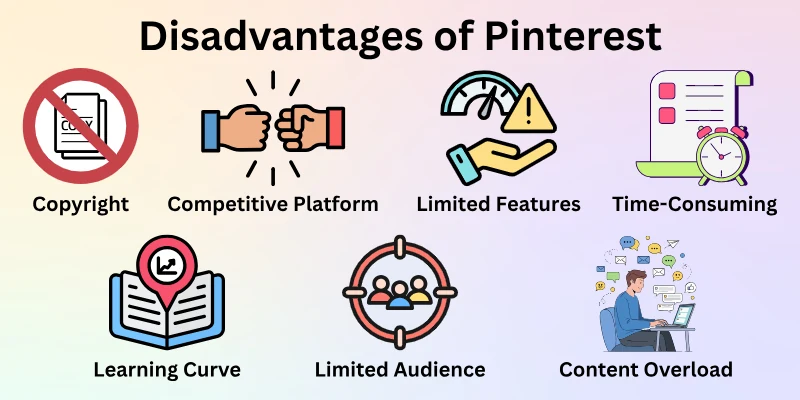
Take a look at the main disadvantages of Pinterest.
- Time-Consuming Content Creation
- Competitive Platform
- Dependence on Algorithm
- Limited Interaction Features
- Content Overload
- Limited Audience Diversity
- Learning Curve for Analytics
- Copyright & Plagiarism Issues
Let’s examine these cons of Pinterest one by one.
1. Time-Consuming Content Creation
Creating attractive pins takes effort. High-quality images, engaging descriptions, and consistent posting can be demanding, especially for beginners.
- Designing eye-catching visuals requires skill
- Regular posting is needed to stay visible
- Can be overwhelming for casual users
- Planning content in advance helps save time
2. Competitive Platform
Many people and businesses use Pinterest, which makes standing out a challenge. Popular topics often have thousands of pins, so getting noticed takes strategy.
- High competition in trending niches
- Requires unique ideas to attract attention
- Success may take longer than expected
- Consistency and originality matter most
3. Dependence on Algorithm
Pinterest decides what content to show users based on its algorithm. This means your pins’ reach can change unexpectedly, even if your content is high quality.
- Visibility can drop without warning
- The algorithm favours certain types of content
- Requires monitoring and adapting strategies
- Not all pins get equal exposure
4. Limited Interaction Features
One of the notable features of Pinterest is that it doesn’t focus on real-time interactions like other social media platforms. Engagement mainly comes from saves and clicks, while comments and discussions are limited.
- Hard to build conversations with followers
- Less opportunity for immediate feedback
- Focuses on content sharing rather than chat
- Engagement is mostly passive
5. Content Overload
Pinterest has a massive amount of pins, which can make it hard to get noticed. Users might feel overwhelmed with too many similar ideas.
- Difficult to stand out among thousands of pins
- Users may scroll past content quickly
- Quality content can get lost in the crowd
- Niche targeting helps visibility
6. Limited Audience Diversity
Pinterest’s user base leans heavily toward certain groups, like DIY enthusiasts and creatives. Some topics or industries may find it harder to reach their target audience.
- Not ideal for every industry or demographic
- May miss audiences outside popular niches
- Best for visually-driven content
- Useful for targeting specific communities
7. Learning Curve for Analytics
Understanding Pinterest analytics and using them to improve performance can be tricky for beginners. Tracking clicks, saves, and impressions requires time and learning.
- Analytics dashboard can be confusing
- Requires trial and error to optimize strategy
- Beginners may struggle to measure success
- Knowledge improves performance over time
8. Copyright & Plagiarism Issues
Pins are easy to share, but not all users credit the original creators. This can create issues for content owners and businesses trying to protect their work.
- Risk of ideas being reposted without credit
- It’s hard to control content once it’s shared
- Businesses need to monitor for misuse
- Proper attribution is crucial
Pros and Cons of Pinterest for Businesses
Pinterest is not just for personal inspiration. Businesses can use it to grow their brand, reach new customers, and drive traffic to their website. At the same time, it comes with a few challenges that are good to know.
Why Businesses Should Use Pinterest
Pinterest can help businesses in several ways:
- Build Brand Awareness: Pins can be seen by many people, helping your business get noticed.
- Encourage Long-Term Engagement: Pins continue to attract attention over time, so your content keeps working for you.
- Drive Traffic and Boost SEO: Pinterest works like a search engine, bringing visitors to your website or online store.
Challenges for Businesses
There are a few things businesses need to keep in mind when using Pinterest:
- Longer Sales Cycle: People often browse and save pins for weeks before deciding to buy.
- Consistent Content and Planning: To get results, you need to post quality pins regularly and have a clear strategy.
Final Thought
In this guide, we have covered the advantages and disadvantages of Pinterest. The platform is excellent for inspiration, SEO, and niche engagement, yet it can be time-consuming and competitive.
To manage these drawbacks, try setting realistic posting schedules, tracking results, and focusing on your most relevant audience. By doing this, you can enjoy the advantages while reducing the risks.
I hope this guide helps you use Pinterest wisely and enjoyably!
FAQs: Pros and Cons of Pinterest
This section answers some of the most common questions about the advantages and disadvantages of Pinterest, so you can get a clear picture of what to expect and how to make the most of it.
Yes. Pinterest can help drive traffic to your blog or website because pins can link back to your pages. This can increase visitors over time.
Yes. Some cons of Pinterest for businesses include strong competition, the need for regular content creation, and algorithm changes that can reduce visibility.
People use Pinterest to find visual ideas and inspiration for projects, style, food, or home plans. It works like a discovery tool where you save ideas you like.
Yes. Pinterest can help improve SEO because pins are indexed by search engines. Good pins can help your content show up in search results.
Pinterest is easy to get started with, but creating good pins and learning how the platform works can take time and practice. Some people find this part challenging at first.
Not really. Pinterest does not focus on live chat or real‑time comments like other social sites. Most interaction comes from saving and clicking pins.
Yes, many people share inspiring quotes about Pinterest that highlight creativity, ideas, and planning. These quotes often remind users how Pinterest can spark new projects or help organize thoughts in a fun, visual way.



Great article! It clearly explains both the advantages and disadvantages of Pinterest, making it easy for readers to understand whether the platform fits their goals. The practical insights and balanced perspective make this a very helpful guide for creators and businesses alike.