Key Advantages and Disadvantages of Facebook in 2026
Published: 21 Jan 2026
One morning, I opened Facebook to check a message but ended up scrolling for nearly an hour. That moment made me think deeply about the advantages and disadvantages of Facebook.
The platform gives us connection, news, and entertainment, but it also pulls us into habits we do not always notice. After using Facebook for a long time, I have learnt what makes it useful and what makes it risky.
In this article, I will share my experience with Facebook and guide you on what to watch out for.
So, let’s not waste any time and go straight into the pros and cons of Facebook.
Advantages of Facebook
Using Facebook comes with many perks, and knowing the benefits of Facebook helps you see why it’s so popular. It’s more than just scrolling; it’s a place to connect, learn, and even grow your ideas.
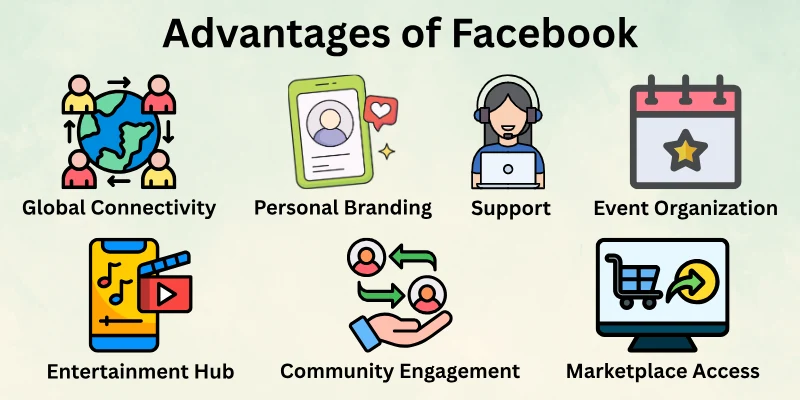
Here’s a handy list of all the top pros of Facebook to know.
- Global Connectivity
- Personal Branding
- Business Growth Platform
- Community Engagement
- Event Organization
- Learning & Knowledge Sharing
- Marketplace Access
- Real-Time News Updates
- Entertainment Hub
- Support & Networking Opportunities
Next, we’ll explore the key benefits of FB and why it matters.
1. Global Connectivity
One of the biggest advantages of FB is that it lets you connect with people across the world in seconds. You can easily stay in touch with family, friends, or colleagues, no matter how far apart you are. It removes the barriers of distance, helping you maintain relationships that would otherwise be hard to keep.
From sharing photos to chatting in real time, Facebook keeps people emotionally close even when miles separate them.
2. Personal Branding
Your Facebook profile is more than just a social page—it’s a way to show who you are. You can share your achievements, hobbies, or opinions to highlight your skills and personality. This helps friends, potential employers, or collaborators understand your strengths. Over time, it can become a small but powerful personal brand that reflects your unique identity online.
3. Business Growth Platform
Facebook gives businesses tools to reach the right audience easily. Creating a page, posting updates, or running ads allows brands to connect with potential customers directly. Small businesses, in particular, benefit from low-cost marketing opportunities. It also helps track engagement, so businesses can see what works and adapt quickly.
4. Community Engagement
One of the key strengths of Facebook is its groups feature, which brings people with similar interests together. Whether it’s a hobby, a professional field, or a local community, groups give you a space to share, discuss, and learn.
They encourage interaction that might not happen elsewhere and help people feel part of a real community. Many groups also become valuable support networks where members can give and receive help.
5. Event Organization
Planning an event becomes simple with Facebook. You can create events, invite people, and track RSVPs in one place. It also sends reminders to attendees, reducing the chances of someone forgetting. From small meetups to large workshops, Facebook’s tools save time and make event management smoother.
6. Learning & Knowledge Sharing
One of the main positive aspects of Facebook is that it is not just for socialising; it is also a great place to learn. Many pages, groups, and live sessions offer tips, tutorials, and expert advice. You can ask questions and get answers from people all over the world. With the right pages or communities, even casual scrolling can turn into a valuable learning opportunity.
7. Marketplace Access
Facebook Marketplace allows you to buy or sell products locally without leaving the platform. You can find items at reasonable prices and sell your own easily. Unlike other platforms, Marketplace is integrated with your profile, so buyers and sellers can check trustworthiness. It’s convenient for small-scale trade or exploring unique items in your area.
8. Real-Time News Updates
Facebook keeps you updated on what’s happening globally and locally. Pages and news outlets post real-time updates, and trending topics show what people are talking about. It’s a quick way to stay informed without switching between multiple sources. You can also engage by commenting or sharing your opinion.
9. Entertainment Hub
Facebook offers endless entertainment, from short videos and memes to live streams and quizzes. You can discover new music, watch live shows, or participate in interactive content. It’s a platform where people can relax and have fun during free time, making social media more than just a communication tool.
10. Support & Networking Opportunities
Facebook connects you with mentors, professionals, and peer groups for support. You can find career advice, mental health tips, or guidance from people who’ve experienced similar situations. It’s a space for meaningful networking, not just casual chatting, helping you grow personally and professionally.
Disadvantages of Facebook
When thinking about the drawbacks of Facebook, it’s clear that while the platform connects people, it has some downsides you should be aware of.
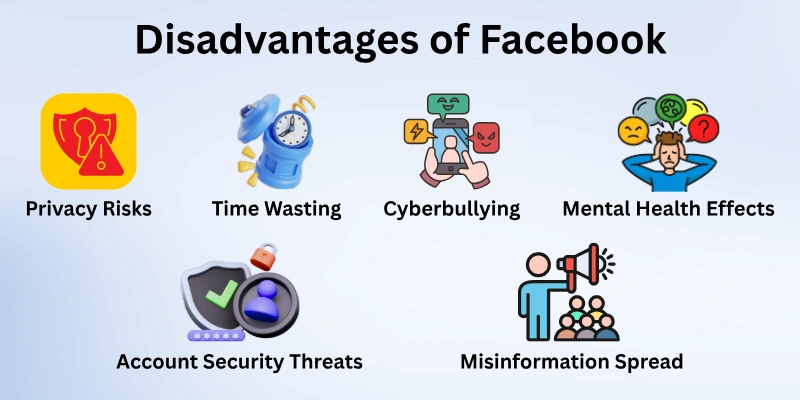
Here’s a breakdown of the main challenges of Facebook.
- Privacy Risks
- Time Wasting
- Misinformation Spread
- Mental Health Effects
- Cyberbullying
- Reduced Real-Life Interaction
- Business Reach Limitations
- Account Security Threats
- Distraction from Tasks
- Over-Sharing Problems
Now, we’ll examine the main disadvantages of using Facebook.
1. Privacy Risks
Facebook collects a lot of personal information, from your posts to your activity. If you’re not careful, this data can be seen or used by people you don’t know. Even with privacy settings, mistakes or hacks can expose sensitive information. It’s important to check what you share and who can see it. Protecting your personal info is key to using Facebook safely.
2. Time Wasting
It’s easy to open Facebook for a few minutes and end up scrolling for hours. This can take time away from work, studies, or hobbies. Many people lose track of time because of endless posts, videos, and stories. Even a few minutes of distraction several times a day can add up. Setting limits helps you stay in control of your time.
3. Misinformation Spread
Fake news and rumors spread quickly on Facebook. People often share posts without checking if they are true. This can cause confusion or panic, and sometimes it spreads harmful ideas. Being careful about the pages you follow and double-checking information is very important. Not everything you see on Facebook is reliable.
4. Mental Health Effects
Seeing everyone’s highlights can make you compare your life to others. This can cause stress, anxiety, or low self-esteem. Overuse of Facebook may even lead to feelings of loneliness. It’s easy to feel left out or pressured when scrolling too much. Taking breaks and focusing on real-life interactions can improve your mood.
5. Cyberbullying
Some people face harassment, negative comments, or trolling online. Cyberbullying can affect anyone, even adults. It can make users feel unsafe or emotionally hurt. Reporting or blocking harmful accounts helps, but it doesn’t always remove the problem completely. Staying cautious and ignoring negativity is important.
6. Reduced Real-Life Interaction
Spending too much time online can take away from meeting people face-to-face. Real-life communication skills may weaken if online interactions dominate. While Facebook helps you stay connected, it cannot replace in-person relationships. Balance is key to keeping strong personal connections.
7. Business Reach Limitations
For businesses, Facebook posts don’t always reach everyone who follows a page. Algorithms decide who sees what, and small businesses may lose visibility without paying for ads. This makes organic marketing harder. Businesses have to work smarter to get noticed and reach their audience effectively.
8. Account Security Threats
Facebook accounts can be hacked or targeted by scams. Fake links or phishing messages are common dangers. Strong passwords and two-factor authentication help protect accounts, but there’s always some risk. Being careful about what you click keeps your account safer.
9. Distraction from Tasks
Even a quick check of Facebook can interrupt your work or studies. Notifications, messages, or trending posts can pull your attention away. Over time, this distraction can reduce productivity and focus. Turning off alerts or scheduling breaks helps control these interruptions.
10. Over-Sharing Problems
Posting too much personal information can cause regrets or security issues. Posts intended for friends can sometimes be seen by strangers. Oversharing can affect your privacy and even your reputation. It’s best to think before sharing and limit what you post online.
Is Facebook Good or Bad?
Whether Facebook is good or bad really depends on how you use it and what you focus on.
Why it can be good:
- It helps you stay connected with friends, family, and communities across the world.
- You can learn new things, follow news, join groups, or even grow a business.
- It can provide entertainment, support networks, and opportunities to meet like-minded people.
Why it can be bad:
- Overuse can lead to wasted time, distractions, or mental stress.
- Privacy risks, cyberbullying, and misinformation are real concerns.
- It can sometimes reduce face-to-face interaction or affect real-life productivity.
In short, Facebook itself isn’t strictly good or bad. It depends on how responsibly and thoughtfully you use it.
Final Note
In this guide, we have covered the advantages and disadvantages of Facebook. It is clear that Facebook can be useful, but it also has limits that need attention.
My personal advice is to stay aware, protect your privacy, and use the platform with care. This way, you can enjoy its benefits while reducing possible risks. Thank you for spending your time here, and I truly appreciate you
Continue to the next FAQs section for more insights. It has more things you may enjoy reading. Do not miss the chance to learn something new.
FAQs: Advantages and Disadvantages of Facebook
Here are the main questions readers have about the merits and demerits of Facebook.
Many use it to stay in touch with family and friends. Others use it to follow news, join groups, or grow a business. It gives people many ways to connect and share in one place.
Facebook helps businesses reach customers through pages, ads, and posts. Small brands use it to build trust and talk directly with buyers. With the right strategy, it can support sales and customer relationships.
Facebook can be safe if you manage your privacy settings and stay alert. Avoid clicking unknown links, and do not share too much personal information. These steps help protect your account and data.
Learning all about Facebook starts with understanding profiles, pages, and groups. Beginners should explore settings and tools before posting often. This helps them use the platform with more confidence and control.
Facebook can be fun, but too much use may cause stress or distraction. People may compare their lives with others, which can affect mood. Taking breaks helps keep a healthy balance.
The purpose of FB is to help people connect, share, and stay informed. It gives users a place to talk, learn, and build communities. When used wisely, it becomes a helpful part of daily life.


- Be Respectful
- Stay Relevant
- Stay Positive
- True Feedback
- Encourage Discussion
- Avoid Spamming
- No Fake News
- Don't Copy-Paste
- No Personal Attacks
- Be Respectful
- Stay Relevant
- Stay Positive
- True Feedback
- Encourage Discussion
- Avoid Spamming
- No Fake News
- Don't Copy-Paste
- No Personal Attacks
